Tips: Kitchen

Keeping it Clean

  • Cast Iron: Never use soap or steel wool with your cast iron skillet.  If you have a particularly nasty pan to clean, create a thick paste with salt and water.  Use a scrap cotton cloth to rub it in.  If entirely necessary, heat up some water and scrape with a spatula.  After cleaning, make sure it is completely dry, then re-season with a dab of canola oil.
  • Raw Meat:  Always use a paper towel to wipe off if you are touching raw meats.  After wiping off, use soap and water to finish up.  Any utensils that touch raw meat should be equally cared for.
  • Knife Blocks: As popular as these are, there is nothing in your kitchen that harbors more germs than a knife block.  Too frequently people use a knife lightly and then put it back in the block.  Consider a knife magnet.  There is a good one by Norpro that is really inexpensive from Amazon.

Keeping it Organized

Keeping it Efficient

  • The Work Triangle:  Keep all of your motion within a triangle.  (Eg) Stove, refrigerator, counter.  You will find that 90% of your movement is within this small area.

Keeping it Safe

  • The single biggest thing for safety is to keep your senses about you.  Most accidents happen when you become distracted.

Tips: Eggs

All About Eggs

Egg Categories Demystified

  • CONVENTIONAL :: The lowest price for a reason.  Four hens per one square foot.  Injury and infection are outweighed by the higher egg production.  Chickens are usually artificially induced into laying more eggs than their body was intended.  When chickens die, they are sometimes unable to lay down, and are held up by the other chicken bodies.  Brand:  Usually store brands and the eggs that are occasionally on sale for a dollar a dozen.
  • ORGANIC :: All this means is that the chickens are not fed hormones, pesticides and antibiotics.  They are still frequently crammed into living spaces.
  • CAGE FREE :: Not in cages, but still usually confined to a barn.  Space is a bit better, with 1 square foot per bird.  Often little to no exposure to sunlight.
  • FREE RANGE :: Conditions are getting better, but eggs are getting more expensive.  The birds are allowed to roam outdoors, similar to what they should expect.  Space is still limited though, and “free to roam outdoors” may mean one small door for thousands of birds.  Also, birds must be antibiotic free.  Brand:  Pete and Gerry’s and Organic Valley
  • PASTURE RAISED :: Dozens to hundreds of square feet per bird.  Usually from smaller farms, just because of the space the birds get.  This is what egg production was a hundred years ago.  The egg yolks are darker, and the eggs taste better.  Brand:  Vital Farms and Simple Truth
  • CERTIFIED HUMANE :: A non-government category.  These birds are monitored by a watch group called Certified Humane, one of the most respected animal welfare groups in the world.
  • NUTRIENT ENHANCED :: Similar to Certified Humane, but not monitored.  Birds are given a nutritionally balanced vegetarian feed.  Recycled, processe, hormones or antibiotics are also avoided.  Brand:  England’s Best
  • ————–
  • AA :: Freshest – white is firm, yolk is round and sturdy.  Good for over easy, poached and hollandaise sauces
  • A :: A week or two old – white is aceptable, and yolk is starting to sag.  Good general purpose egg, but use within the week.
  • B :: Old – White is beginning to look milky and sad.  Yolk will break easily.  HOWEVER, these eggs make the best Hard Boiled Eggs because the white has lost its attachment to the shell.
  • ————–
  • Keep eggs in the fridge at (or near) 40º – An egg on the counter ages about 7x faster than eggs in the fridge.  Storing eggs in their original carton ON THE SIDE will help the yolk stay centered.  Also, pasturized eggs are complete safe these days to eat poached, over easy, or even raw.

Hard Boiled Eggs

There are many ways to hard boil an egg. Here are several methods. Try them all, and pick your favorite

  • Grandpa’s Way of Doing It

    • It doesn’t matter if you start with cold or room temperature eggs.  Put eggs into a large pot, and cover (by two inches) with water.  Bring the water up to a quick boil, then cover and leave for 15 minutes.  After 15 minutes, dump the hot water and cover the eggs with ice and then run cold water into the pot.  Let set for at least 5-10 minutes
    • Start with eggs that are at least a week old, preferably about 10 days. This gives time for the albumin, the white, to separate from the shell membrane.
    • Least amount of sticking will happen if you peel under slow running water tap.
    • In my family, we put a pencil or grease-marker circle around the eggs to show that they have been hard-boiled.
    • Test an unmarked egg to see if it is hard boiled or raw, by SPINNING the egg on its point. A raw egg will not spin, while a hard-boiled egg will spin like a top.
    • When you hard-boiled eggs, and air sac is usually on the fat and. Start peeling here.
    • Eggs should always be stored pointy end down.
    • Refrigerate cooked eggs for up to two weeks.
  • Third Party Hints


    The information below this section is from a third party. It is part of Grandpa's Personal Recipe box. Feel free to browse, but know that this information is from someone else.
    • It will take longer to heat up a cold than a warm egg to the desired temperature. Start with an egg that has been brought to room temperature (set out on counter 1 hour)
    • Alton Brown notes that carefully cooking an egg at 67 degrees Celsius (153°F) yields a yolk that bends to the scientist’s will. 10 minutes in boiling water—is not ideal. 212 degrees Fahrenheit is far higher than the temperature at which the egg whites and the yolks coagulate. – (My personal preference is water heated to about 185 degrees)
    • Egg white begins to set at 145º
    • Egg yolks set at about 158º
    • Egg white firms completely at 180º
    • AB says that because the yolk contains fat, it floats above the aqueous white, both in the shell and in a beaker. To achieve a centered yolk, one must rotate the egg while cooking it.
    • As eggs cook, their balled-up proteins uncoil into strands, and the strands bind together to form an intricate mesh that traps water. In essence, the proteins form a gel, a liquid dispersed in a solid. Boiling causes too many egg proteins to bind and form dense meshes, “so there is less sensation of water in the mouth,” says Alton Brown (Good Eats). Voilà: rubbery egg whites and sandy, grayish yolks.
    • IF YOU ARE GOING TO USE THEM RIGHT AWAY, at the tail end of the cooking process, shake them against the side of the pan to lightly crack the shell to let water in. This will make them easier to peel.  DO NOT do this if you are planning on storing the eggs for later use.

Cooking with Eggs

  • Large eggs are the standard for cookbooks. If you use a medium or extra large egg, adjust the recipe accordingly.
  • 1 egg is 1.5 ounces – two is 3.0 ounces – three is 4.5 ounces

Storing Eggs

  • Eggs, fresh from the chicken, do not have to be refrigerated if used within a week or so.  Look for tell-tale signs such as a bit of chicken poop or feathers.  This is actually good news.  Just be sure to wash it before cracking it.
  • United States markets wash the eggs, which remove the protective coating. Refrigerate these eggs – or at least don’t set out for more than a few days.  Warm them to room temperature an hour before cooking.

Using Egg Whites

  • When egg whites are beaten, the whites stretch and trap air bubbles.  The smaller and more even the size of the bubbles; the more stable the foam.
  • Large bubbles break more quickly, and the foam collapses faster.
  • A large whisk with many fine wires will create smaller bubbles and a better foam.
  • Whites foam better when beaten at a cool temperature: About 65-75º
  • Whites will generally increase about 8-10 times in volume
  • If whites are underbeaten, they haven’t stabilized enough to hold bubbles.  Overbeaten, and the bubbles are stretched too far and will pop easily.  When overbeaten, you will see cottony bits of solidified (coagulated) egg whites.
  • Plain whipped whites make a fragile and short-lived foam.  Even their own weight will cause the bubbles to burst.
  • Bubbles that burst become liquid again, and will not whip up again.
  • Cream of Tartar or a little white vinegar will stabilize the foam.  Use about 1/8 tsp cream of tartar for 1 large egg white.
  • Sugar also strengthens the egg white protein, but you should still use cream of tartar.
  • Once a foam is established, 1 TBL every 30-45 seconds will dissolve uniformly.
  • If sugar is added too quickly, it won’t dissolve and your whites will be grainy.
  • If sugar is added BEFORE the foam is established, the whites can’t incorporate enough air to make a stiff foam.
  • Even a slight bit of egg yolk will keep your egg whites from foaming.  Even oil on the side of your bowl or your whisk will prevent the whites from foaming.
  • Use a large bowl.  Whisking in a small bowl will allow the bubbles to escape as quickly as they form.
  • A copper bowl is best.  In a metal bowl, the simple action of beaters or whisks will increase the temperature enlarging the bubbles.  Copper will transfer the heat rapidly from the whites, keeping them cooler.  Copper ions will also help bubbles to form.

Al Pastor Pork Loin

tenderloinINGREDIENTS

  • Pork tenderloin strip or pork shoulder
  • 1 C minced pineapple – diced and charred
  • 1/4 C onions – diced and charred
  • 1 TBL achiote paste (or substitute cumin and cayenne)
  • 1 TBL chipotle or adobo paste
  • 1 TBL Grandpa's Thunder Powder or Arghhh Powder
  • 2 C pineapple juice (alt orange juice)
  • 2 cloves garlic
  • scant clove, ground bay laurel, garlic, sage

STEP BY STEP

  1. Bring tenderloin up to room temperature (about 45 minutes)
  2. Dice and char onions and pineapple
  3. Add all other ingredients in a mixing bowl and add the charred vegetables
  4. Marinate the tenderloin for about 90 minutes
  5. Cook over very high heat (400-500º) for about 5 minutes per side
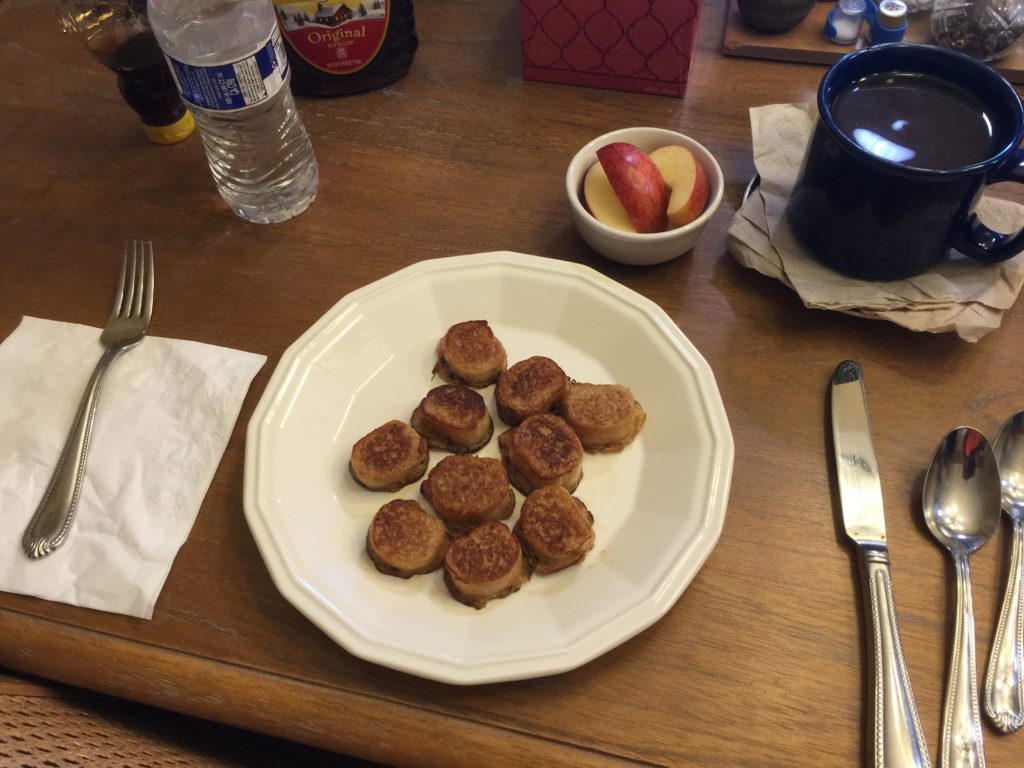
  6. Let rest 10 minutes before cutting into medallions and serving

ALTERNATIVES

You can braise a lesser cut of pork in the same liquid.
Bake at 275º for 3-4 hours
Let cool, then shred the meat
Let shredded meat marinate in the remaining liquid for another 30 minutes, then use for tacos or burritos.

Ideally, sear the meat a second time in cast iron before serving

Use spider strainers to create taco bowls – one inside, one outside
Cook in 4 inches of oil
Let cool before removing
Sprinkle with salt

Great with pickled red onion , radishes or queso fresco.
Serve also with ranch dressing

Spaghetti Pie

INGREDIENTS
Per 1 C of (not compacted) cooked pasta
(eg) 2 cups = 2x the ingredients below

1/2 C shredded mozzarella or Provalone cheese

  • Leftover spaghetti pasta strings
  • 1 egg
  • 1/4 C marinara sauce
  • 1/4 C sweated onion (diced)
  • 1/4 C Ricotta cheese
  • 1/4 C grated Parmesan
  • 1/2 tsp salt
  • 1/2 C ground beef (browned)
  • parsley to taste
  • Tomato sauce – only if needed to thin mixture

STEP BY STEP

  1. Dump each ingredient into a large mixing bowl
  2. Toss well
  3. Place into cake pan
  4. Top with a extra sauce
  5. Top with mozzarella cheese
  6. Sprinkle with a bit of extra Parmesan
  7. Bake 25 minutes @ 350º
  8. Stop with Parmesan and basil chiffonade


Salami Cup

INGREDIENTS

  • Thin slices of Genoa Salami or high qality (low moisture) ham
  • TWO identical mini muffin pans
  • FILLER
    • 1/4 C Ricotta cheese
    • 1/4 C marscapone cheese
    • 1/4 C honey
    • 1/2 tsp red pepper flakes (or ground)
  • Thinly sliced figs
  • Hazel nuts
  • Lemon zest
  • 5 basil leaves

STEP BY STEP

  1. Get mini muffin and place meat rounds over each cup
  2. Place the other muffin pan over top of the rounds, compressing them into the cup
  3. Turn pans (together) upside down (to allow for grease to run out)
  4. Put into a larger cookie sheet to avoid a mess in the bottom of your oven
  5. Place heavy cast iron pot on top to hold everything down tightly
  6. Bake at 400º for 30 minutes
  7. Set on top of stovetop and let cool completely
  8. Mix filler in separate bowl
  9. Spoon into piping bag and HALFWAY fill meat cups
  10. Top with figs, then hazelnuts, lemon zest and then basil strips
  11. Serve with sprigs of rosemary on the plate as garnish

ALTERNATIVES

You can use many different fillings with salami cups

  • Poached egg with cracked pepper and basil chiffonade
  • Chopped hard boiled egg topped with sun dried tomatoes and basil
  • Chopped ham, cheese and bell pepper
  • Chopped spinach mixed with cream cheese and sour cream
  • Tomato, avocado and cheese
  • … or just use your imagination.  Be sure to try it before you spring it on your guests though.

Beef Carbonara

Use Braised Beef (or any slow-cooked shredded meat) from a previous dinner.

INGREDIENTS

  • Leftover Braised Beef
  • 2 eggs
  • Ham
  • Parm cheese
  • Bacon pieces
  • Hot Pasta

STEP BY STEP

  1. In bottom of small cast iron skillet, melt 2 TBL butter and spread evenly over bottom
  2. Add pieces of uncooked bacon
  3. Spread shredded beef over bottom of the skillet, covering bacon
  4. Crack eggs and put whole on the beef
  5. Add seasoning (Salt, pepper, coriander, cayenne)
  6. Start on stove top until edges start to cook
  7. Grate Parmesan cheese
  8. Sprinkle with shredded cheddar/mozzarella mix
  9. Put in oven at 300° for 20 minutes
  10. Turn out of the skillet and serve “upside down” with bread, tortilla or drop biscuits


Shepherd’s Pie

Use Braised Beef (or any slow-cooked shredded meat) from a previous dinner.

shep-pieINGREDIENTS – FILLING

  • Leftover shredded beef or (traditional) ground lamb
  • 4 TBL butter
  • 1/4 C AP flour
  • 1-1/2 C chicken broth
    IN A SEPARATE MIXING BOWL, COMBINE
  • 1 small carrot – diced small
  • 1/2 C baby peas
  • 1 small stalk celery – diced small
  • 1/2 C shredded cheese
  • 4-6 black olives – diced
  • 1/4 C grated onion

INGREDIENTS – TOPPING

  • 2 C mashed potatoes
  • 1/2 tsp salt
  • 3 TBL cold butter
  • 1/2 C shredded cheddar cheese
  • 1/4 C cream cheese

STEP BY STEP

  1. Bring sauce pan up to medium heat
    FILLING – – – –
  2. Add butter to hot pan
  3. As soon as butter is melted, add flour
  4. As soon as flour starts to ball, add half your broth
  5. Stir until it starts to turn smooth
  6. Add the rest of your broth
  7. Stir until it starts to thicken
  8. When it has thickened (per video below) add it to the mixing bowl with your chopped veggies
    TOPPING
  9. Mix potatoes with salt, butter and cheeses
  10. Separate into 4 pieces and let rest five minutes
  11. Meanwhile, spoon your filling into ramekins for cooking
  12. Carefully spoon potato topping onto filling
  13. Gently spread it out covering the filling
  14. Drag fork tines across the top making a pattern
  15. Poke holes in the top so that steam can escape, otherwise the top may fail.
  16. Bake at 350º for 25-35 minutes until browned
  17. Let rest five minutes before serving, or cool on counter and refrigerate for reheating later.

Photo from The Little GSP.

NLOF Bolonaise Sauce

Use Braised Beef (or any slow-cooked shredded meat) from a previous dinner.

INGREDIENTS

  • Mirpoix vegetables (1/2 C each of carrot, celery, onion)
  • Bell pepper
  • Garlic
  • Diced tomato
  • Red wine
  • Salt and pepper

STEP BY STEP

  1. Sauté mirpoix vegetables in 1 TSP olive oil
  2. Add diced pepper and garlic
  3. Add diced tomato, red wine, salt and pepper
  4. Add leftover meat
  5. Add Parmesan rind if you have it
  6. Simmer until reduced and the meat is broken down

Serve over cooked spaghetti pasta


Braised Beef Sandwich

Use Braised Beef (or any slow-cooked shredded meat) from a previous dinner.

INGREDIENTS

  • Roma tomato – halved
  • Leftover meat – shredded
  • Tomato – sliced
  • Spinach leaves
  • Creamy cheese – Brie consistency
  • Butter

STEP BY STEP

  1. Sprinkle roma tomato with olive oill
  2. Season roma tomato with salt and pepper
  3. Bake roma tomato at 350º for about 20 minutes
  4. While it is baking, shred your meat and toss it in 1 TBL melted butter
  5. Spread mayonnaise lightly over two pieces of sandwich bread
  6. Slice a beefsteak or other hearty tomato for dressing your sandwich
  7. Lay spinach leaves on top of the tomato
  8. Place your meat over the spinach
  9. Lay thin chunks of creamy cheese on top . Brie consistency
  10. Cook in hot buttered skillet until browned


Braised Beef

  1. Basic 5 pound chuck roast
  2. Sear in hot skillet to brown all sides
  3. Set aside and put 1/2 C good red wine to deglaze
  4. Put back in the pot and cover
  5. Add 1 jar pepperoncinis
  6. Slow cook 4-5 hours at 325º
  7. Remove peppers and reserve for the next day
  8. Refrigerate  roast overnight
  9. Remove (and discard) congealed fat
  10. Put peppers back in and reheat at 350º for 20 minutes
  11. Remove meat and shred, then return the shredded meat to the pan
  12. Cook for another 20 minutes


Mashed Potato Hash Browns

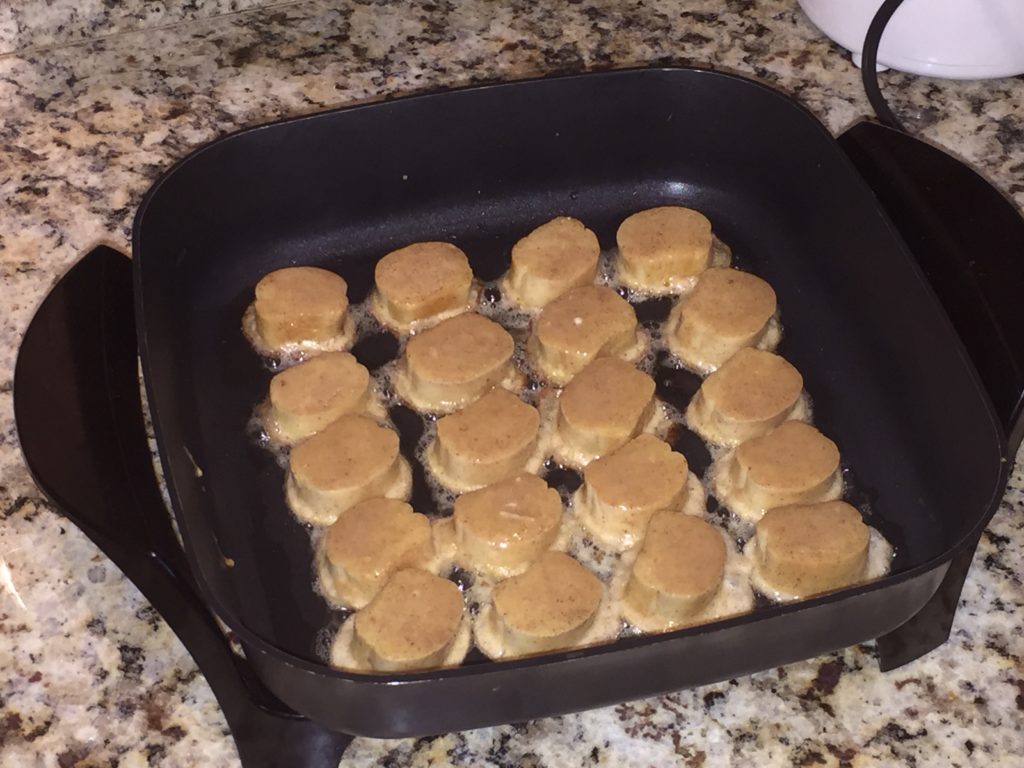
2016-04-09 08.03.40INGREDIENTS

  • Old mashed potatoes
  • Butter and EVOO (for frying)
  • 1-2 eggs per person

REMINDER: Keep the handle of your pan pointed to the back of the stove to avoid an accidental spill or burn.

This recipe will actually work with old scalloped potatoes, hashed browns from another morning, and baked potatoes. I would probably draw the line at potato salad.

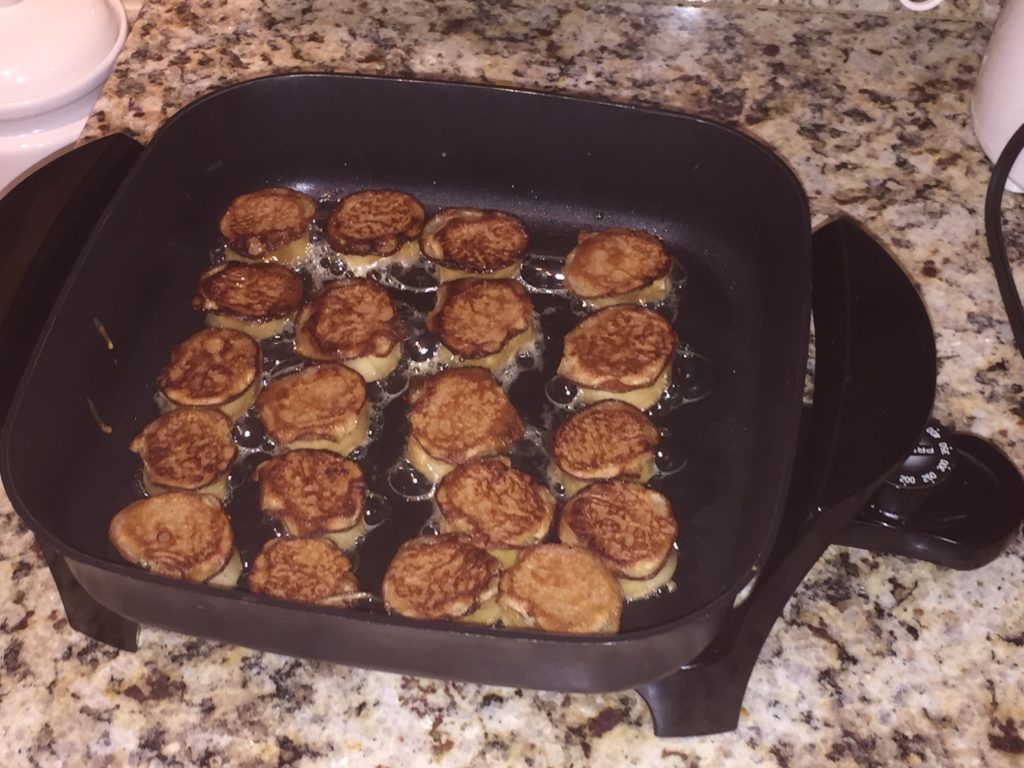
CLICK EITHER IMAGE FOR AN ENLARGEMENT
2016-04-09 08.13.13
STEP BY STEP

      1. Put at least 1 cup of leftover mashed potatoes on a cutting board (or a clean counter)
      2. Cut them into fairly large pieces (about the size of a regular marble)
      3. PREHEAT the butter and oil in your skillet to a medium high heat
        – If you put mashed potatoes into cold oil, they will become greasy
      4. Put mashed potatoes into your skillet and let them brown
      5. Handle or flip them AS LITTLE AS POSSIBLE because they will fall apart otherwise
      6. As soon as they are to your liking, plate them and fry your egg
      7. Put 1-2 egg in a skillet and let them cook on the bottom just a bit
      8. Flip them carefully to avoid breaking the yolk
      9. Plate them on top of the potatoes and serve


NOTE: You can eliminate steps 7 and 8 if you use an egg poacher or poach the egg in a pan of simmering water

Banana Muffins

Ingredients

  • 2 bananas
  • 1 TBL flour
  • 1/2 tsp baking powder
  • 1/2 tsp salt
  • 3 eggs
  • Fruit for the bottom of the cup

Step by Step

  1. Preheat oven to 400º
  2. Crush bananas
  3. Combine flour, salt and baking powder
  4. Mix in eggs
  5. Place fruit (raspberries?) on the bottom of a greased baking muffin pan
  6. Spoon mixture over top, filling half way
  7. Bake 12 minutes
  8. Cool before turning out of the muffin pan or they will break apart

Here is the original recipe

NLOF Veggie Soup Meatballs

Strain the veggies from your soup.
Drink the broth… it’s good for you.

  • For every 1 C of veggie matter, combine the following in a food processor
  • 2 eggs
  • 3/4 C raw oats
  • 1/2 C flour
  • 1/2 tsp salt

Pulse all of the above together

  • Add about 1 C stuffing mix or seasoned bread crumbs
  • Mix together by hand
  • Makes 6 nice sized meatballs.
  1. Bake in oven at 350º for 45 minutes
  2. Put into baking ramikens
  3. Top with maranara and provalone cheese
  4. Bake another 15-20 minutes


Costco Chicken Wings

This is the basic recipe for cooking pretty much any frozen chicken wings.

CLICK THE IMAGE ABOVE TO DISPLAY THE RECIPE.

It is actually better to get a “Party Wing Pack” from the grocery store.  Cut the wing tip off and safe for stock.  Cut the remaining two pieces right at the joint.

  1. Thaw wings overnight in the fridge (recipe for 12)
  2. Dry with a paper towel
  3. Spray with Pam or other baking spray
  4. Cook at 400º for 30 minutes
  5. Flip and cook another 30 minutes
  6. After flipping them, combine
    • 2 TBL  soy sauce
    • 2 TBL cornstarch
    • 1/4 C honey
    • 2 TBL Sambal Olek (or 1 TBL Sriracha)
    • 1 tsp garlic powder
    • 1/2 tsp ginger
    • 1 TBL lime juice
  7. Simmer sauce while wings finish cooking
  8. Add 1 TBL chives to the sauce before tossing
  9. Toss wings in hot sauce while wings are still hot

Whenever Baking with Mushrooms

Cleaning mushrooms: The common wisdom is don't wash mushrooms, just use a dry paper towel. Also, don't wash them until you are ready to use them. That being said: Do not wash them if they are being used in a dry application, such as a salad. You can, however, give them a quick rinse underwater if you are immediately baking with them or using them immediately in some sort of soup or other wet application. The towel cleaning should be a suggestion rather than a rule, but when in doubt, just use a dry paper towel.


Brine your mushrooms

  1. Put 2 QT of water in a large bowl
  2. Add 2 TBL salt
  3. Cut mushrooms all the same size
  4. Put shrooms in the water
  5. Top with a plate to hold them down
  6. After 10 minutes drain and pat dry
  7. Let completely dry for another 10 minute
  8. Toss in 2 TBL EVOO
  9. Roast at 450º for about 30 minutes on the bottom rack
  10. Take out and toss them, then cook 10 more minutes
  11. Take out and toss with 2 TBL butter and 1 tsp lemon juice
  12. They are ready to use or serve
  • A mushroom acts like a vegetable, in that vegetables get soft when cooked.
  • Mushrooms also have Chitin in them, which acts more like meat – and toughens up
  • The brine will allow it to hold onto the moisture during cooking


Boiled Bacon ?!?

This is a tip from America’s Test Kitchen

Rather than cooking bacon in a hot skillet, where some pieces are overcooked and others are rubbery, try this:

  • Put bacon in the bottom of your skillet
  • Add water just to cover
  • Turn the heat up to high
  • When the water starts to boil, reduce the heat to medium
  • Boil off all of the water
  • When the water is gone, reduce the heat to medium low
  • When the bacon is fully cooked you will see your bacon in just a bit of grease
  • Remove and blot the bacon
  • This should have a nice bite to it, be crisp yet chewy


Yogurt Brûlée

Spoon Greek yogurt into a fire-ready ramekin
Sprinkle Turbinado sugar over the top
Use your torch to caramelize the sugar
Top with a bit of fresh fruit
Serve quickly, cause it will not stay as crispy for as long as custard will.

Easier way – similar flavor

Pour honey on top of your yogurt

Weights and Measures

Cooking Abbreviations

This is what Grandpa uses, anyway

1 gm = 1 gram
1 cc = 1 cubic centimeter
1 tsp = 1 teaspoon
1 TBL = 1 tablespoon
1 oz = 1 ounce
1 C = 1 cup
1 LB = 1 pound
1 pt = 1 pint
1 qt = 1 quart

Conversions provided by Google

CLICK HERE for a weight converter
CLICK HERE for a volume converter
CLICK HERE for a length converter
CLICK HERE for a height converter
CLICK HERE for a currency converter
CLICK HERE for a long URL shortener converter
CLICK HERE for YouTube direct positioning
CLICK HERE for an area converter
CLICK HERE for a language converter
CLICK HERE for a converter

Frequently Used Conversions

Liquid: From smallest to largest

1 milligram  =  0.015 grain = A teeny tiny ant, or a mosquito that has not yet eaten
1 grain  =  64.8 milligrams =  1/7,000 pound  =  1/437.5 ounce = 1 single grain of barley or long grained rice
1 CC = about 5 drops = ABOUT 1 gram (just barely under)
1 CC = 1 milliliter
1 CC = 1 gram = use just the tip of your measuring spoon
1 tsp = 5 cc = ABOUT 5 gm = the weight of a single nickle
1 TBL = 3 tsp = 1/2 oz = 15 cc
1 ounce  =  2 TBL =  1/128 U.S. gallon  =  1/16 U.S. pint
1/4 C = 2 oz = 4 TBL
1 deciliter  =  1/10 liter = 100 milliliters
1/2 C = 4 oz = 1 gill = 119 cc
1 C = 16 TBL = 8 oz = 238 gm
1 PT = 2 C = 16 oz =  1/2 quart =  1/8 gallon
1 QT = 2 PT = 32 oz = .946 liter = 1/4 gallon
1 liter = 1,000 CC = 1 qt + 3 TBL =  1.06 U.S. quarts
1 gallon = 4 qts = 128 oz = 3.78 liter

1 U.S. gallon (basic unit of liquid capacity in the United States)  =  231 cubic inches of water
1 imperial gallon = 1.2 US gallons  =  277.4 cubic inches

Dry Measures: From smallest to largest

1 cubic centimeter  =  0.06 cubic inch
1 cubic inch  =  16.4 cubic centimeters
1 dry pint  =  1/64 bushel  =  1/2 dry quart
1 dry quart  =  1/32 bushel  =  1/8 peck
1 peck  =  1/4 bushel
1 U.S. bushel (basic unit of dry capacity in the United States)  =  2,150.4 cubic inches
1 imperial bushel (basic unit of dry capacity in some Commonwealth nations)  =  2,219.4 cubic inches
1 cubic yard  =  0.765 cubic meter
1 cubic meter  =  1.3 cubic yards
1 U.S. bushel  =  0.97 imperial bushel  =  3.5 dekaliters

Weight: From lightest to heaviest

1 milligram  =  0.015 grain = A teeny tiny ant, or a mosquito that has not yet eaten
1 grain  =  64.8 milligrams = 0.0648 gm
1 gram  =  0.035 avoirdupois ounce
1 pennyweight  =  24 grains  =  1/20 troy ounce
1 dram  =  1/256 pound  =  1/16 ounce = .0625 ounces = 1.77 gram
5 gm = the exact weight of one nickle
1 oz =  1/16 pound = 12 dimes = 28.5 gm
1 pound =  0.454 kilogram = Typical 16 oz canned goods
1 kilogram (basic unit of weight or mass) = 2.205 pounds
1 metric ton  =  1,000 kilograms =  1.1 short tons
1 short ton  =  2,000 pounds =  0.9 metric ton
1 long ton  =  2,240 pounds

Length: From shortest to longest

1 millimeter  =  1/1,000 meter = The diameter across this zero º
1 centimeter  =  1/100 meter =  0.39 inch
1 inch  =  2.54 centimeters =  1/36 yard  =  1/12 foot
1 foot  =  1/3 yard =  0.305 meter
1 yard (basic unit of length) =  0.914 meter
1 meter (basic unit of length) = just more than a yardstick = 39.37 inches =  3.28 feet =  1.094 yards
1 fathom  =  6 feet
1 rod  =  5 1/2 yards
1 furlong  =  220 yards  =  40 rods
1 kilometer  =  1,000 meters =  0.62 mile
1 mile  =  1,760 yards  =  5,280 feet  =  1.609 kilometers
1 nautical mile  =  6,076.1 feet

Area

Liquid: From smallest to largest

1 square centimeter  =  1/10,000 square meter =  0.155 square inch
1 square inch  =  1/1,296 square yard  =  1/144 square foot =  6.45 square centimeters
1 square decimeter  =  1/100 square meter
1 square foot  =  1/9 square yard
1 square yard (basic unit of area)
1 square meter (basic unit of area)
1 square rod  =  30 1/4 square yards
1 are  =  100 square meters
1 acre  =  4,840 square yards  =  160 square rods  =  0.405 hectare
1 hectare  =  10,000 square meters  =  100 ares =  2.47 acres
1 square kilometer  =  1,000,000 square meters =  0.386 square mile
1 square mile  =  3,097,600 square yards  =  640 acres =  2.59 square kilometers

Volume

Length, Width, Height: From smallest to largest

1 cc = 1 cubic centimeter  =  0.06 cubic inch =  1/1,000,000 cubic meter
1 cc = 1 milliliter  =  1/1,000 liter
1 cubic inch  =  1/46,656 cubic yard  =  1/1,728 cubic foot  =  16.4 cubic centimeters
1 cubic foot  =  1/27 cubic yard
1 cubic yard (basic unit of volume) =  0.765 cubic meter
1 cubic meter  =  1 stere (basic unit of volume)  =  1.3 cubic yards
1 centiliter  =  1/100 liter
1 deciliter  =  1/10 liter
1 liter  =  1 cubic decimeter (basic unit of capacity)
1 dekaliter  =  10 liters
1 hectoliter  =  100 liters  =  1/10 cubic meter

Grandpa’s Hard Boiled Eggs

Consistent Results

Summary: Start cold, Bring to boil, Finish in 15.

      1. DO NOT USE FRESH EGGS.  Eggs should be at least near (or past) their last day of sale.  This is not an expiry date.  They plan on eggs being in your fridge for a couple of weeks after his date.
        • The time allows the shell to separate from the membrane making them much easier to peel.
      2. Put a dozen eggs (room temperature) into a deep pot, and add cold tap water until covering the eggs with an extra 2-3 inches of water
      3. Add 2 TBL salt and 1/4 cup white vinegar to water and stir until salt is dissolved.
      4. Turn burner on highest heat possible.  Watch closely to make sure it does not come up to a rolling (or roiling) boil.  If you have an immersible thermometer, you are looking for about 205º
      5. Meanwhile, prepare bowl of water containing about four cups of ice cubes, for when eggs are done. Set aside.
      6. When water starts to steam or lightly boil, turn heat to low and start timing
      7. Cover and let cook for 10 minutes
      8. (optional) Every 2 minutes or so, use a tongs to gently stir and rotate egg (to center yolk)
      9. At the eight minute mark, put water into your bowl of ice
      10. At 10 minute mark, use a slotted spoon to carefully transfer eggs from the hot water into the ice water.
      11. Let cool for 15 minutes.
      12. Eggs are done.
      13. Drain, dry and refrigerate.

Peeling Tips

  1. Start peeling from the fat end – the air sac usually makes this end float
  2. If you peel within 24 hours, they will peel more easily.  Any longer than that and the moisture evaporates through the shell, and makes them harder to peel.
  3. Use eggs that are several days past their “Sell by” date.  These are older eggs, and the membrane has begun to let go.  They will peel more easily.

THE STEAM METHOD

Another method that produces consistent results because the temperature is highly regulated is to put 1-2 inches of water in a steamer.  Put the eggs into the basket, but don’t put the basket on the steamer yet.  Bring the water up to a boil, and THEN put the basket back on the steamer and cover. 

Eggs should be room temperature.

For large eggs, time 13 minutes exactly, then remove the eggs to a bowl of iced tap water to cool – about 30 seconds.  12 minutes will give you a softer white and creamy yolk.  15 minutes will give you a drier yolk and very firm white.  Peel underwater.


HTML Snippets Powered By : XYZScripts.com