Gnocci with Tomato Sauce

Serves 6

* 1 tablespoon extra-virgin olive oil
* 1 small onion, finely chopped
* 3 cloves garlic, minced
* 1/4 cup dry white wine
* 1 can (28 ounces) whole plum tomatoes with juice, crushed by hand
* 1 can (14 1/2 ounces) tomato sauce
* 2 sprigs basil
* 1/4 teaspoon crushed red pepper flakes
* Coarse salt and freshly ground pepper
* Gnocchi
* Thinly shaved parmesan cheese, for serving

1. Heat oil in a large saucepan over medium heat until hot but not smoking. Add onion and garlic; cook, stirring occasionally, until onion is translucent, 5 to 7 minutes. Add wine; cook until most liquid has evaporated. Add tomatoes and juice, tomato sauce, basil, and red pepper flakes. Reduce heat to medium-low; simmer until slightly thick, about 30 minutes. Season with salt and pepper. Remove from heat; cover to keep warm.

2. Bring a large pot water to a boil; add 1 tablespoon salt. Add half of the gnocchi; when they rise to the top (after about 2 minutes), continue to cook until tender, about 15 seconds more. Transfer gnocchi with a slotted spoon to pan with sauce. Repeat process with remaining gnocchi.

3. Reheat gnocchi over low heat; gently toss. Serve with cheese shavings.

These are from Martha Stewart Web Site

Crispy but Soft Garlic Bread

INGREDIENTS

  • 6 TBL butter
  • 2 TBL olive oil
  • 2 TBL grated garlic
  • 1 tsp garlic powder mixed in 1 tsp water
  • 1 tsp Oregano
  • Cayenne, Salt and Pepper to taste
  • 1 loaf of SOFT crusted Italian bread

STEP BY STEP

  1. Heat 3 TBL butter and the garlic in the microwave for 60 seconds (tames the garlic)
  2. Mix heated butter with garlic powder mixture
  3. Mix in remaining ingredients
  4. Cut Italian loaf lengthwise
  5. Spread both halves with garlic butter mixture
  6. Sprinkle lightly with freshly grated Reggiano cheese
  7. Bake face up on a heavy baking sheet at 450º for 3-4 minutes
  8. Turn face down on the hot baking sheet
  9. Cover with another baking sheet and press lightly
  10. Cook for 8-10 more minutes

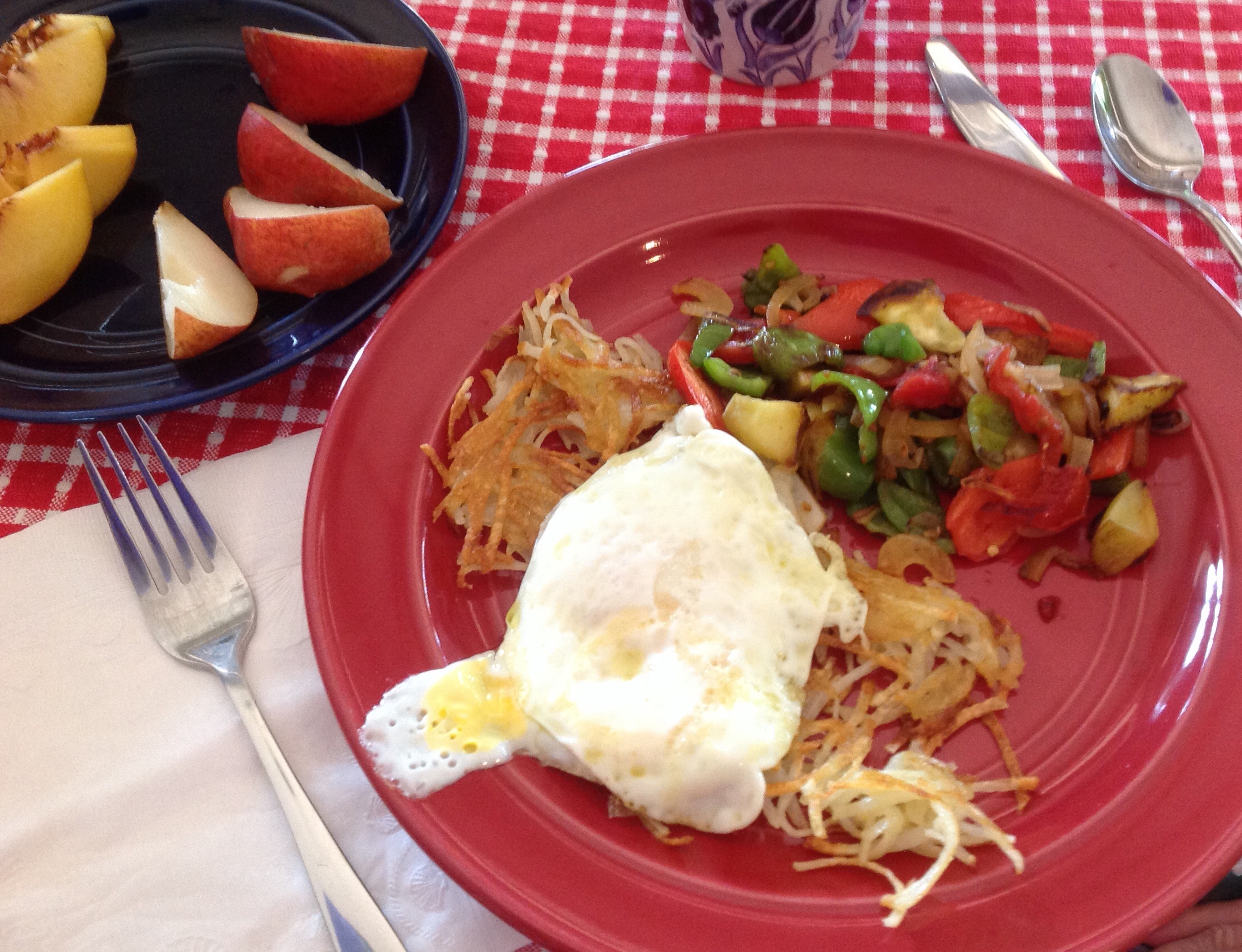
Hash Browns (Hashed Browns)

hash-brownsAccording to Google Hash Browns is correct.  I’ve heard it both ways.  People will also refer to Latkes (which is the Jewish term) and Rostis (which is the German term).  They are cooked SLIGHTLY differently, so I will include a recipe for both of them at this site.  This recipe is for the kind of Hash Browns that you would get if you were to go out to some Mom and Pop diner here in the United States.

INGREDIENTS

  • 3 small Yukon Gold potatoes (or two large Russets)
  • 1 small onion
  • Corned beef
  • 1 egg
  • 1 TBL Olive oil
  • 1 TBL salted butter
  • 1 tsp salt

STEP BY STEP

NOTE: For Home Fries, dice the potatoes into cubes the desired size and prepare pretty much the same way.  Toss every 5 minutes or so, and increase cooking time so that they are well browned on most sides.

  1. Wash potatoes well, and pat dry
  2. If you prefer peeled potato hash browns, cut nice big chunks of the skin for cooking on another day as potato skins.  Store them in the fridge in a jar of salted water.
  3. Cut potato meat into thin slices, then cut slices into short strips. 
    Alternately you can grate them.
  4. Mix with grated or diced onion
  5. Mix with shredded corned beef
  6. Add 1 beaten egg
  7. Use salad spinner or a tea towel to dry them as much as possible
  8. Toss in 1 TBL Olive oil and place in large cast iron skillet over medium heat
    – These will cook for about 5-8 minutes.
    Flip when potatoes start to brown at the edges of the pan.
    You can slide onto a plate, then invert the plate for safe flipping
  9. Set the burner to low, then cook for another 5 minutes
  10. They are ready to serve when the second side has browned.
    HERE IS AN OPTION YOU MAY TRY.
  11. Peel onion and chop into small slivers
  12. In small pan, saute onion in 1 TBL olive oil
  13. When translucent, remove from heat and set aside
  14. After potatoes have browned, combine all into a large mixing bowl and toss together with sauteed onion and salt
    READY FOR ANOTHER OPTION?
  15. Put loosely into a preheated (oiled) waffle iron for 10-12 minutes.  DO NOT add too much cheese, or you will have a gooey mess.  Top the cheese with more potatoes to minimize cheese contact.

NOTES

    • If you toss them too frequently the gluten develops and the hashed browns become tough and chewy, rather than crisp.
    • Don’t overcrowd skillet of they will be soggy, rather than crisp. You need space for the steam to escape.

VARIATIONS

  • When hashed browns are almost done, create a hollow, and carefully crack two
    eggs into the hollows. Reduce heat to simmer, cover and allow eggs to soft
    boil for 5-10 minutes.
  • Add one diced sour apple at Step 7. You can also add bell peppers or diced
    chives at Step 7. Another option is to add finely diced corned beef or sausage
    to make hash.
  • I prefer to dump the partially cooked potatoes into a large mixing bowl and toss there, rather than in the skillet. After tossing, return them to the hot skillet.

Grandpa’s Mashed Potatoes

These are not your traditional potato skins, but instead gives you a yummy use for the left-over skins.

INGREDIENTS

  • 4 “regular” russett potatoes – Use starchy, not waxy
  • 1 carrot – julienne strips
  • 1-2 C raw cauliflower – cut into one inch pieces
  • 1/2 onion – slivers
  • 3 TBL olive oil OR 6 TBL butter
  • 2 TBL “chives” or cut green onion tops
  • 1 tsp oregano
  • 1/4 CU half and half (at the very end) or low-fat buttermilk
    Use whole milk if you must, but not low fat regular milk

STEP BY STEPpotato

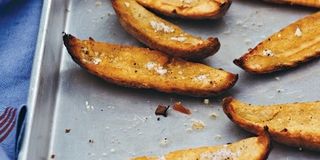
  1. Cut the skins off the potatoes into nice large flat hunks. This can be stored in a bowl of salted water and used later for potato skins.
    When ready, bake peels at 400º for 20 minutes.
  2. Rinse remaining potatoes and cut into one inch (or less) sized pieces.
  3. Cut 1/2 onion into slices into mixing bowl
  4. Using a potato peeler, peel the carrot into the mixing bowl.
  5. Toss potatoes, onion and carrot in the mixing bowl
  6. Put the pieces into a steamer basket with one inch of water in the bottom of the pan.
    Alternately you can use a pot of water, but this rinses a lot of the sugars and starches away.
  7. Cook or steam potatoes for about 20 minutes
  8. Drain water from pan and put veggies back into the empty pan.
  9. Add 6 TBL of butter
  10. Using a potato masher, crush the pieces into a mush. If you like “lumpy” potatoes, don’t pot-skinscrush them too much.
  11. Add splashes of milk product, stirring continually, ONLY to the point of giving them a creamy texture
  12. Add chives and oregano and mix with a fork.
  13. Optional:  At this point, you can add a bit of shredded cheddar cheese
  14. For really fancy potatoes, pipe them into mounds using a fluted piping tip, then broil them for about three minutes.  Otherwise, just plate and serve with a side of gravy.
  • Special Steps A “quick release” ice-cream scoop can give you those pretty restaurant mounds of potatoes.
  • Variations For less starch in the potatoes, and less stringent onions, run tap water gently through them after  Step 3.

Healthy Alternative

Use half russet potato and half cauliflower.  Add a bit of extra salt and butter.

Hot Dog Buns / Hamburger Buns

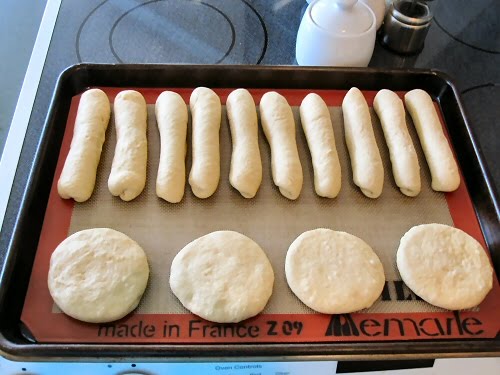
This was originally a recipe for bread sticks. If that is what you want, just roll them a little skinnier and shorten the cooking time by 2-3 minutes.  For hamburger buns, roll them into small baseballs and press them flat to about 1/2 inch thickness – they will rise and thicken.  I frequently roll them into a sheet about 3/4 inch thick, and use a 3 inch biscuit cutter to make the buns.  They end up being about 3.5 inches in diameter.

bunsINGREDIENTS

  • 1 package (or 1 TBL) active dry yeast
  • 2 TBL sugar (split in half for use at two different times)
  • 1/4 C warm water – very warm to the touch, but not hot
  • Three-quarter C milk
  • 1/4 C dried (instant) milk powder
  • 1 tsp Xanthan gum
  • 2 tsp salt
  • 1/4 C soft shortening or lard (bacon grease)
  • 3 C sifted all-purpose flour
  • 1 C spelt or whole wheat flour
  • 1 egg, beaten
  • (optional) 1/4 C sour dough starter

STEP BY STEP

  1. ACTIVATE YOUR YEAST
    Mix your yeast, water, and half your sugar in a small glass bowl
    Stir to mix
    Set aside
  2. SCALD YOUR MILK
    Put into microwave for a minute
    Set aside to let it cool
    Put your lard, salt and the rest of your sugar into the milk
  3. PREPARE HALF OF YOUR FLOUR
    In a large mixing bowl…
    Add your sourdough starter if you are using it
    Add the milk mixture and 1/2 cup flour.
    Add the yeast mixture, dried milk, xanthan gum and everything else
    Mix in bread maker at medium speed until smooth, scraping the bowl occasionally. 100 strokes if by hand.
  4. FINISH YOUR DOUGH
    Add more flour, a little at a time, until dough leaves the sides of the bowl, and surface of dough springs back when pressed.  Dough should not be sticky.
    You may not use all of your flour (or you may need more)
    Turn dough onto lightly floured board.
    Knead until smooth and elastic: 4-8 minutes.
    Place in lightly oiled bowl.
    Turn dough over to oil the top also.
    Cover and refrigerate overnight for a more complex flavor
    When ready to make the buns, cover and let rise in warm place for about 30 minutes.
  5. SHAPE YOUR BUNS
    Form your buns on a greased baking sheet, keeping in mind that they will increase in size by about 125%
    Let them rise for about an hour in the (not turned on) oven
  6. BAKE YOUR BUNS
    Pull the trays of buns out of the cold oven and turn oven to 350º
    Brush the tops of your buns with melted butter
    Sprinkle with sesame seeds or lightly with coarse sea salt if you wish
    Bake at 350º for about 10-12 minutes or until browned
    Let cool 10 minutes before removing from tray

Pastry Dough

You can use a pastry cutter, but it is easier to use your food processor.  Just make sure you do not overprocess your dough, or it will be tough.

INGREDIENTS

  • 4 CU flour
  • 1/4 CU granulated sugar
  • 1/4 CU dark brown sugar
  • Juice and zest from one lemon
  • 1 stick butter (cold) pieces
  • 1 tsp salt
  • 1 egg plus 1 yolk
  • Pulse above together, then add ice cold water
    Pulse only long enough to bring dough ball together

STEP BY STEP

  1. Cut all ingredients together or pulse in food processor
  2. Add water with food processor running only to incorporate – DO NOT OVERPROCESS
  3. Wrap dough in plastic, and refrigerate for 30-60 minutes
    Freezes well too.
  4. Roll dough flat, but not too thin, then transfer to pie pan or parchment paper.  Roll onto your rolling pin to transfer to keep it from breaking apart.
  5. Dock crust so that dough doesn’t puff up
  6. Sprinkle lightly with a bit more brown sugar
  7. Cover with foil, and bake at 375° for 20 minutes
  8. Remove foil and bake 5 more minutes

NOTES

  • Fill with savory or sweet filling.
  • If you are making a rustic free-form tart, put fruit in just after step four

Rigatoni Bolognaise ala Grandpa

INGREDIENTS

  • Rigatoni pasta
  • 1/3 LB Ground pork
  • 1/3 LB Ground sausage
  • 1/3 LB Ground beef
  • 2 strips of bacon
  • 2 TBL Olive oil
  • 6 cloves garlic – crushed
  • 1 small carrot – minced
  • 1 yellow bell pepper – chopped
  • 1 small celery – chopped
  • 1 medium onion – minced
  • 1 tsp paprika
  • 1 TBL Worcestershire sauce
  • 1 C Red wine
  • 1 tsp Parsley
  • 3 Bay leaves
  • 1 large can crushed tomatoes
  • 1 can tomato paste
  • Salt/pepper to taste
  • Parmesan cheese
  • Grated Gruyere and 1 poached egg per person

STEP BY STEP

  1. Brown meat, save drippings.
  2. Sweat in pan: EVOO, carrot, celery, onion, garlic, bell pepper
  3. Add red wine, bay leaf, crush tom, parsley (reduce parsley)
  4. Bring to a boil, then reduce to a low simmer and cook 2 hours
  5. Boil pasta
  6. Toss w/ sauce and grated Parmesan
  7. Top with grated Gruyere and a lightly poached egg


Sourdough – COLLECTION INDEX

Care and Feeding of your Sourdough (Printable Summary)

Questions? Always start out at GRANDPA'S SOURDOUGH COLLECTION INDEX

Thinking about venturing into the world of Sourdough?  Read Grandpa’s Sourdough BEGINNERS OVERVIEW as one of your first steps.
It’s started to get too confusing with so many recipes and notes on my web page, so this is the ONLY page that will link to the other pages.

More accurately called Sourdough, the entire process has taken on a nearly cult following. Click here to read what Wiki has to say about Sourdough.

Much of this page is based on (or was taken from) CarlsFriends.NET which offers Carl Griffith’s 1847 Oregon Trail Sourdough Starter. This page is not intended to take away from Carl’s Friends, but rather be a continuing legacy of Carl T Griffith. (Reciprocal information here.)

BACKGROUND INFORMATION

About Carl T. Griffith :: Carl is an actual descendent of those who came west on the Oregon Trail. He has inspired hundreds, if not thousands, of bakers to explore sourdough bread. He got me started!!!!

Carls Brochure :: This gives a bit of background information about this starter that has been alive since 1811. (Backup page) :: (Grandpa’s note: check recipes from above link)

About Carl and the 1847 Oregon Trail Starter :: A legacy that spans over 170 years

Musings from Carl :: The inspiration behind Carl’s Friends

BEGINNERS

Print out this page :: This is a VERY brief overview that will be handy to have on hand until you are familiar with the sourdough process.

Obtaining Dried Starter

Getting Starter from Carl T Griffith :: SASE required

Getting Starter from Grandpa :: SASE OR $1 required

Making Your own Starter from Scratch

Basic Sourdough Starter :: This is a very basic recipe to make your own sourdough starter

Susan’s Easy Sourdough Starter :: by Susan Payne

Honey Sourdough Starter :: A recipe from one of our church ladies

Rita’s Sourdough Starter :: From Rita Davenport

Son of Norway Sourdough Starter :: From Fedrelaudet Lodge 23 – Petersburg, Alaska

Maintaining your starter

How to Revive your Sourdough Starter :: Unless you are given a live sponge, you will need to bring it back to life. Click here to get a live sponge.

Regular Care and Feeding of your Starter :: Feed your starter at least every 7-10 days

OK… My Starter is alive – Now what? :: You must feed your starter weekly or it will die

OK… My Starter is alive – Now what? :: Here is a brief printable sheet that all beginner and intermediate sourdough bakers should have handy.

INTERMEDIATE BAKERS

Making your own dried starter :: Grandpa’s way and Carl’s way.  You ‘ve learned… now you want to share.

ADVANCED BAKERS

External Links :: There is soooooo much to learn about sourdough. Here are some links that will help you expand your knowledge.

NOTHING BUT RECIPES

Grandpa’s Sourdough Bread :: This is the recipe that I make most of the time.

Sour Dough Cinnamon Rolls :: By our of the Church Ladies at Phoenix First UCC.

Sourdough Braided Wheat Rolls :: Unknown source

Sourdough Parker House Rolls :: by Trysha Mapley – Mapley’s Morsels

Irish Soudough Soda Bread :: Traditional soda bread with the tang of sourdough.

Royal Caribbean Cruise – Sourdough Rolls :: provided through the courtesy of Royal Caribbean Cruise Lines

Four Sourdough Recipes :: Two Breads, Pizza Dough and Sweet Rolls

Basic Bread :: Basic recipe from a TV show


xxxxxxxxxxxxx :: zzzzzzzzzzzzz

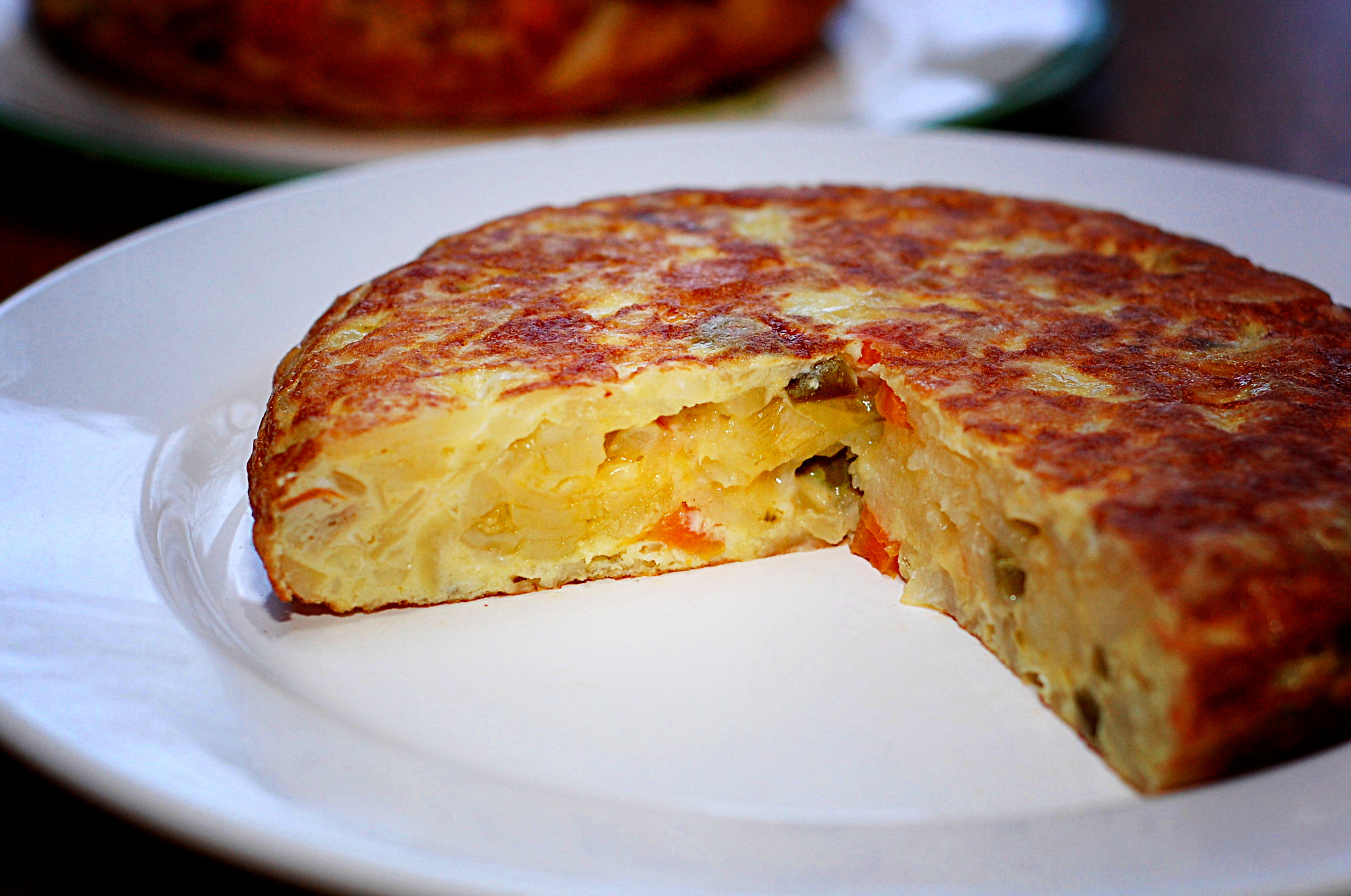
Tortilla Española

AKA Spanish Tortilla

In Spain, the tortillas are not the thin things that we are used to in Phoenix, but rather thick potato quiches.
In Spain, tortillas are not the thin things that we use here in Phoenix, but rather thick potato quiches.

INGREDIENTS

  • 1/4 cup extra-virgin olive oil
  • 1-1/4 pounds waxy potatoes, peeled and thinly sliced
  • 1 medium onion, thinly sliced
  • 8 extra-large eggs
  • Kosher salt and freshly ground black pepper
  • Optional:  Cheese mix: See notes at bottom of this page.

STEP BY STEP

  1. Heat half of your oil in a large skillet till hot, but not smoking.
  2. Add the onion and stir occasionally.  Onion should sweat and soften, but not caramelize.
  3. Gently toss the potatoes in with the onion, seasoning with salt and pepper along the way.
  4. Reduce the heat to medium, and cover.
  5. Simmer – stirring occasionally and adjusting the heat if necessary so that the vegetables do not brown, until the potatoes are tender when pierced with the tip of a parking knife, 15 to 20 minutes.
  6. Meanwhile, beat the eggs with salt and pepper to taste in a large bowl.
  7. Heat the oil in a large cast-iron or nonstick skillet over medium-high until very hot but not smoking.
  8. Gently temper the potatoes and onion into the eggs
  9. Pour the entire thing into the skillet, spreading the potatoes evenly in the pan.
  10. Cook for about 1 minute, just to set the bottom of the egg mixture.
  11. Reduce the heat to medium-low and cook for 20 minutes, or until almost set through.
  12. Carefully flip the tortilla over (invert it onto a plate if you must, then slide it back into the pan, bottom side up) and cook for 5 minutes longer, until set.
  13. Flip out onto a clean plate and allow to rest for 5 minutes.
  14. Serve warm or at room temperature.

NOTE

  • After reducing the heat to medium-low in Step 11, start checking for doneness after about 15 minutes. It may not take the 20 minutes mentioned depending on the pan you use. You don’t want to overcook the eggs or they’ll toughen and become dry.
  • You could, of course, Americanize this just a bit with cheese.  Option 1 is to use a Monterey Jack and cheddar mix.  Option 2 is to grate a nutty Gruyere, Manchego or Parmigiano-Reggiano and toss into the egg and potato mixture. It isn’t traditional but it adds another layer of flavor.
  • Use organic eggs if possible. There is a difference, especially in dishes like this one where eggs are the focal point.
  • Tortilla Española is essentially the national dish of Spain. You can eat it as a tapa, for breakfast, in a bocadillo (sandwich), or for dinner with salad and a bit of jamon. Basically anytime, anywhere. We had a great one at Valdubon and I think it’s because they weren’t afraid to use a lot of olive oil. No fear!

Reprinted from Spain: A Culinary Road Trip by Mario Batali with Gwyneth Paltrow, published by Ecco, an Imprint of HarperCollins Publishers, 2008 with adaptations by Robert (Grandpa) Andrews


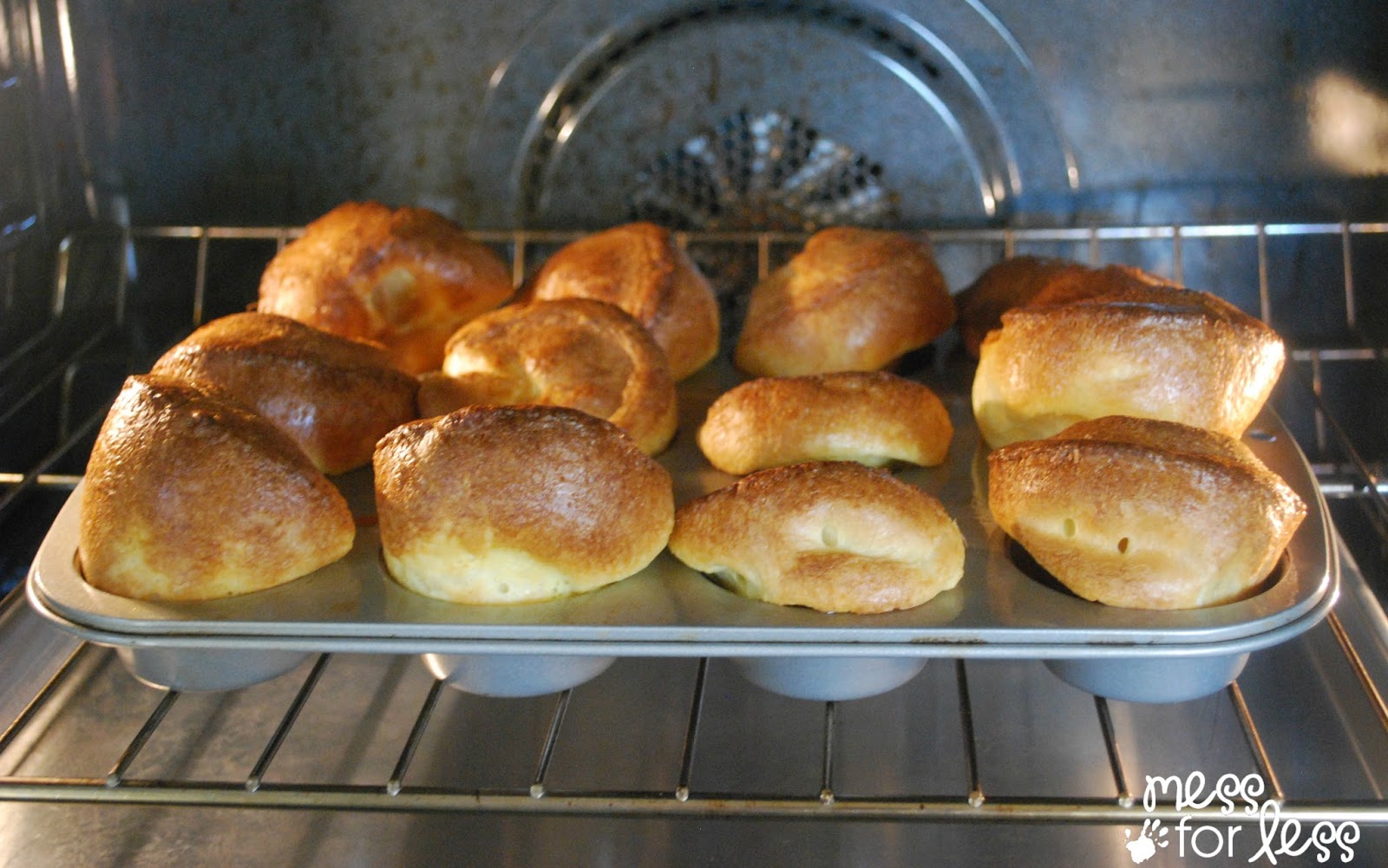
Yorkshire Pudding

In America, these are called simply POPOVERS.

INGREDIENTS – By Measure

  • 2 CU (120 g) of plain flour
  • 2 C (200 ± g) lowfat or whole milk – do not use skim
  • 4 egg yolks (200 ± g)
  • About 1/2 tsp salt, 1/2 tsp pepper
  • 3 TBL beef or chicken roast drippings
    (or 1 chopped piece of bacon in the bottom of the pan)
  • Optional:  1-2 TBL chopped thyme, tarragon or chives

STEP BY STEP

  1. Use a sieve to sift the flour and salt into a bowl.
  2. Create a “well” or a hole in the middle of the flour.
  3. Break the eggs and place them in the hole.
  4. Mix the eggs and flour thoroughly, but do not overmix
  5. Add the milk. Try to make a smooth mixture with everything
  6. Let mixture rest for 60 minutes in the fridge
  7. About 25 minutes before serving, place skillet in a COLD oven
  8. Preheat oven and large cast iron skillet to 450 degrees F or 220 C.
    If using chopped bacon, keep an eye on it so it does not burn, but does completely render
  9. If not using bacon, cover the bottom of a HOT cast iron skillet with 3-4 TBL roast drippings.  Add butter if necessary.
  10. Wait until the oven comes up to heat. CAUTION: Oil will be very hot.
  11. Add the batter to the pan, filling to 3/4 from top.
    It should sizzle as you pour it.
  12. Close door and turn heat down to 425.
  13. Bake for about 25 to 40 minutes minutes – until raised and browned
  14. Let the pudding rise and get golden brown in color, but not black
  15. Remove from oven and serve immediately.
  16. If the pudding sits for a while or if you wait, the pudding may get soggy, and fall in the middle

VARIATIONS

  • see also POPOVERS and “Dutch Baby”
  • Yorkshire pudding is a tradition staple food in British Sunday dinners. It’s mainly served as a side dish, usually served with beef roast or chicken.

Whole Wheat Spaghetti with Kale

INGREDIENTS

  • 1 lb Kale (chopped)
  • 4 strips of bacon (1/2” pieces)
  • 1/2 C fontina cheese
  • 3 cloves garlic (sliced into chips)
  • 2 C Chicken stock
  • Pasta

STEP BY STEP

  1. To prepare Kale, remove thick stem, roll up & slice into ½” ribbons, Float leaves in water basin to wash.
  2. Cut bacon into 1/2” pieces
  3. Cook bacon @ med hi till brown & crispy, put onto paper towel and set aside.
  4. Into rendered fat add, garlic chips, cook till transparent (done).
  5. Add kale, bit by bit, adding a bit of salt w/ each handful to draw out moisture.
  6. After kale has wilted, add chicken stock (1 can plus a splash of water), bring up to simmer & cook 10 minutes covered.
  7. Cook your pasta
  8. Reserve 1 cup pasta water for sauce thinning.
  9. Drain pasta, add fontina cheese or other cheese, add salt & pepper.
  10. Serve w/ sprinkles of bacon & cheese.
  11. Add cut tomatoes or cherry tomatoes for texture.


Whole Wheat Bread

INGREDIENTS

  • 2 C lukewarm water
  • 1 pkg (1 TBL) yeast (w/1 tsp sugar)
  • 1/2 C honey (or ½ cup sugar)
  • 3 TBL oil
  • 1 TBL salt
  • 2 cup wheat flour
  • 2 cup white flour (more for kneading)
  • 2 TBL raw rolled oats

STEP BY STEP

  1. Mix everything together and dump out onto a floured surface
  2. Knead thoroughly on floured surface until smooth, keeping dough as soft as possible.
  3. Keep kneading, and adding more flour until you get a ball that is moist, but not sticky
  4. Place in greased bowls, cover and let rise until double – about 90 minutes.
  5. Shape into loaves, place in greased tin. Let rise until almost double – about 60 minutes.
  6. Bake 400° for 10 min then lower to 325° for 25-30 min.

Makes 2 loaves


From Sally’s Baking Addiction
A great site for new and seasoned bakers
Find it online: https://sallysbakingaddiction.com/whole-wheat-bread/

Success Tips to Keep in Mind

  1. You can make this loaf of bread 100% whole wheat, or replace 1 cup (about 125–130g) of the whole wheat flour with bread flour for a lighter, taller, fluffier loaf. The directions remain the same.
  2. Knead the dough for a long time, at least 8 minutes. If you have a stand mixer, use it for this recipe. This is a heavy whole grain dough, so it requires a good amount of kneading to help produce a more elastic structure.
  3. When kneading, avoid adding too much flour; a slightly tacky and soft dough is OK.
  4. Use an instant-read thermometer to check the internal temperature of the baked bread. This guarantees you won’t under-bake or over-bake the bread. It’s an incredibly helpful baking tool! The bread is done when the center of the loaf is 195–200°F (90–93°C).
  5. If you’re new to working with yeast, please review my Baking with Yeast Guide where I include practical and easy-to-understand answers to many yeast FAQs

Whole Wheat Bread

5 Stars 4 Stars 3 Stars 2 Stars 1 Star 4.9 from 1587 reviews
  • Author: Sally McKenney
  • Prep Time: 4 hours, 30 minutes (includes sponge and rises)
  • Cook Time: 38 minutes
  • Total Time: 5 hours, 10 minutes
  • Yield: 1 loaf

You need just 8 simple ingredients to make this whole wheat sandwich bread. It’s soft yet hearty and oh-so-flavorful, and store-bought sandwich bread just doesn’t compare! You can use 100% whole wheat flour, or you can swap in some bread flour for a taller, fluffier loaf. See recipe Notes for freezing and overnight instructions. You can also reference my Baking with Yeast Guide for answers to common yeast FAQs. 

Ingredients

Sponge

  • 1 cup (240ml) water, warmed to about 110°F (43°C)
  • 1/3 cup (80ml) whole milk, warmed to about 110°F (43°C)
  • 2 and 1/4 teaspoons (7g) active dry or instant yeast (1 standard packet)
  • 2 cups (260g) whole wheat flour (spooned & leveled)

Dough

  • 3 Tablespoons (63g) honey
  • 3 Tablespoons (43g) unsalted butter, softened to room temperature
  • 1 teaspoon fresh lemon juice (or apple cider vinegar)
  • 1 and 1/3 cups (173g) whole wheat flour (spooned & leveled), plus more as needed
  • 1 and 1/4 teaspoons salt
  • optional oat topping: 1 beaten egg white + 1 Tablespoon whole oats

Instructions

    1. Prepare the sponge: In a large bowl or the bowl of your stand mixer, whisk the water, whole milk, and yeast together. Add the 2 cups (260g) flour and stir with a spatula or wooden spoon until a thick batter forms. Cover lightly and allow to double in size at room temperature, about 60–90 minutes. Sometimes this can take up to 2 hours. *I do not recommend a hand mixer for this dough because the dough is too thick and heavy.*
    2. Add the remaining dough ingredients including the honey, butter, lemon juice, remaining flour, and the salt. With a dough hook attachment, or using a spatula or wooden spoon (and some arm muscle!), beat on medium speed/mix until the dough comes together and pulls away from the sides of the bowl, about 3 minutes. If the dough seems too wet to a point where kneading (next step) would be impossible, beat in more flour 1 Tablespoon at a time until you have a workable dough, similar to the photos above. Dough should be soft and a little sticky, but still manageable to knead with lightly floured hands.
    1. Knead the dough: Keep the dough in the mixer and beat for an additional 8–10 full minutes, or knead by hand on a lightly floured surface for 8–10 full minutes. (If you’re new to bread-baking, my How to Knead Dough video tutorial can help here.) If the dough becomes too sticky during the kneading process, add 1 more Tablespoon of flour at a time to make a soft, slightly tacky dough. Do not add more flour than you need; you do not want a dry dough. After kneading, the dough should still feel a little soft. Poke it with your finger—if it slowly bounces back, your dough is ready to rise.
    2. 1st rise: Lightly grease a large bowl with oil or nonstick spray. Place the dough in the bowl, turning it to coat all sides in the oil. Cover the bowl and allow the dough to rise in a relatively warm environment for 1.5–2 hours or until about double in size. (For a tiny reduction in rise time, see my answer to Where Should Dough Rise? in my Baking With Yeast Guide.)
    3. Grease a 9×5-inch loaf pan.
    4. Shape the dough: When the dough is ready, punch it down to release the air. Lightly flour a work surface, your hands, and a rolling pin. Roll the dough out into a large rectangle, about 8×15 inches. It does not have to be perfect—in fact, it will probably be rounded on the edges. That’s ok! Roll it up into an 8-inch log and place in the prepared loaf pan.
    5. 2nd rise: Cover shaped loaf. Allow to rise until it’s about 1 inch above the top of the loaf pan, about 45–60 minutes.
  1. Adjust oven rack to a lower position and preheat oven to 350°F (177°C). It’s best to bake the bread towards the bottom of the oven so the top doesn’t burn.
  2. Optional oat topping: If you want to add the optional oat topping, add it right before baking the bread. With a pastry brush, brush the risen loaf with egg white, then sprinkle the oats on top.
  3. Bake the bread: Bake for 36–40 minutes, or until golden brown on top. If you notice the top browning too quickly, loosely tent the pan with aluminum foil. (I usually add it around the 20-minute mark.) To test for doneness, if you gently tap on the loaf, it should sound hollow. For a more accurate test, the bread is done when an instant-read thermometer reads the center of the loaf as 195–200°F (90–93°C). Remove from the oven and allow bread to cool for a few minutes in the pan on a cooling rack before removing the bread from the pan and slicing. Feel free to let it cool completely before slicing, too.
  4. Cover leftover bread tightly and store at room temperature for up to 1 week.

Notes

    1. Freezing Instructions: Prepare recipe through step 6. Place shaped loaf in a greased 9×5-inch loaf pan or disposable loaf pan, cover tightly, and freeze for up to 3 months. On the day you serve it, let the loaf thaw and rise for about 4–5 hours at room temperature. Bake as directed. You can also freeze the baked bread loaf. Allow the bread to cool completely, then freeze for up to 3 months. Thaw in the refrigerator or at room temperature, then reheat as desired.
    2. Overnight Instructions: Prepare the recipe through step 6. Cover the shaped loaf tightly and refrigerate for up to about 15 hours. At least 3 hours before you need the bread the next day, remove from the refrigerator, keep covered, and allow to rise on the counter for about 1–2 hours before baking. Alternatively, you can let the dough have its 1st rise in the refrigerator overnight. Prepare the dough through step 3, then cover the dough tightly and place in the refrigerator for up to 12 hours. Remove from the refrigerator and allow the dough to fully rise for 2 more hours. Continue with step 5.
    3. Special Tools (affiliate links): Stand Mixer or Large Glass Mixing Bowl with Wooden Spoon or Silicone Spatula | 9×5-inch Loaf Pan | Rolling Pin | Pastry Brush for optional topping | Instant-Read Thermometer | Wire Cooling Rack
    4. Milk: Low-fat or nondairy milk work here, but whole milk produces phenomenal texture and I highly recommend it.
  1. Yeast: I usually use instant yeast. You can use active dry yeast instead, with no changes to the preparation. Rise times will be slightly longer. Reference my Baking With Yeast Guide for answers to common yeast FAQs.
  2. Flour: Make sure your whole wheat flour is fresh. Check the date on the package, and don’t store it uncovered. Whole wheat flour can become rancid if stored for too long, and your bread will taste bitter. You can use all whole wheat flour in this recipe, or substitute 1 cup (130g) of bread flour for a slightly taller, fluffier loaf. You can use 1 cup of bread flour in the sponge in step 1 OR save it for the remaining dough in step 2. If using 1 cup (130g) of bread flour in step 2, you’ll also need the 1/3 cup (43g) of whole wheat flour.
  3. Honey: Honey produced the best tasting bread. In a pinch, you can use regular granulated sugar or brown sugar. But you will miss out on that honey flavor. I have not tested other sweeteners.
  4. Can I shape this into a round boule? No, this dough needs the structure of a loaf pan. Instead, you may like this no-knead seeded oat bread.
  5. Doubling this recipe: For best results, I recommend making two separate batches of dough. This is a big, heavy dough and the sponge will take a very long time to rise, and so will the kneading step. It’s best to make 2 separate doughs.
  6. Whole Wheat Rolls: I recommend my soft whole wheat dinner rolls recipe, or you can try my multigrain bread/rolls recipe instead.
  7. Adapted from Sandwich Bread and Whole Wheat Dinner Rolls

Bread Pudding – COLLECTION

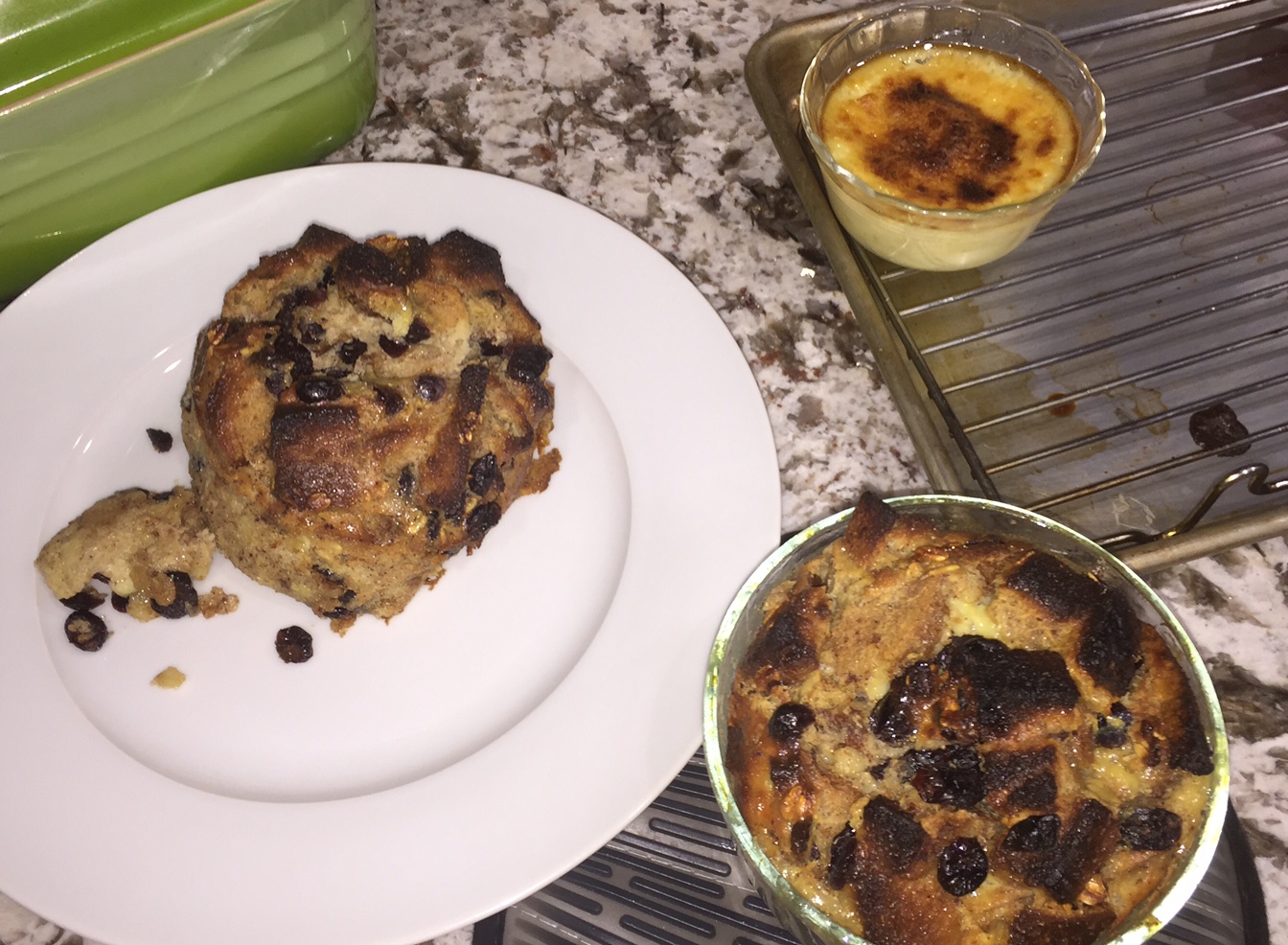
Bread Pudding
A great cold-morning breakfast.

Optional Additions:

  • Brioche
  • browned sausage
  • cheddar or Monterey jack cheese
  • Make ahead, refrigerate overnight, bring to room temp before cooking

Grandpa’s Bread Pudding

Start with Grandpa’s recipe for BASIC CUSTARD, but use brown sugar, not white.

Bread Mixture:  2-3 C challah or brioche, mixed with 1/2 cup raisins, 1 chopped banana, and 1/2 C cottage cheese.

Once you have the custard liquid made, pour it over top of your bread mixture and let rest for 2-8 hours.

OPTIONS:
1 TBL oat bran
1 TBL wheat germ
1-2 oz dark rum or cognac
After Crisco, additionally coat ramekins with fine corn meal

Variations FILLING OPTION: Try combining with sausage, cheese, bell pepper, onion, ham, etc.

BREAD: Don’t use stale bread crumbs, but instead use Fresh hard bread like a baguette torn into rustic small pieces.
Use a firm bread. French Bread, Sourdough, etc.  – DO NOT USE SPONGE BREAD – You can, however use Hawaiian Bread, Brioche or Hallah for a nicely textured bread.

Bake bread crumbs at 350° for about 10 minutes
Cover and soak golden raisins in bourbon over low heat
After 5 minutes at a simmer, drain bourbon into custard

{CAPTION}Immerse bread crumbs gently into custard
Soak cubed bread crumbs in custard mixture for 20-30 minutes
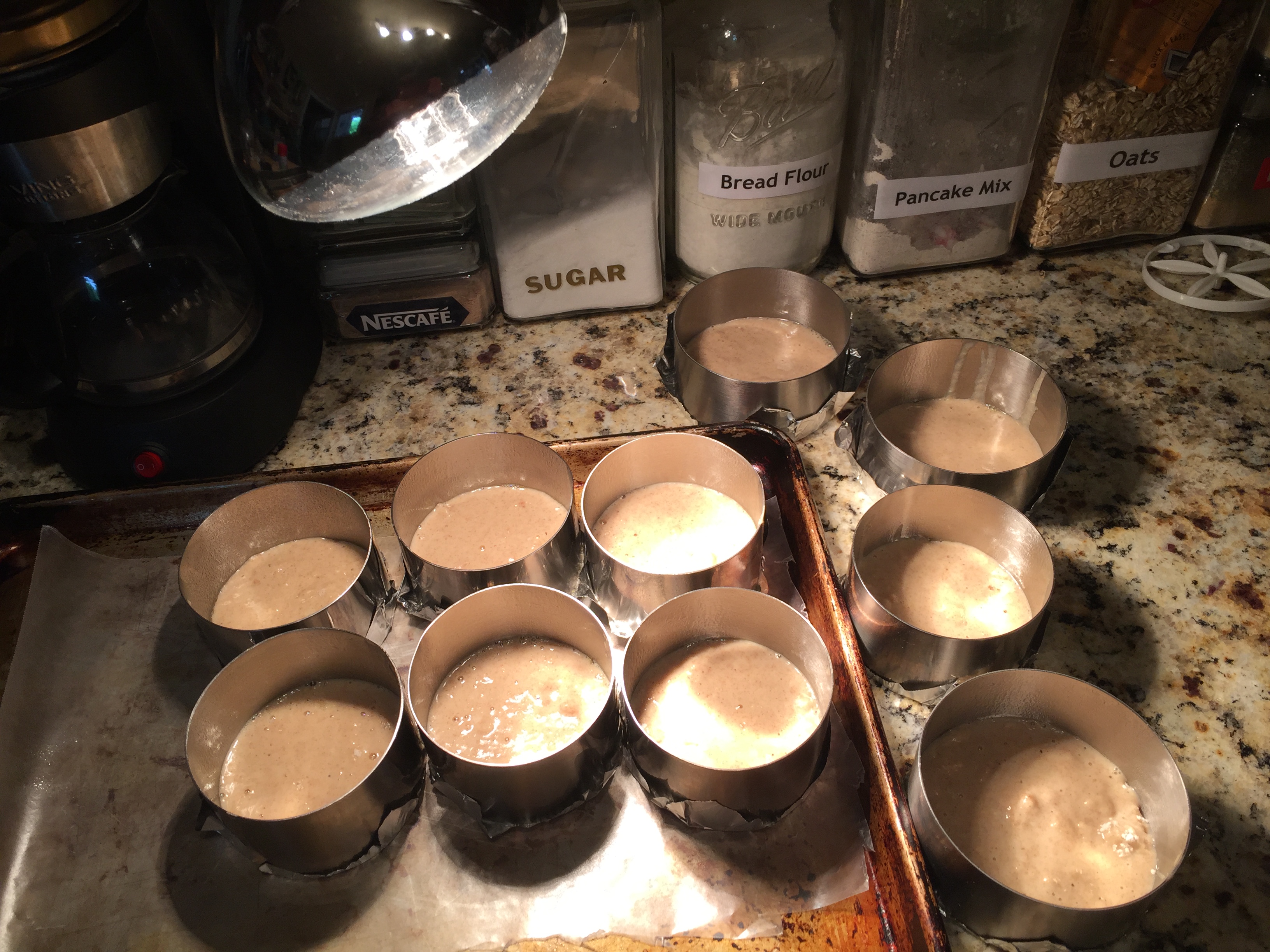
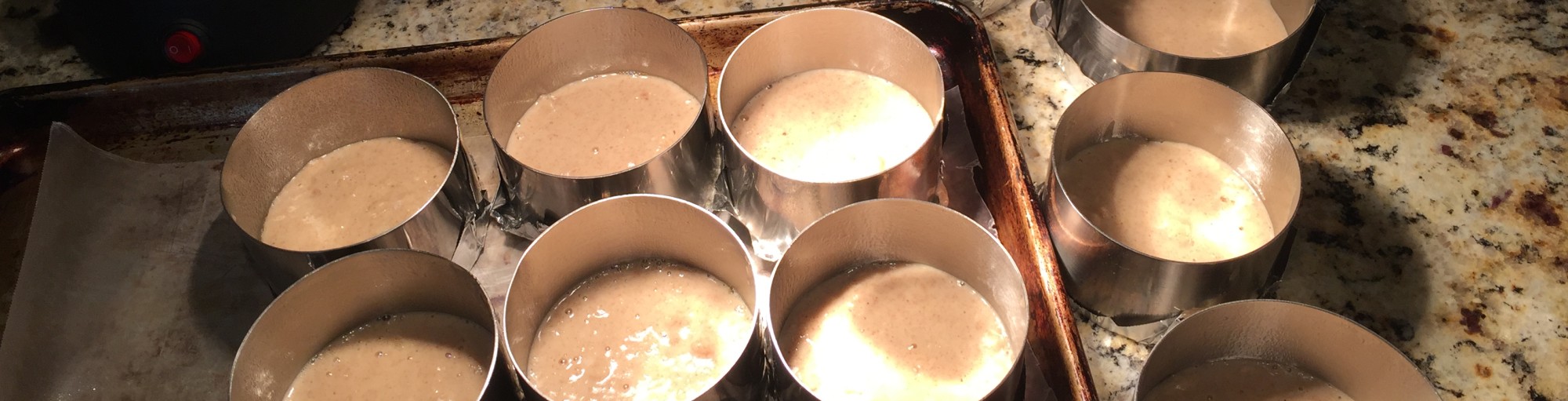
Using slotted spoon, put bread crumbs evenly into lightly greased individual ramekins or baking dish

TOPPING OPTION: Toss bread crumbs with Parmesan cheese and butter.
Top bread pudding with this topping, then cook 5 minutes more.

Fill up with bread, then add remaining liquid
Bake 45 minutes at 350
– For large baking dish, increase this time to 50 minutes
. Cover with foil for first half hour
Meanwhile prepare topping. After removing foil, sprinkle toping and then continue cooking.

Remove and let set on counter for about five minutes
Run spatula around the edges

Topping
Pieces of butter
Add sugar and cinnamon
Cut together with pastry cutter

Basic Custard

IRC Bread Pudding

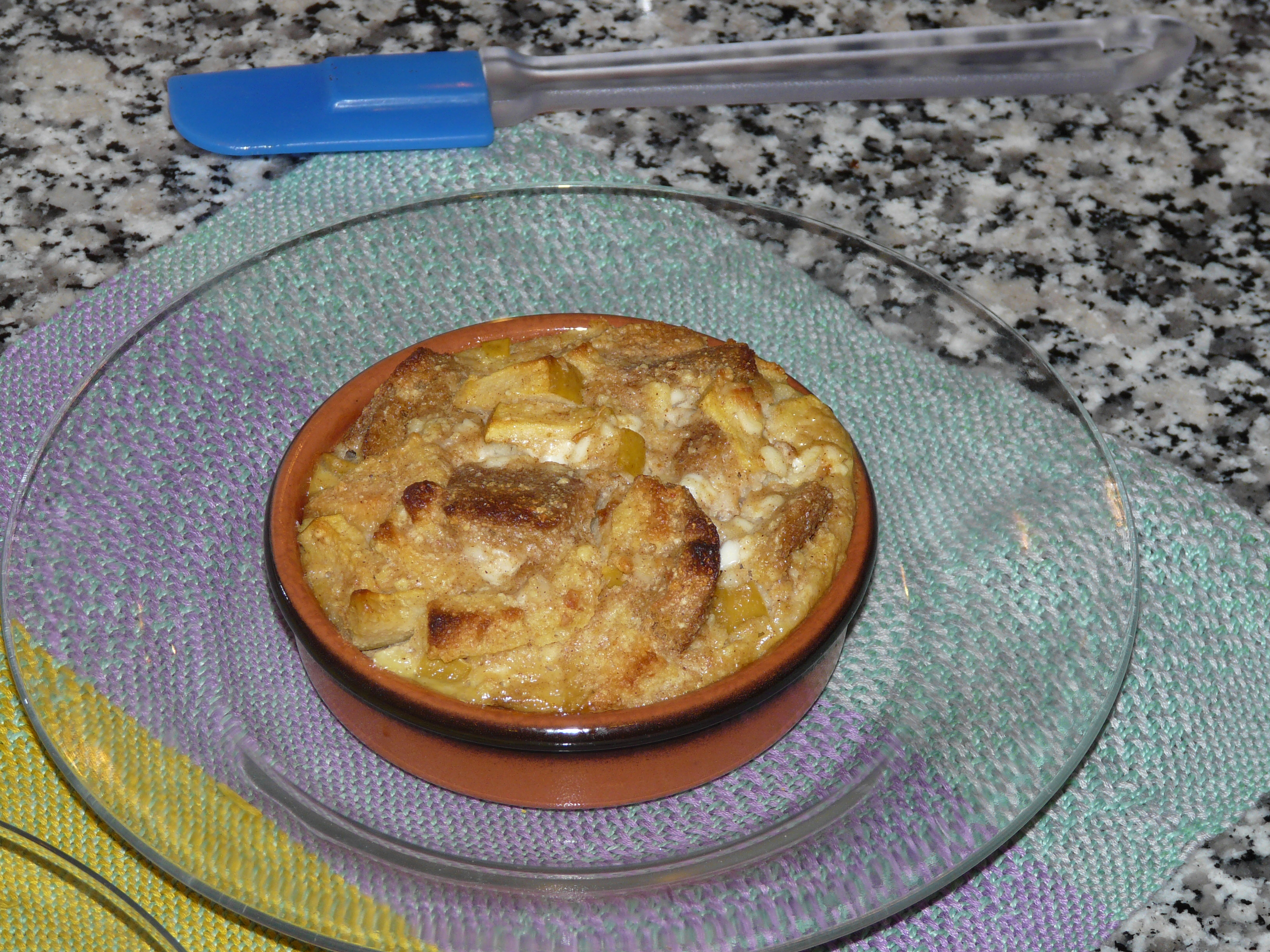
Apple Bread Pudding

Bread Pudding – another idea

Savory Corn Bread Pudding


Drop Biscuits

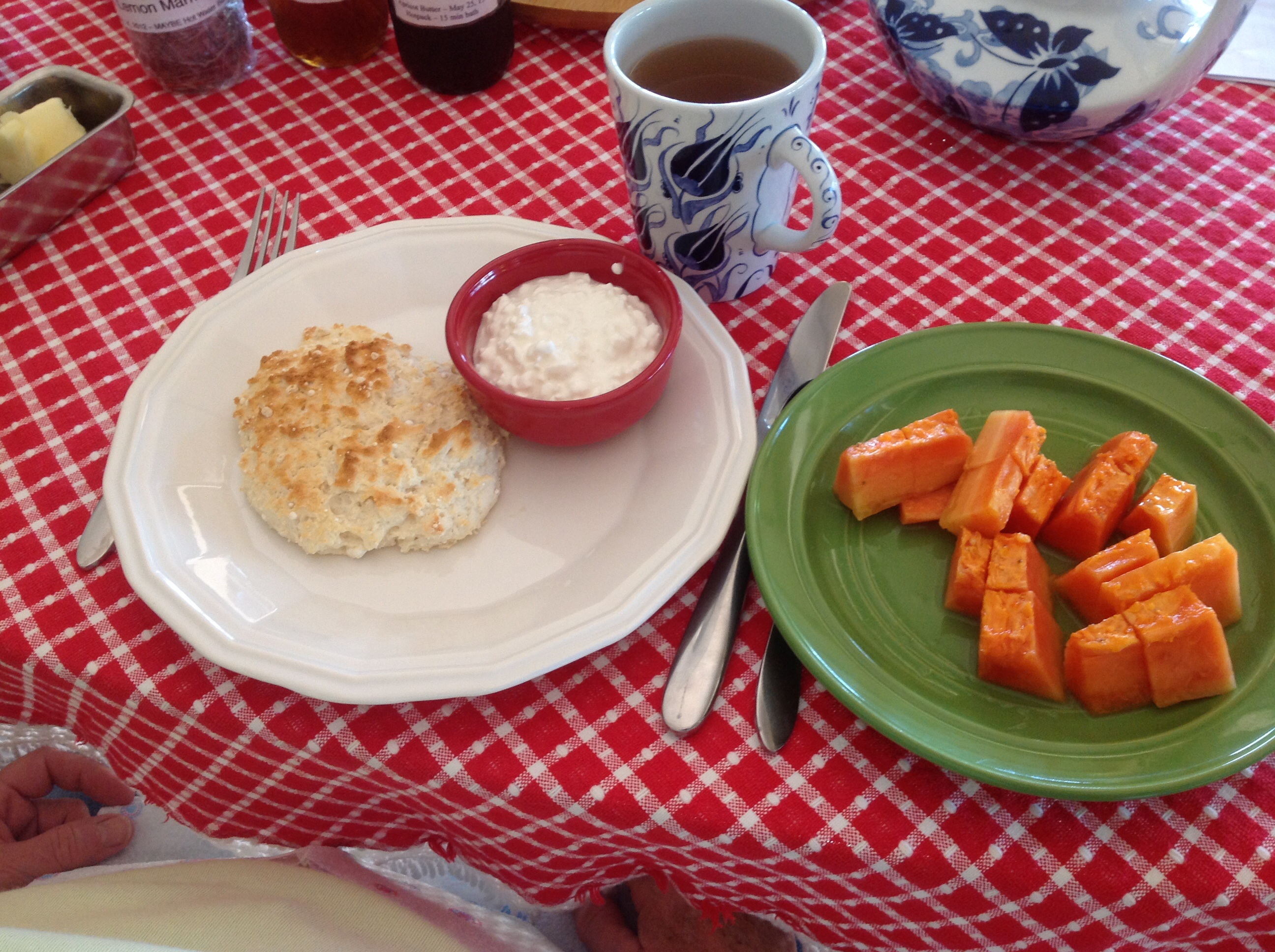
Drop biscuits are just about the easiest and best thing that you can serve with breakfast.

Here is the recipe from the Bisquick box, which is just about perfect. I do like, however, to sometimes add shredded cheddar cheese or chives.

Easy for Yesica to make for Eliseo.

Biscuits and Gravy Recipe

Basic Drop Biscuits

INGREDIENTS & STEP BY STEP

  1. 1 CU Bisquick
  2. 1/3 CU milk
  3. Mix and drop onto ungreased baking pan
  4. Bake at 400 for about 12-15 minutes

For Corn Dogs add 2 TBL corn meal to the above recipe. Roll dough flat, cut into wedges, wrap around hot dogs.  Bake as directed above.

Garlic Cheese Drop Biscuits

INGREDIENTS

  • 2 cups Original Bisquick® mix
  • 2/3 cup milk
  • 1/2 cup shredded Cheddar cheese (2 ounces)
  • 2 tablespoons butter or margarine
  • 1/8 teaspoon garlic powder

STEP BY STEP

  1. Heat oven to 450ºF.
  2. Stir Bisquick mix, milk and cheese until soft dough forms.
  3. Drop dough by 9 spoonfuls onto ungreased cookie sheet.
  4. Bake 12-15 minutes or until golden brown.
  5. Stir together butter and garlic powder; brush over warm biscuits.

Grandpa’s Biscuits

INGREDIENTS

  • 1 CU Bisquick
  • 2 stalks of chives – diced
  • 1/4 CU softened butter
  • (mix above lightly together)
  • 1/4 CU Sour Cream
  • 1/2 CU Buttermilk

STEP BY STEP

  1. Preheat oven to 450 degrees F
  2. Combine (fold) all gently until soft and sticky – DO NOT OVER MIX
    – If too sticky or wet, add more Bisquick
    – If too dry, add ONE tablespoon of milk
  3. Lightly flower your baking surface (preferably a baking stone)
  4. For drop biscuits
    – Pull off golf-ball sized chunks and let drop on baking surfaceBiscuit
    – You can moush into shape, but do not roll.  They should be rustic.
  5. For more traditional biscuits
    Pull off smaller than golf-ball sized chunks and roll lightly into balls
    – Flatten slightly, then place onto baking surface
  6. Brush top of bottom later lightly with butter
  7. Roll another and place it on top of the first layer
  8. Press them together
  9. Bake at 400º for 12-15 minutes or until golden brown

Drop Biscuits from Scratch

INGREDIENTS

  • 2 CU All Purpose Flour
  • 1 TBL Baking Powder
  • 1 TBL Sugar
  • 1 tsp Salt
  • 1 tsp cream of tartar
    (sift above five together)
  • 1/4 CU cold butter
  • 1/2 C cold shortening
    (cut above into dry ingredients)
  • 1/2 CU Sour Cream
  • 1/2 CU Buttermilk

STEP BY STEP

  1. Sift together dry ingredients
  2. In separate bowl, mix wet ingredients
  3. Cut in shortening and butter into dry ingredients
  4. Combine (fold) all together gently – DO NOT OVER MIX
  5. Drop small chunks onto baking stone
  6. Bake @ 350-400º degrees for about 12-15 minutes


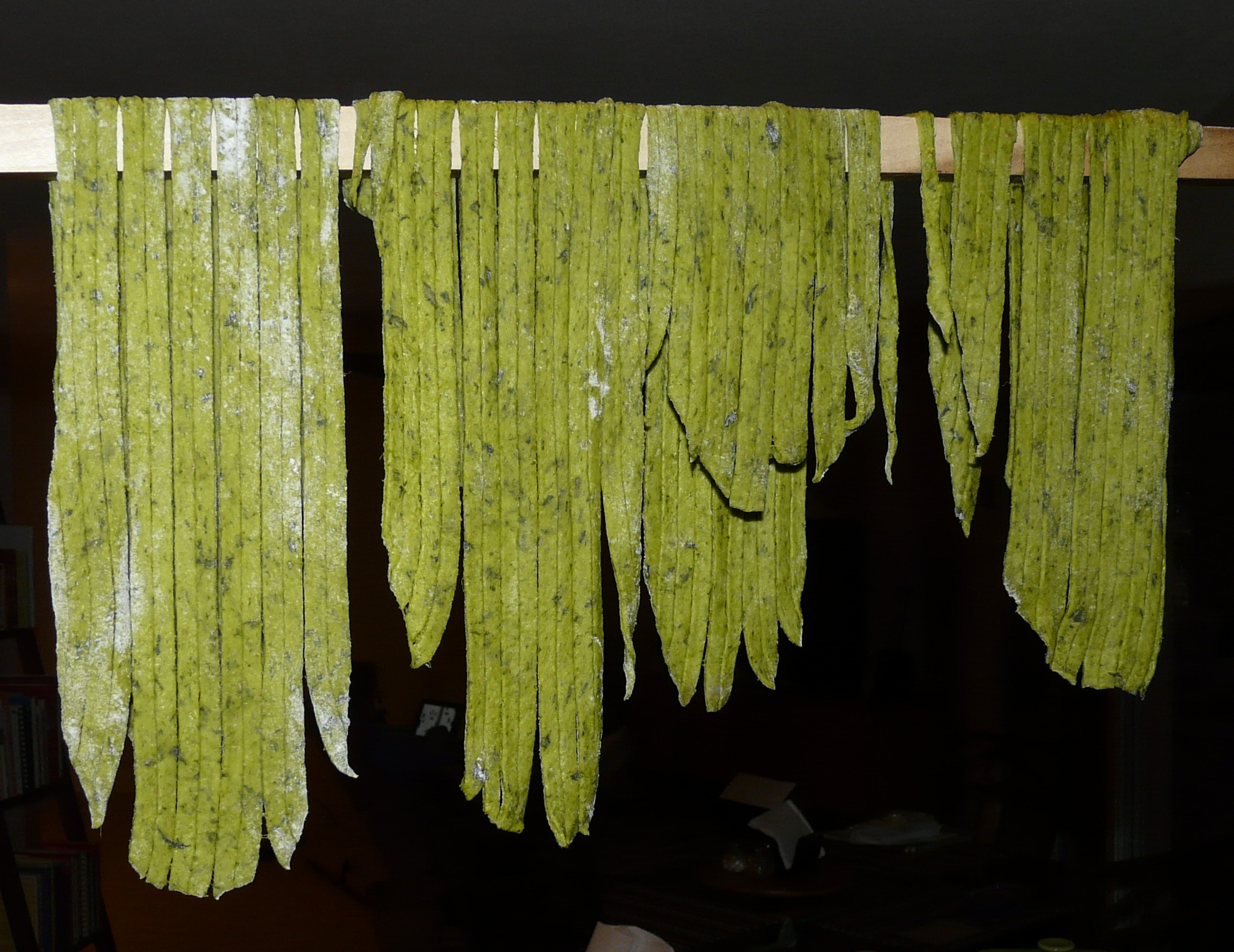
Kale and Mustard Greens Pasta Noodles

INGREDIENTS

  • Large handful of Kale or minzuna.
  • Large handful of mustard greens, collard greens, or spinach
  • 2 C White AP Flour
  • 1/2 C flax or whole wheat flour
  • 3 yolks plus 1 whole egg
  • 1/2 tsp salt

STEP BY STEP

Noodles can be cut to any width
  1. Steam greens
  2. Chop the steamed greens small
  3. Squeeze all moisture from greens – Press between paper towels and newspaper
  4. Chop again to make sure they are very fine
  5. Sift together All-Purpose Flour, flax or whole wheat flour and salt
  6. Create a “well” in the flours
  7. Crack and beat the eggs into the well and start to mix
  8. Add water 1 tsp at a time (if necessary) to allow dough ball to come together
  9. Wrap in plastic and let contents meld for 30 minutes
  10. Using a rolling pin on a floured surface, roll, flip, roll, flip, etc
    Ideally, if you have a pasta roller, start on setting 5 and go down to setting 2.
  11. Once desired thickness is obtained use pasta cutter or pizza cutter and a ruler to cut strips
  12. Hang out to dry for 30 minutes before cooking
  13. Cook only until noodles are softened. Takes HALF the time as dried pasta.
  14. Toss with olive oil and cheese

This recipe was published in Grandpa’s Corner – IRC Volume 1, Issue 5

International Rescue Committee – Gila Farms Cooperative Project

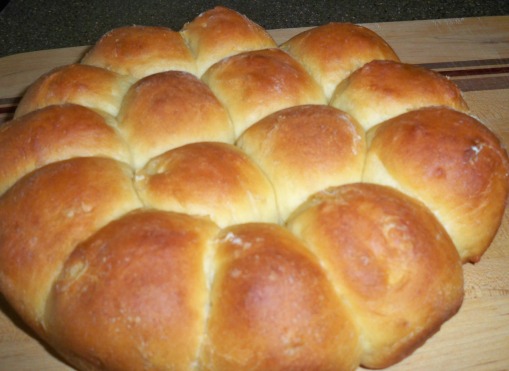
Parker House Rolls

parkerINGREDIENTS TO MAKE ABOUT 24 ROLLS

HALF RECIPES ARE SHOWN IN PARENTHESIS

    • STEP ONE – Mix and proof
  • 1/2 C warm water
  • 1 pkg yeast ( or 1 TBL )
  • 2 TBL honey
    (HALF: 1/4 C, 2 tsp, 1 TBL)

    • STEP TWO – Heat to scalding
  • 1/2 C milk
  • 5 TBL butter
  • 2 tsp salt
  • 3 TBL sugar
    (HALF:  1/4 C, 3 TBL, 1 tsp, 2 TBL)

    • STEP THREE – Mix in glass bowl
  • 3 eggs, beaten
  • 1/4 milk powder (ideally buttermilk powder)
  • 1/4 C shortening
  • OPT: 1/2 C sourdough starter
    (HALF:  2 eggs, 2 TBL powder, 2 TBL shortening,1/4 C starter)

    • STEP FOUR – Create dough-
  • 2 C AP flour (or half AP / half wheat flour)
  • More flour if needed to make the dough not too sticky
  • Reserve 2 C more AP flour
    (HALF:  1 C flour, and add more as necessary)

STEP BY STEP

    1. Mix Step One ingredients
      • Let rise for about ten minutes
    2. Meanwhile, put Step Two ingredients into sauce pan, and bring to a high simmer
      • Set pan aside to cool to just “warm”
    3. Mix Step Three ingredients in a glass bowl
    4. Add warm milk mixture
    5. Next mix the yeast mixture into the milk mixture
    6. Put into stand mixer, or use your bowl
    7. Mix, and add flour until it starts to form a dough ball
    8. Then knead on a floured surface
    9. Add more flour to your floured surface  if necessary until the dough ball becomes only a little bit sticky
    10. Transfer to a greased bowl and lightly oil the top of the ball
    11. Let rise to twice the bulk  – about 30 minutes
      • IDEALLY:  Move to the fridge and let rise at least 8 hours.  Even overnight is OK
    12. Flatten with your fingers on a floured surface.  Kind of flat, but still about 3/4 inch thick.
    13. Cut into disks
    14. Place on baking sheet or pie pan with sides not quite touching
    15. Brush the top with butter
    16. Cover and let rise again for 1/2 to 1 hour in warm place.
    17. Bake 12-15 minutes in 400 degree oven.
      . . . Another source says 350° for 30 minutes
      . . . Just watch closely and remove when browned
    18. Brush top with more melted butter
    19. OPT:  Sprinkle with a bit of coarse sea salt

Very Thin Tortillas – Mu Shu

Authentic Mu Shu Pancakes

I don’t like the thicker tortillas that you find in the grocery store.  Here is a fairly simple way to make thin ones.  These also work well for Mu Shu pancakes.

INGREDIENTS

  • 1 cup sifted flour
  • 1/2 cup  very hot water
  • Scant salt

STEP BY STEP

  1. Mix flour and salt, then add extremely hot water
    What I do is put flour and salt in a food processor, and then drizzle in hot water until it starts to come together.
    The hot water breaks down the gluten so that they roll easier and flatter
  2. After adding the boiled water, drizzle in cold water until dough comes together.
  3. Mix adjusting water until dough is like playdough
  4. Wrap in plastic and let set for 30 minutes
  5. Prepare a medium-hot skillet – Cast iron is my preference – NO OIL
  6. Roll a log, and then cut in half, then in half again, then in thirds – You will have 12 pieces
  7. Roll into balls, and then flatten into thick disks – hockey pucks
  8. Brush sesame oil onto the top of HALF of them
  9. Stack two disks (oil in between) and roll out until about 7 or 8 inches in diameter
  10. Put a pair into a non-greased skillet on 350-400º for 30 seconds
  11. When the edges start to become translucent (about 30 seconds) flip the pancakes as a pair
  12. Cook the second side for about 30 more seconds
  13. Flip the two together and cook the first side again for only 10-20 seconds more
  14. Remove the pancakes to cool just a little bit, then separate
  15. See tips below on keeping them from drying out

To keep Mu Shu Pancakes from Drying Out

  1. Place finished pancakes in shallow covered bowl – like a glass pie pan
  2. Put microwave-heated wet cloth at the bottom of the bowl
  3. Put a plate on top of the cloth so the pancakes do not become soggy
  4. Cooked side always goes up.
  5. Put a pan lid on top of the bowl to keep the moisture in.


Mu Shu Pancakes – Video

Here is a video that shows how to roll the pancakes together. It is kind of hard to visualize above.  They fold the pancakes into quarters.  Although that is very common, I don’t like that because they tend to stick together that way.

Mu Shu Crepe Pancakes

INGREDIENTS

  • 3 TBL melted butter
  • 1 C whole milk
  • 1/2 C flour
  • 1/2 tsp salt
  • 2 eggs

STEP BY STEP

  1. Pulse together flour, salt, eggs and butter
  2. Add milk, and pulse just to mix
  3. Strain using a fairly coarse strainer
  4. Let batter rest for 30 minutes to let the glutens relax
  5. Cook in buttered crepe pan until cooked, but not browned
  6. Stack on plate to store and serve

Finish on a floured surface. If you have a scale, 120 – 130 mg ball of dough is perfect for pancakes. Roll balls, then cover and set them aside for 30 minutes

Po’ Boy Sandwich Roll

This creates a nice soft bollito that is great for making a po’ boy.

INGREDIENTS

  • 1 TBL dry yeast
  • 1 TBL Nonfat Dry Milk
  • 1/2 TBL Sugar
  • 1 tsp Salt
  • 2 C AP flour (I plan to try swapping 1 Cup of cake flour next time)
  • 1 C Hot Water (120-130 F)
  • 1/2 TBL Butter
  • 1/2 TBL cold water

STEP BY STEP

  1. Mix together 1 Cups flour, yeast, dry milk, sugar and salt
  2. Pour in the hot water and butter, mix well
  3. Add remaining flour 1/2 cup at a time. Switch to hook near the end of flour
  4. Add additional flour 1 TBL at a time to get to an elastic ball that is not TOO sticky, but better sticky than too dry.
  5. Knead on medium speed 2 for 10 minutes
  6. Turn dough out onto floured surface and knead with your hands, folding over and over until it is NOT sticky, and dough springs back when you push a finger into it.
  7. Shape into a ball, oil lightly, and place in large glass bowl at least 3x the size of the ball.
  8. Let rise until doubled in size – about 1 hour
  9. Turn out onto a lightly floured surface. Knead briefly to allow large bubbles to escape.
  10. Place pan of water in the oven
  11. Start oven preheating to 350º
  12. Divide into 2 pieces, shape into two torpedoes, and cover loosely with saran and let rise for another 60 minutes on top of the stove
    The dough should double easily in 45 min
  13. Brush dough with cold water, slash across the top and bake for 40 Minutes
  14. Rotate half way through for even color – do not over-bake
  15. Cool on a rack


Grandma’s Spinach Pasta

Grandma LOVES spinach pasta. This recipe was designed to make quick, but good, spinach pasta using a Kitchen Aid, and will make a total of about eight servings. We’ve also substituted Collard Greens and Kale with excellent results. Since I created this recipe though, I found a great source of spinach pasta at Amazon.com. CLICK HERE to see what I buy these days. Even Grandpa takes a quality shortcut now and then.

pasta

INGREDIENTS

  • 4 C AP Flour
  • 1 block froezen spinach (drained, chopped and squeezed)
  • 3 eggs
  • 1 tsp salt
  • 1/2 C Flax
  • 1/2 C Whole Wheat Flour
  • 1/2 C water
  • 1/4 C EVOO

STEP BY STEP

  1. Mix until like Playdough
    Add a spoonful of water or a spoonful of flour to adjust if necessary
  2. Cut into four pieces
  3. Roll into skinny long rope – about 12 inches long
  4. Roll to about 1/4 inch with rolling pin
  5. Put into pasta roller at 1 for one pass
  6. Fond and repeat on 1 about four more times
  7. Return into pasta roller at 3 for three more passes
    NOTE: The continued rolls will improve the consistency of the resulting pasta
  8. Put through pasta cutter, controlling the strands as they come out
  9. Hang over board or broom handle for 20-30 minutes in four separate groups
  10. Take each group and divide again into 4-8 groups and wind VERY LOOSELY into nests
  11. Set aside to dry for 24 hours before bagging and storing
    Make sure they dry out before storing or they will mold
  12. Will keep about two weeks.  Four in the refrigerator.
HTML Snippets Powered By : XYZScripts.com