Basic Ceviche

This is a very easy ceviche recipe that you can do as a side dish, an appetizer, or even an entire meal. We made this with our friend Cinthia while living in Velez-Malaga, Spain.  Ceviche is very flexible as long as your ingredients are extremely fresh.  Below is a good video from AllRecipes about ceviche.

INGREDIENTS

  • This recipe must be made at least 2 hours ahead of time – 4 hours is better
    PROTEINS
  • 1-2 LB FRESH  Mahi (Tuna) or other delicate white fish
    – cut into 1/4 – 1/2 inch pieces
    – You can also use Rock Fish, Sea Bream, Grouper, Seabass, Halibut, Talapia, Cod or Red Snapper – cut thinly and blanched 30 seconds
    – DO NOT use swordfish or tuna, as these are long-lived fish and are more likely to have parasites
  • Scallops – blanched*  20-30 seconds
  • Shrimp – blanched*  20-30 seconds
  • Crab – blanched* 20-30 seconds
  • Squid or Octopus – blanched* 20-30 seconds
    * Blanched means that you plunge it into boiling water for about 30 seconds, and then remove it to an ice bath to stop the cooking.
    REQUIRED VEGETABLES and LIQUIDS
  • One Lemon and one lime – zest and juice
  • 1 C FRESH real lime juice (this is because the acidity is well-controlled)
  • 1 TBL tomato juice or green tomato
  • Cucumber – Small cubes
  • Roma Tomato – Deseeded and chopped fairly small
  • 1/2 red onion – Chopped fairly large – blanched 30 seconds
  • Cilantro – Rough chopped
  • Jalapeño or Serrano – minced (hotter: habañero)
  • Chives – Cut into 1/4 inch strips
  • 1 tsp salt
  • EVOO
  • Additions:  Red onion slivers, Passion Fruit, Papaya, Pineapple, Mango, Kumquat, Plums,
    OPTIONAL INGREDIENTS
  • Spice it up with a squirt of Siracha
  • Radish
  • An easy option is to buy a good pico de gallo and use in place of the vegetables listed above.

SELECTING THE RIGHT FISH

CLICK HERE FOR TIPS ON BUYING A FRESH FISH

STEP BY STEP

  1. Cut fish into 3/4 – 1 inch pieces
  2. Place fish pieces in a glass bowl
  3. Blanche all raw seafood for no more than 30 seconds, then plunge into ice water to stop the cooking process
  4. 1/2 fresh squeezed lime juice – enough to cover
  5. Sprinkle with a bit of salt and set aside for 10-20 minutes
  6. Dry Pack Scallops are another good thing to use in your ceviche.
     – – – To find out why Dry Pack are better than Wet Pack,  CLICK HERE.
  7. Optional: Plunge shrimp (deveined) and other seafood into boiling water for 30 seconds, then into ice water.  I actually prefer this step.
  8. In a second large mixing bowl, combine the following:
  9. Cut 1 red onion into very thin julienne strips
  10. 2-3 large tomatoes – thinly slice tomato flesh, discarding seeds and juice
  11. Finely chop 2-4 TBL  EACH – Depending on taste
    – Optionally: strips of pepper – mild or hot
    – green olives – quartered
    – parsley – chopped
    – cilantro – some chopped, some fairly whole
    – celery pieces (1 stalk, ribs removed before cutting)
    2 TBL EACH
    – ketchup
    – EVOO (emulsified with whisk)
    – Worcestershire sauce
    – oregano and salt to taste
    – minced garlic
  12. Combine all of the above in the glass bowl and refrigerate for AT LEAST 2 hours, but for as long as five.  Not longer though, they will become chewy.
  13. Serve topped with slices of avocado, cubed papaya or mango, salt, pepper, and chopped cilantro

If you want to see a ceviche recipe in action, use the below video.
Lots about Sushi: with VIDEO

Sushi Toolbox

  • Dark soy sauce
  • Rice wine vinegar
  • Short grain rice
  • Nori – small sealed packages
  • Rice Spatula
  • Rolling Mats
  • Wasabi paste or powder
  • Pickled Ginger (Gari) – white (homemade) or pink

Sushi Rice

      • 2 C short grain rice (meshi)
        • AKA Sushi Rice, Glutinous Rice or Pearl Rice
          Very starchy and sticky OR if you can’t find any, add 1 TBL cornstarch to your rice
        • Rinse three times
      • 2 C water
        MIX BELOW – Use this after the rice has finished cooking
      • 3 T rice vinegar or Sushi seasoning vinegar (heated in microwave)
      • 1 TBL mirin
      • 2 TBL sugar
      • 2 tsp salt

STEP BY STEP

      1. Measure your amount of rice while it is dry
      2. Wash rice in a bowl of cold water
      3. Strain
      4. Repeat Steps 2 and 3 until water runs clear (total three times is usually OK)
      5. Mix pre-measured amounts of rice and water and let set for 30 minutes
      6. Cook rice according to directions
        OR Put rice into boiling water, simmer 15 minutes
      7. Remove from heat, cover and let rest 10 minutes
      8. Meanwhile, mix vinegar, mirin, sugar and salt
      9. Poke holes/wells into your rice with a spoon
      10. Pour over a wooden paddle onto rice … drizzle
      11. GENTLY fold cooked rice into vinegar mixture
        Stir around, don’t beat (fan with paper plate to help it cool more quickly)
      12. Keep your hands wetted
      13. Cover with plastic and let cool about 30 minutes on the counter.  Do not refrigerate

Rolling Tips and Tricks

      • Nori (海苔) is the Japanese name for edible seaweed and is frequently used for sushi across the world.  It is usually just referred to as seaweed.
      • Seaweed . Smooth and shiny goes toward the outside.  Rough side goes to the inside against the rice.
      • Use plastic wrap as a covering for your sushi mat
      • Press rice flat onto plastic
      • Dress with slices of cucumber, avocado, shredded imitation krab meat
      • Do not overfill
      • Tuck and roll
      • Dip knife and hands in water
      • Cut in half three times for 8 pieces or half, then thirds for six pieces.

Sushi Filling Options

  • Salmon
  • Shrimp
  • Tuna (mahi mahi)
  • Red snapper
  • Spanish mackerel
  • Scallop
  • Mushrooms
  • Avocado
  • Scallion
  • Sesame Seed
  • Caviar
  • Un
  • Fennel Leaves
  • … and actually whatever you want to wrap into it

Types of Sushi

      • Chirashizushi: “scattered sushi” – Sushi plus other things over rice
      • Oshizushi: “pressed sushi”. Also known as hako-sushi which means “box sushi”
      • Nigirizushi: “hand-pressed sushi” – Frequently like a salmon roll (See Nigiri below)
      • Makizushi – meaning “rolled sushi” – What most Americans visualize when they hear sushi
        Generally wrapped in Nori (seaweed), but can occasionally be wrapped in a thin omelette, soy paper, cucumber, or shsiso (perilla) leaves.

        • Hosomaki: “thin roll” – rice on inside, nori on the outside
        • Chumaki: “medium roll” – rice on inside, nori on the outside
        • Futomaki: “thick roll” – rice on inside, nori on the outside
        • Uramaki: “inside-out roll” – rice on outside, nori on the inside
        • Temaki: “hand roll” – cone-shaped roll
        • Tekkamaki:  Cut tuna into sticks, put nori on mat rough side up, put down rice then tuna

Nigiri

  1. Shape sushi rice into a bite-sized football, but don’t compress
  2. Schmear wasabi on fish, krab or shrimp
  3. Put wasabi against rice and squeeze only to merge all ingredients.  Do not over-compress

Westernized Sushi

        • Dragon Roll:  Eel, crab, cucumber with avocado on the outside
        • Tiger Roll:  Avocado, shrimp tempura, cucumber
        • California Roll:  Rice down on plastic covered mat, then nori, avocado, crab, cucumber. Roll wrap in rice sprinkled with sesame seeds
        • Rainbow Roll: An assortment of fish and avocado on top of a California Roll
        • Spider Roll: Soft-shell crab, cucumber, sprouts (or lettuce, roe, or avocado) and sometimes spicy mayo
        • Spicy Tuna Roll: Rice, tuna, mayo, and chili sauce wrapped in nori
        • Philadelphia Roll: Salmon, avocado, asparagus, and cream cheese wrapped in rice
        • Dynamite Roll: Yellowtail and/or prawn tempura, bean sprouts, carrots, avocado, cucumber, chili, and spicy mayonnaise
        • Teriyaki Roll: Nori, chicken, teriyaki sauce wrapped in rice
        • Boston Roll: Crab, salmon, and scallion wrapped in rice
        • Alaska Roll: Asparagus, and avocado wrapped in rice, topped with Smoked salmon
        • Scallop Volcano Roll: California roll topped with a baked scallop and mushrooms
        • Summer Roll: Sashimi and veggies inside wrapped in rice paper
        • Spicy Tataki Roll: Spicy tuna inside. Sashimi tuna and avocado outside.
        • Eel Avocado Roll: Rice, avocado, and eel wrapped in nori.  Topped with avocado
        • Seattle Roll: Cucumber, avocado, raw salmon, and smoked salmon wrapped in rice
        • Firecracker Roll:  Spicy scallop inside. Tuna and avocado outside
        • Yellowtail Roll: Yellowtail and scallion California roll.
        • Hawaiian Roll: Garlic and albacore inside. Wrapped in rice with avocado and albacore on top.
        • Mango Roll: Avocado, crab meat, tempura shrimp wrapped in rice, topped with mango slices, and creamy mango paste.
        • Classic Roll: Tuna, avocado, and cucumber wrapped in rice and nori
        • Futomaki Roll: Crab, egg, and vegetables wrapped in rice and nori

See www.Ranker.com for a list three times longer than the one above.

Extra Tips and Information

      • If you are going out for sushi, use these tips:
        • Smell should not be overly “fishy”
        • Weekends are when the fresh fish come in
        • Ask about source of their sushi
      • Japanese style sushi has the rice on inside
      • American style sushi has the rice in outside
      • Sashimi is considered by many to be a type of sushi made with raw high-quality fish or raw meat.  It is actually a completely different dish.
      • Sushi should be freshly but quickly killed, usually with a knife point to sever the brain stem
      • Bleeding fish in ice water immediately after killing keeps the meat clear
      • Wait several hours for rigor to start for a firmer flesh
      • Visit All About Sushi Guide for more information

Jacques Pepin Sushi Tray

      • Jacques Pepin made a sushi platter by putting down a layer of rice, and then cubes of salmon, cubes of tuna, small bay scallops, chopped black mushrooms, pieces of avocado (tossed in lemon juice to prevent browning), diced scallion, sesame seeds, caviar, uni, and fennel leaves.  He served wasabi and soy in a cup.  It was WAY easier than formal pieces of sushi and looked just beautiful.

Common Types of Sashimi

      • Salmon (Sake)
      • Squid (Ika)
      • Shrimp (Ebi)
      • Tuna (Maguro)
      • Mackeral (Saba)
      • Horse Mackeral (Aji)
      • Octopus (Tako) – Usually blanched or cooked
      • Whale Meat (Gei-niku)
      • Sea Urchin (Uni)
      • Scallop (Hotate-gai)
      • Puffer Fish (Fugu)
      • Yellowtail (Hamachi)
      • Fatty Tuna (Otoro)

      • You may also view my page for Dungeness Crab Cakes which was filmed at a class aboard the MS Rotterdam.
      • The below video was taken at the Phoenix Eats Trade Show, so has very little verbal description, but offers some very good video for rolling sushi.

Video from Kikoman

Bananas Foster: VIDEO

Thai Crab Salad Rolls

Sake Poached Scallops with Ginger

Bananas Foster

Food and Wine built a cooking class kitchen aboard the MS Rotterdam. With a class of nine, we cooked Thai Crab Salad Rolls, Sake Poached Scallops with Ginger and Bananas Foster. The results were incredible. Here is a summary of the 90 minute class.

This page has been repeated three times, for each of the above recipes.

This is a 45 minute video of a cooking class given aboard the Holland America MS Rotterdam on our way back from Spain.

Sake Poached Scallops with Ginger: VIDEO

Holland America Cooking Class

Thai Crab Salad Rolls

Sake Poached Scallops with Ginger

Bananas Foster

Food and Wine built a cooking class kitchen aboard the MS Rotterdam. With a class of nine, we cooked Thai Crab Salad Rolls, Sake Poached Scallops with Ginger and Bananas Foster. The results were incredible. Here is a summary of the 90 minute class.

This page has been repeated three times, for each of the above recipes.

This is a 45 minute video of a cooking class given aboard the Holland America MS Rotterdam on our way back from Spain.

VIDEO: Thai Crab Salad

Thai Crab Salad Rolls

Sake Poached Scallops with Ginger

Bananas Foster

Food and Wine built a cooking class kitchen aboard the MS Rotterdam. With a class of nine, we cooked Thai Crab Salad Rolls, Sake Poached Scallops with Ginger and Bananas Foster. The results were incredible. Here is a summary of the 90 minute class.

This page has been repeated three times, for each of the above recipes.

This is a 45 minute video of a cooking class given aboard the Holland America MS Rotterdam on our way back from Spain.

VIDEO: Ensaymada or Friendship Bread

Cinnamon Rolls and Ensaymada or Friendship Bread

Thanks to SPIRIT for providing the background music.  This video shows friendship bread (which I think is the recipe for Ensaymadas) and how to make cinnamon rolls from scratch. One IMPORTANT step that is missing from the videos is to sprinkle cinnamon and sugar on top after spreading butter and before rolling into a tube. The topping is not shown on the video, but the recipe is included.

This page has been repeated two times, for each of the above recipes.

This is a 10 minute video of a cooking class given aboard the Holland America MS Rotterdam on our way back from Spain.

Thai Sweet Chili Sauce: VIDEO

Holland America Cooking Class

Dungeness Crab Cakes with Thai Sweet Chili Sauce

Marinated Cucumbers

This page has been repeated three times, for each of the above recipes.

This is a 45 minute video of a cooking class given aboard the Holland America MS Rotterdam on our way back from Spain.

  • 1/2 ounce fresh minced ginger
  • 1/4 ounce garlic minced
  • 1/2 ounce white wine vinegar
  • 2 ounce fresh lime juice
  • 12 ounce Sake
  • 4 ounce heavy cream
  • 12 ounce butter
  • 2 ounce Thai sweet chili sauce
  • salt and white pepper to taste
  • Add everything except the cream and reduce to a light syrup
  • add cream and simmer

Spaetzle

This is classically served with veal. See my recipe for Braised Veal Shank at least a day before starting this recipe.  Alternately, this is good when served as a side for schnitzel.

INGREDIENTS

STEP BY STEP

  1. Grate nutmeg, salt and pepper into flour
  2. Create well in center of flour and put in two eggs and a splash of milk
  3. Mix and incorporate slowly adding more milk if necessary.
    Final batter should be almost like a pancake batter.
  4. Put large-holed colander over a pot of barely boiling water – slightly more than simmering though
  5. Pour the batter into the colander allowing batter to drop into the boiling water below.
  6. Push through all batter using a spatula as a pusher.
  7. The squiggles will cook through in 2-3 minutes.  When they rise to the top they are done.
  8. Strain and plunge them into an ice bath to stop the cooking.
  9. Strain WELL and pour out on a platter or onto a towel
  10. Here they will rest about 5 minutes or more and absorb any water on the surface of the spaetzle.
  • Serve with seasonal veggies.
  • Bake the harder veggies
  • Blanch softer veggies
  • When your meat is about done, fry your spaetzel in HOT EVOO or clarified butter in a stainless steel pan
  • Sautee mushrooms if you have them.  Better over-done than under-done.
  • Top with grated Parmesan cheese

Tips: Grilling Burgers (Beef)

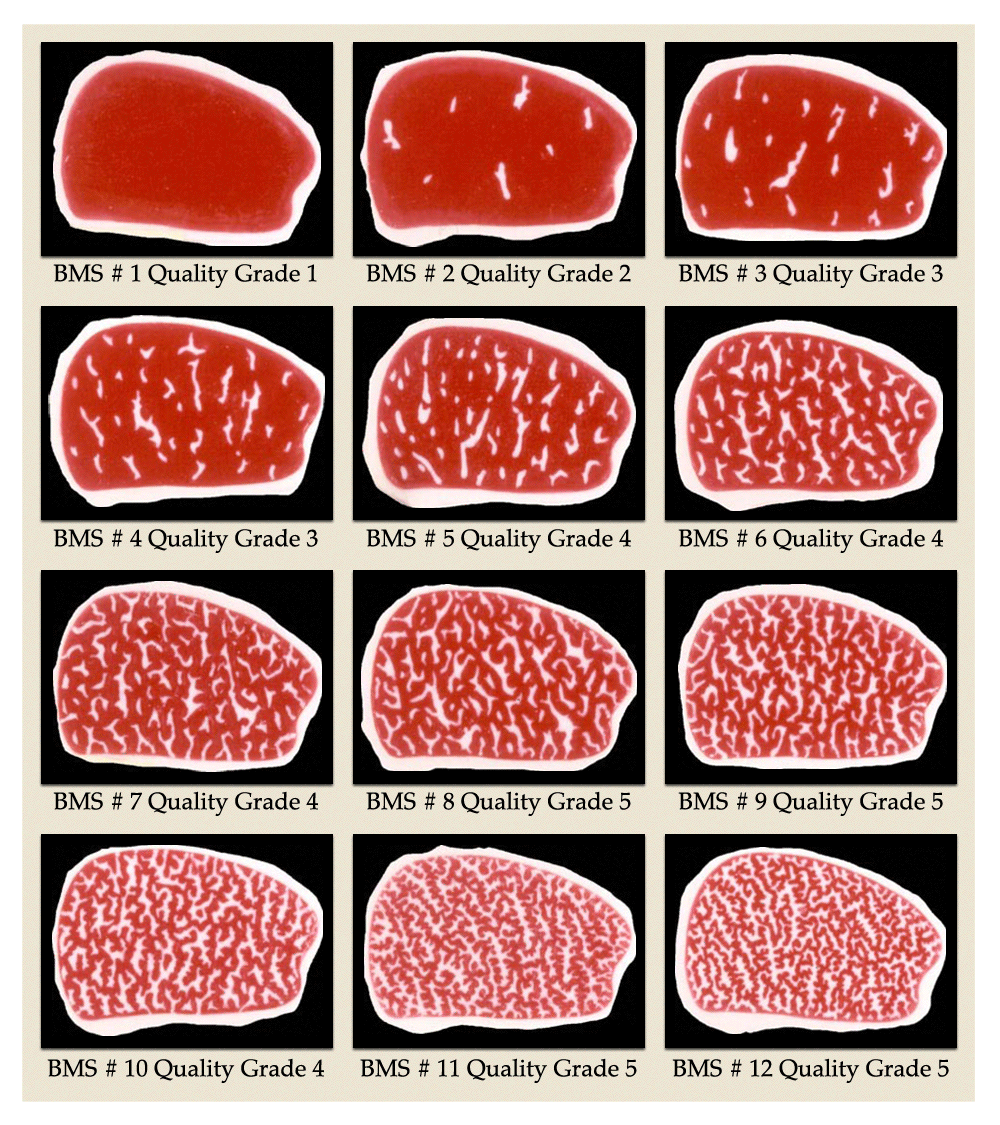
Grades for Marbling
Grades for Marbling – click to enlarge

See also Tips: Steaks and Cow Parts

Buying your Hamburger

  • 80/20 lean has the best fat to meat ratio for grilling
  • What does 80/20 or 85/15 mean?  If ground beef has 20 percent fat and 80 percent lean beef, it is good for grilling, but not necessarily good for you. To be called “lean,” ground beef, it must have a lean point of 92% lean (or higher) and only 8% fat . “Extra lean” ground beef must have a lean point of 96% lean or higher. 
  • Another good meat option is 1/2 LB ground chuck mixed with 1/2 LB ground brisket
  • MARBLING EQUALS FLAVOR
    – SELECT is right around BMS Grade 3
    – CHOICE is right around Grade 4
    – PRIME is right around Grade 5
  • Select a piece of chuck with lots of marbling and have your butcher grind it (yes, there are people behind those doors — just ring the bell).
  • Ask for a “coarse” grind.
  • You can also grind the meat yourself with a meat grinder or chop in the food processor (cut into 1- to 1½-inch cubes first).
    An advantage to this is that there are fewer worries about contamination and you can safely cook your burgers medium-rare, if that’s how you like them.  A chef’s favorite that I see on TV a lot is 1/3 chuck, 1/3 shoulder and 1/3 short ribs.
  • Try different combinations of meat.  Almost any kind of ground meat can be used to make burgers, or mix together different ones. I’ve heard of mixing pork with beef, chicken with lamb, or even buffalo with beef. For flavor, try mixing some fresh sausage in with another type of meat.
  • A good combination is half short ribs, half brisket with an extra handful of fat thrown in.

Prepping your Meat for Cooking

  • When making your patties, don’t handle the meat too much.  It will become mealy.  The heat from your hands begins to melt the fat and makes the patty too dense. Move it lightly from hand to hand and loosely make a patty no thicker than one inch, or you will have to cook it too long).
  • When adding other ingredients to ground meat, use a spoon or spatula to avoid heating the meat with your hands
  • Make an indentation in the center of the meat.  Have you noticed that your burgers tend to form rounded tops when cooking, causing the condiments to slide off? If you push down slightly in the center, creating a round area about ¼ inch lower than the surrounding meat, your finished burger will come out flat.
  • Many people just want great beef, straight up with salt and pepper. But it’s also fun to add flavors, and if you are using leaner meats, or leaner cuts of beef, you can add moisture at the same time. Finely minced vegetables such as onion, mushrooms, or mild chilies are especially good for this.
  • Worcestershire sauce and soy sauce are common liquids to add to burgers.About 2 tsp per pound of meat is good.
  • You can also take a lean cut of meat and add some olive oil for good fat, or butter for flavorful bad fat; although this will cook faster than meats that are naturally fattier like 80/20 hamburger
  • If using lean meat, add moisture or fat to your meat.

Cooking your Meat

  • Start charcoal in center in a pyramid, then move to one side
    • Direct Heat:  Things that cook quickly or to get a sear (steak, chicken skin)
    • Indirect Heat: Finish cooking.  Also use for flare ups
    • Spread out coals for thin hamburgers, zucchini, asparagus, hot dogs, skewered seasoned shallots
  • Press down gently, but firmly, at the very beginning to get a good sear on the meat.  After that, don’t press down on the burgers when cooking.  This compresses the meat, making it denser, and also squeezes the juices out of the meat.
  • Salt and pepper are a must, but consider garlic powder or onion powder.  I personally recommend Grandpa’s Thunder Powder.
  • Once your burger is on the heat, don’t move it until it naturally releases.  Once it does, flip it.  Flip it twice more so that both sides get two cookings each.
  • A thermometer is a must-have.  I have a page of Kitchen Gadgets with a link to Thermoworks.  I recommend both an infrared (or IR) thermometer and an instant read ThermaPen.  Cook your meats at least to 145º internal temperature, unless you have ground the meat yourself.

Alton’s Cheese Soup

This recipe was adapted from Alton Brown’s – Good Eats

INGREDIENTS

  • 16 OZ broth
  • 2 OZ sharp cheddar cheese – shredded
  • 2 oz Monterey Jack cheese – shredded
  • 2 oz Fontina cheese – shredded (Alt: provolone, gruyere, and gouda)
  • 2 TBL butter
  • 3 oz onion (minced)
  • 2 oz carrot (minced)
  • 2 oz celery (minced)
  • 2 TBL sifted flour
  • 2 bay leaf
  • 2 cloves garlic (minced)
  • 1/2 CU heavy cream
  • 1/2 tsp Tabasco
  • 1/2 tsp white pepper
  • 1 tsp Worcestershire Sauce
  • 1 tsp Marsala wine

STEP BY STEP

  1. Mince onion, carrot, and celery
  2. Mix with 1 TBL softened butter
  3. Sweat onion, carrot and celery
  4. Drizzle in sifted flour, stirring continually
  5. Add broth to pan
  6. Add bay leaves
  7. Add minced garlic
  8. Bring to NEAR boiling and simmer 30 minutes
  9. Remove bay leaf
  10. Add heavy cream
  11. Pour into bowl and puree with immersion blender
  12. Add shredded cheese just a bit at a time
  13. Add Marsala wine
  14. Add Worcestershire sauce
  15. Add Tabasco and white pepper
  16. Blend with spoon until smooth

Note
To reheat, use double boiler to avoid graininess

HTML Snippets Powered By : XYZScripts.com