Easy Homemade Soft Pretzels

Easy Homemade Soft Pretzels

5 Stars 4 Stars 3 Stars 2 Stars 1 Star 4.8 from 809 reviews
  • Author: Sally McKenney
  • Prep Time: 25 minutes
  • Cook Time: 15 minutes
  • Total Time: 40 minutes
  • Yield: 12 pretzels

Description

This is one of the easiest ways to prepare homemade soft pretzels for beginners, and the results are extra delicious! The dough is a family recipe and only needs to rest for 10 to 30 minutes before shaping. The quick baking soda boil gives the pretzels their traditional flavor, and I do not recommend skipping it. This recipe is also in my New York Times best-selling cookbook, Sally’s Baking 101.


Ingredients

  • 2 and 1/4 teaspoons (7ginstant or active dry yeast (1 standard packet)
  • 1 Tablespoon brown sugar or granulated sugar
  • 1 and 1/2 cups (360ml) warm water (around 100°F/38°C)
  • 1 Tablespoon (14g) unsalted butter, melted and slightly cooled
  • 1 teaspoon salt
  • 3 and 3/4–4 cups (469–500g) all-purpose flour (spooned & leveled), plus more as needed
  • coarse salt, for topping

Baking Soda Bath (See Recipe Note)

  • 1/2 cup (120g) baking soda
  • 9 cups (2.13L) water


Instructions

    1. Whisk the yeast and sugar into warm water. Cover and allow to sit for 1 minute.
    2. Whisk in the melted butter and salt. Add 3 cups (375g) of flour. Mix with a wooden spoon (or dough hook attachment if using a stand mixer) until combined. Add 3/4 cup (94g) more flour until the dough is slightly tacky and pulls away from the sides of the bowl. If it is still sticky, add up to 1/4 cup more (31g) flour, 1 Tablespoon at a time, as needed. Poke the dough with your finger—if it bounces back, it is ready to knead.
    1. Knead the dough: Keep the dough in the mixer and beat for an additional 3 to 5 full minutes, or knead by hand on a lightly floured surface for 3 to 5 minutes. (If you’re new to bread-baking, my How to Knead Dough video tutorial can help here.) If the dough becomes too sticky during the kneading process, sprinkle 1 teaspoon of flour at a time on the dough or on the work surface/in the bowl to make a soft, slightly tacky dough. Do not add more flour than you need because you do not want a dry dough. After kneading, the dough should still feel a little soft. Poke it with your finger—if it slowly bounces back, your dough is ready to rise. You can also do a “windowpane test” to see if your dough has been kneaded long enough: tear off a small (roughly golfball-size) piece of dough and gently stretch it out until it’s thin enough for light to pass through it. Hold it up to a window or light. Does light pass through the stretched dough without the dough tearing first? If so, your dough has been kneaded long enough and is ready to rise. If not, keep kneading until it passes the windowpane test.
    2. Shape the kneaded dough into a ball. Cover lightly with a towel and allow to rest for 10 to 30 minutes. (Meanwhile, I like to get the water + baking soda boiling as instructed in step 8.)
    3. Preheat oven to 400°F (204°C). Line 2 baking sheets with parchment paper or silicone baking mats. Silicone baking mats are highly recommended over parchment paper. If using parchment paper, lightly spray with nonstick spray or grease with butter. Set aside.
    4. With a sharp knife or pizza cutter, cut dough into 75g sections, which is about 1/3 cup of dough each.
    5. Roll the dough into a 20–22-inch rope. Form a circle with the dough by bringing the 2 ends together at the top of the circle. Twist the ends together. Bring the twisted ends back down towards yourself and press them down to form a pretzel shape.
  1. Bring baking soda and 9 cups of water to a boil in a large pot. Drop 1–2 pretzels into the boiling water for 20–30 seconds. Any longer than that and your pretzels will have a metallic taste. Using a slotted spatula, lift the pretzel out of the water and allow as much of the excess water to drip off. Place pretzel onto prepared baking sheet. Repeat with remaining pretzels. If desired, cover the boiled, unbaked pretzels with lightly oiled plastic wrap and refrigerate for up to 24 hours before baking (step 9).
  2. Sprinkle the tops of the pretzels with coarse salt. Bake for 12–15 minutes or until dark golden brown.
  3. Remove from the oven and, if desired, serve warm with spicy nacho cheese sauce.
  4. Cover and store leftover pretzels at room temperature for up to 3 days. See Make Ahead & Freezing Instructions in recipe Notes below for more storage info. To reheat, microwave for a few seconds, or bake at 350°F (177°C) for 5 minutes.

Notes

    1. Make Ahead & Freezing Instructions: If planning to freeze fully baked pretzels, do not top them with coarse salt before baking. Cool completely, then freeze in an airtight freezer-safe container or zip-top bag for up to 3 months. To reheat, brush frozen pretzels (no need to thaw) with water and sprinkle with coarse salt, then bake at 350°F (177°C) for 20 minutes or until warmed through, or microwave frozen pretzels until warm. The prepared pretzel dough can be covered and refrigerated for up to one day or frozen in an airtight container for 2–3 months. Thaw frozen dough in the refrigerator overnight. Refrigerated dough can be shaped into pretzels while still cold, but allow some extra time, about 1 hour, for the pretzels to puff up at room temperature before continuing with the baking soda bath and baking. You can also freeze the boiled, unbaked pretzels and here’s how: after boiling the pretzels in step 8, place them on a lightly greased parchment paper- or silicone baking mat-lined baking sheet. Freeze the pretzels for about 1 hour, then transfer them to an airtight freezer-safe container or zip-top bag (squeeze out as much air as possible from the bag before sealing) and freeze for up to 3 months. To bake, brush frozen pretzels (no need to thaw) with water and sprinkle with coarse salt, then bake at 400°F (204°C) for 15–20 minutes or until dark golden brown.
    2. Special Tools (affiliate links): Electric Stand Mixer or Glass Mixing Bowl | Wooden Spoon | Baking Sheets | Silicone Baking Mats or Parchment Paper | Pizza Cutter | Large Pot (such as a Dutch oven)
    3. Baking Soda Bath (Step 8): The baking soda bath is strongly recommended because it helps create that chewy texture and distinctive pretzel flavor. If skipping, brush the shaped and unbaked pretzels with a mixture of 1 beaten egg + 1 Tablespoon of dairy or nondairy milk. This is known as an egg wash. Sprinkle the brushed pretzels with salt. The egg wash will help the salt stick. If you don’t have an egg, simply brush with 2 Tablespoons of dairy or nondairy milk.
  1. Cinnamon Sugar Pretzels: Skip the coarse salt topping (and skip the egg wash, see note above, if you aren’t doing the baking soda bath step). Bake as directed in step 9. Meanwhile, melt 4 Tablespoons (56g) of unsalted or salted butter. Brush the baked and warm pretzels with melted butter, then dip the tops into a mix of cinnamon and sugar. I usually use 3/4 cup (150g) of granulated sugar and 1 and 1/2 teaspoons cinnamon. Cinnamon-sugar pretzels taste best the day they’re made because the melted butter topping causes them to become soggy after a few hours.
  2. Reference my Baking with Yeast Guide for answers to common yeast FAQs.

Soft & Chewy Oatmeal Raisin Cookies

Description

Soft and chewy with that trademark homemade flavor, these are the best soft and chewy oatmeal raisin cookies. Your family will love these easy oatmeal raisin cookies!


Ingredients

    • 1 cup (16 Tbsp; 226g) unsalted butter, softened to room temperature
    • 1 cup (200g) packed light or dark brown sugar
    • 1/4 cup (50g) granulated sugar
    • 2 large eggs*
    • 2 teaspoons pure vanilla extract
    • 1 Tablespoon (15ml) unsulphured or dark molasses (do not use blackstrap; I prefer Grandma’s brand)
    • 1 and 2/3 cups (209g) all-purpose flour (spooned & leveled)
    • 1 teaspoon baking soda
    • 1 and 1/2 teaspoons ground cinnamon
    • 1/2 teaspoon salt
    • 3 cups (255g) old-fashioned whole rolled oats*
    • 1 cup (140g) raisins (see Note below)
  • optional: 1/2 cup (64g) chopped toasted walnuts

Instructions

    1. Using a hand mixer or a stand mixer fitted with paddle attachment, cream the softened butter and both sugars together on medium speed until smooth, about 3 minutes. (Here’s a helpful tutorial if you need guidance on how to cream butter and sugar.) Add the eggs and mix on high until combined, about 1 minute. Scrape down the sides and bottom of the bowl as needed. Add the vanilla and molasses and mix on high until combined. Set aside.
  1. In a separate bowl, whisk the flour, baking soda, cinnamon, and salt together. Add to the wet ingredients and mix on low until combined. Beat in the oats, raisins, and walnuts (if using) on low speed. Dough will be thick, yet very sticky. Chill the dough for 30-60 minutes in the refrigerator (do the full hour if you’re afraid of the cookies spreading too much). If chilling for longer (up to 2 days), allow to sit at room temperature for at least 30 minutes before rolling and baking.
  2. Preheat oven to 350°F (177°C). Line two large baking sheets with parchment paper or silicone baking mats. Set aside.
  3. Roll balls of dough (about 2 tablespoons of dough per cookie) and place 2 inches apart on the baking sheets. I recommend using a cookie scoop since the dough can be sticky. Bake for 12-14 minutes until lightly browned on the sides. The centers will look very soft and under-baked. Remove from the oven and let cool on baking sheet for 5 minutes before transferring to a wire rack to cool completely. The cookies will continue to “set” on the baking sheet during this time.

Notes

  1. Make Ahead & Freezing Instructions: Cookies stay fresh covered at room temperature for up to 1 week. Baked cookies freeze well—up to three months. Unbaked cookie dough balls freeze well—up to three months. Bake frozen cookie dough balls for an extra minute, no need to thaw. Here’s how to freeze cookie dough.
  2. Special Tools (affiliate links): Electric Mixer (Handheld or Stand) | Baking Sheets | Silicone Baking Mats or Parchment Paper | Cookie Scoop | Cooling Rack
  3. Oats: For these oatmeal raisin cookies, I use old-fashioned whole oats. They provide the ultimate hearty, chewy, thick texture we love!
  4. Eggs: Room temperature eggs preferred. Good rule of thumb: always use room temperature eggs when using room temperature butter.
  5. Raisins: Soak your raisins in warm water for 10 minutes before using (blot very well to dry them) – this makes them nice and plump for your cookies.
  6. Adapted from Loaded Oatmeal Cookies & Oatmeal Creme Pies. Recipe originally published on Sally’s Baking Addiction in 2014.

No-Bake Cheesecake

You know, when you get a bagel, you sometimes have a left-over cream cheese.  This is a way you can put them to really good use.

Here is a baked cheesecake recipe using mostly the same ingredients.  It’s easy, but has to set overnight in the fridge, so allow extra time for that.

NOTE:  We are going to use a graham cracker crust for this cheesecake.  Here is a video of the same process making a larger cheesecake.  SallysBakingAddiction.com

Graham Cracker Crust

(larger recipe is shown in {{ brackets }}

  • 4 Graham Crackers   {{ 2.5 C graham crackers }}
  • 1 TBL butter (melted)  {{ 1/2 C butter }}
  • 3 TBL Brown Sugar (packed)  {{ 1 C }}
  1. Pulse grahams and brown sugar in a food processor
  2. Drizzle in melted butter while running
  3. Pack (bottom and sides) into lightly greased baking ramekin or miniature bread pan    {{ springform pan}}
  4. Put into freezer for at least an hour, or even overnight.
  5. Alternately, buy small frozen graham crackers crusts.

Ingredients for pie

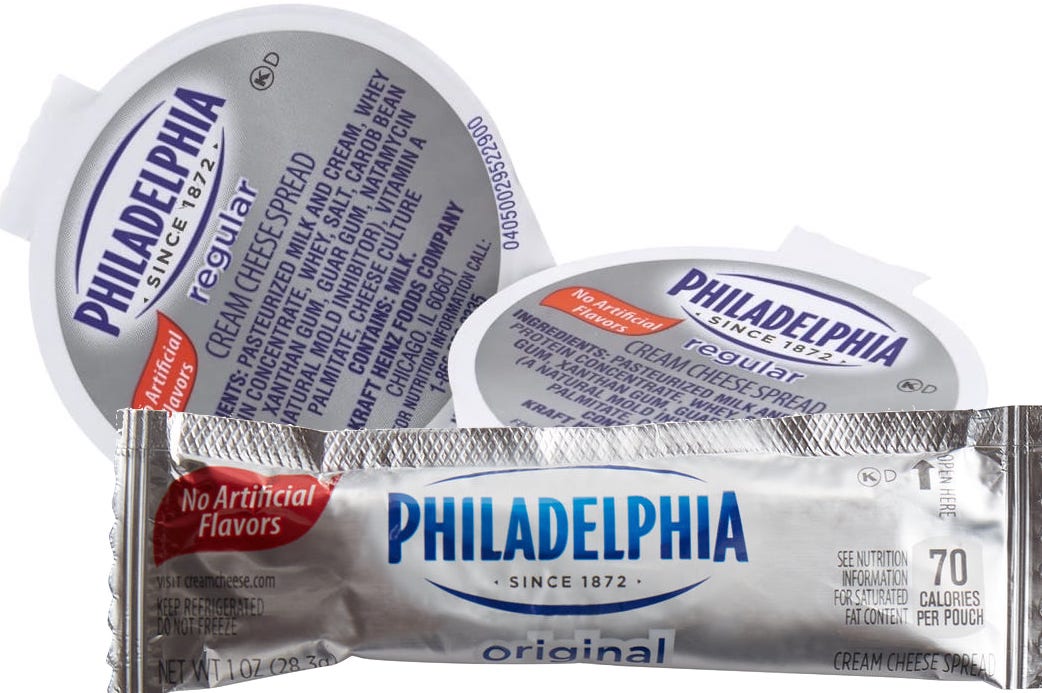
  • 6 oz (6 mini tubs) full fat Cream Cheese.  DO NOT use Cream Cheese Spread – room temperature  
    {{ 1 block Philadelphia Cream Cheese }}
  • 2 TBL butter – softened  {{ 1 stick }}
  • 1/2 C powdered sugar  {{ 2 C }}
  • 1 tsp each sour cream, lemon juice
  • Splash vanilla
  • 1 tsp brown sugar   {{ 1/4 C }}
  • 1/4 C crushed pineapple  {{ 20 oz can }} drained
    COOL WHIP MIXTURE
  • 1/4 C Cool Whip  {{ 10 oz }} or start from heavy cream
  • Some of your crushed pineapple from above
  1. Beat COLD heavy cream into heavy peaks.  Do not skimp on this step.   •   Add confectioner sugar as you near completion
  2. In a separate bowl, combine softened cream cheese  (DO NOT use Cream Cheese Spread) with sour cream, lemon juice, vanilla and brown sugar
  3. Gently fold cream and sugar mixture in a large bowl.
  4. Combine and pour into pie crusts
  5. Use an offset spatula or back of a teaspoon to smooth the cake
  6. App pineapple if desired
  7. Cover with plastic wrap, and refrigerate for at least 6-8 hours, but overnight is better.
  8. This WILL NOT freeze well. 

    OPTIONAL:  Before serving decorate with whipped cream, lemon curd, strawberry sauce, raspberry sauce, blueberry sauce, fresh berries or salted caramel.


Cheesecake

  • 1 and 1/4 cups (300ml) heavy cream or heavy whipping cream
  • three 8-ounce blocks (680g) full-fat cream cheese, softened to room temperature
  • 1/2 cup (100g) granulated sugar
  • 2 Tablespoons (15g) confectioners’ sugar
  • 1/4 cup (60g) sour cream, at room temperature
  • 2 teaspoons lemon juice
  • 1 teaspoon pure vanilla extract


Rib Eye Cap Steak

A note from Grandpa:

This is an expensive cut, so it is worth the extra effort to make it truly special.  It is practically Wagyu quality.  You can butterfly it, and then spread a bit of butter of the surface and roll it up (roulade) and tie it into a tube.  Cut this into disks of 1 1/2 to 2 inches, and cook in the oven at 550º until internal temperature is 125º (about 7-10 minutes)  Remove to a plate and tent with foil for 5-10 minutes.  Drizzle with melted butter infused with garlic, shallot, rosemary, and thyme.

From Snake River Farms

  • Grade: USDA Choice or higher
  • Weight: approx. 18 oz.
  • English cross origin
  • Wet-aged 21+ days for improved flavor and texture
  • Hand cut by a master butcher
  • Individually wrapped
  • Product ships frozen and will arrive frozen or partially thawed
  • Cost: approx $85 each

This rare cut is considered to be the single most delectable and flavorful steak available. Also known as the ribeye cap, deckle steak, calotte or spinalis dorsi, it is highly prized by top chefs, beef aficionados, and butchers alike. Surprisingly, a cut this spectacular is not universally known by its name, however anyone who has cut that small morsel of cap from a ribeye has realized there’s something special going on. If you look at a ribeye steak, you’ll see the large eye of meat that’s the center of the cut. Surrounding this center is the spinalis dorsi, or cap of ribeye. We carefully remove this from the entire ribeye roll to produce a beautiful cut that has the tenderness of a filet mignon, the rich marbling of a rib steak, and a mouthwatering flavor and texture all its own. The cap of ribeye is hard to find and is only available in limited quantities. Each steak is approximately 18 oz. and serves about 4 people.

“…Hands down, Double R Ranch is the best beef in the country.” ~ Eric Helner, Executive Chef, The Metropolitan Grill, Seattle, WA

Steak Temperature Guide

Here are the magic numbers you’ll need to determine when your steak is cooked to the degree of doneness you most prefer. The internal temp is when the steak should be removed from the heat. The steak will continue to cook so the temperature will rise during the rest period.

Preference Description Internal Temp
Rare Red center, very cool 110°F
Medium Rare Red, warm center 120°F
Medium Pink throughout 130°F
Medium Well Pink center 140°F
Well No pink Not recommended

*Consuming raw or undercooked meats may increase your risk of foodborne illness. The USDA recommends an internal temp of 145°F and resting for at least 3 minutes.

FEEDBACK

Best Cut Around

I received a rib cap from SRF as a gift. I seasoned with SPG, cut it in 4″ strips, rolled and tied each strip. I cooked over an open flame on my fire pit, using lump charcoal and oak. After an hour of cooking, I pulled the meat off with an IT of 125 degrees F. It was the most tender and flavorful steak I have ever had. Definitely buying this again.

SUPERB FLAVOR AND TEXTURE

The ribeye cap is my favorite cut of steak for special occasions. This is the fourth time I have ordered this piece. The flavor is superb, it has a very deep “beefy” flavor, and, if prepared correctly, exhibits melt-in-your-mouth tenderness. I cut this huge hunk of meat into two pieces, and cook them separately, one takes less time, as the cut tapers from very thick at one end to thin at the other. I reverse sear this cut, and I believe that is the only way to properly grill this hunk of meat. It ends up moist and tender on the inside, and beautifully charred on the outside.


Marshmallows

SUGAR TEMPERATURE CHART

Making your own is pretty easy

Sally’s Baking Addiction has a website with a similar recipe with much more information than I’ve provided here, including WHY you add some of these ingredients.  PS:  Her recipe differs slightly.  Try both!

  • 3/4 oz gelatin
  • 1/2 C COLD Water
  • 1/2 C warm water
  • 1.5 C granulated sugar
  • 1 C Light corn syrup
  • 2 TBL cornstarch
  • 2 tsp vanilla extract
  • 1/4 tsp salt
  1. Dissolve gelatin in cold water
  2. Let rest while you prepare hot mixture
  3. Heat water and sugar on medium high for 3-5 minutes
  4. Heat until 240º
  5. Add Light corn syrup and cornstarch to the pan
  6. Continue to heat until it goes up to 245º
  7. Take to your mixer and add to the gelatin in your mixer – POUR SLOWLY
  8. Add vanilla and salt
  9. Beat as much air in as possible, so crank the speed up to high
  10. Beat about 12 minutes – longer for a stiff marshmaallow
  11. Spray a baking tray with oil, then pour in confectioner sugar and shake to dust
    ALTERNATELY PIPE INTO LONG STRIPS THEN SNIP INTO PIECES
  12. Pour into a flat baking tray using a greased spatula
  13. Smooth it out
  14. Paint with simple syrup
  15. Sprinkle with more confectioner sugar or dip into sparkles
  16. Turn out and cut with a pizza cutter
  17. Dust with a mixture of sugar and corn starch
  18. Store for up to three weeks

Baked Beans – COLLECTION

Regular ol’ Baked Beans

2 CU prepared beans – See recipe for Dry Bean Processing
¾ lb fat salt pork or 2 strips bacon
½ tsp salt
3 TBL brown sugar
½ tsp mustard
1/2 onion – chopped small
1 TBL ketchup
1 clove garlic – minced

1 a Put pork on glass plate and cover with paper towel.
1 b Cook in microwave 30 seconds and change towels.
1 c Cook another 30 seconds.
1 d Repeat one more time if necessary – ususally not necessary
2. Put cooked pork in bottom of glass casserold dish (that has a cover available)
3. Strain beans, reserving liquid
4. Add beans into pot, burying pork
5. Mix in all other listed ingredients
6. Add Reserved Liquid (from beans) pouring over top to barely, but completely, cover – use spoon to work liquid through beans
7. Cover with glass lid and bake 2 hours at 300 degrees
8. Uncover and cook 1 more hour

Reserved liquid means the liquid in which the beans did their final soak in, and were subsequently cooked in.

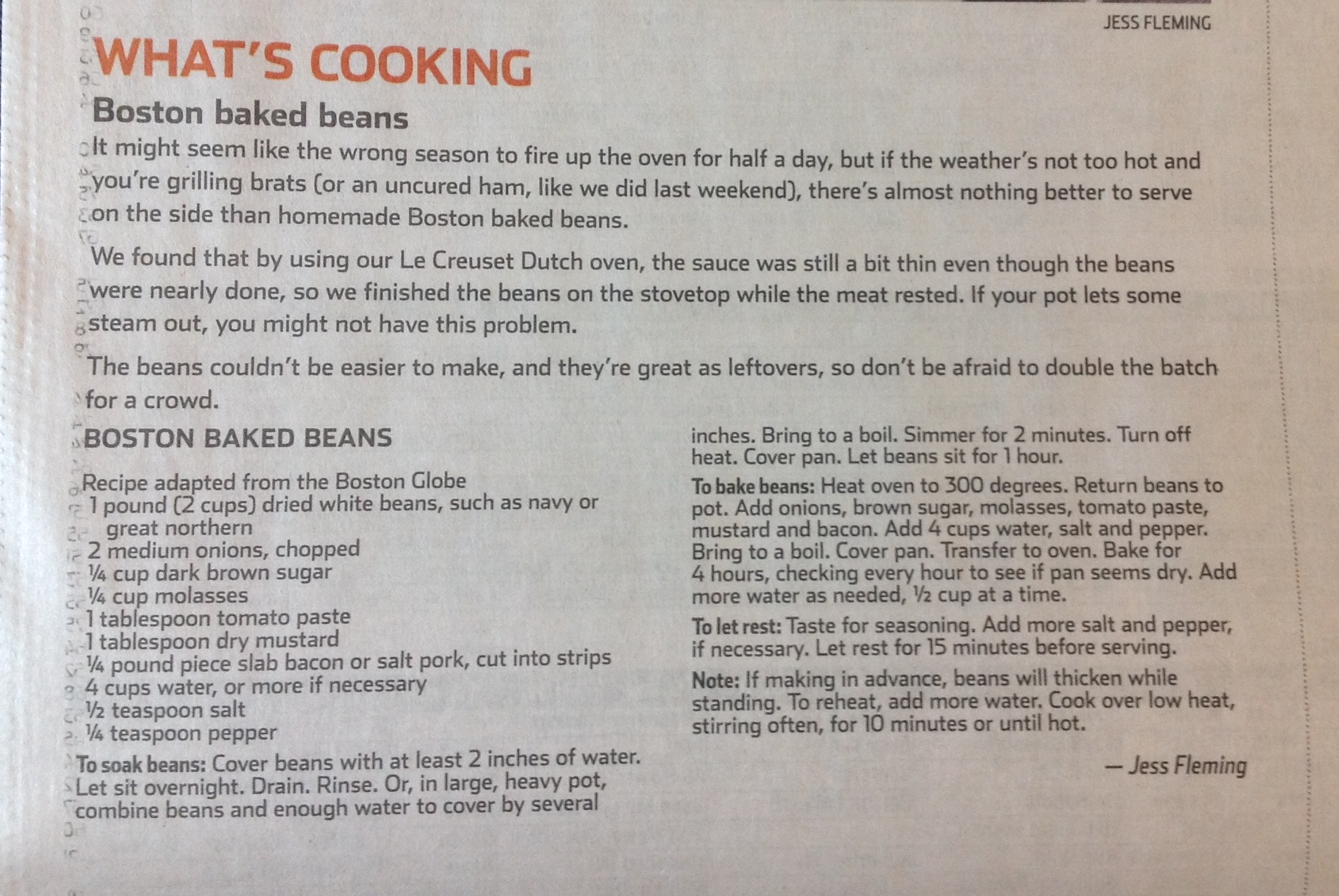
Boston Baked Beans


… From scratch.

Boston Baked Beanss (1)

https://www.grandpacooks.com/recipes/boston-baked-beans/

Boston Baked Beans (2)

https://www.grandpacooks.com/recipes/boston-baked-beans-2/

Backyard Baked Beans

https://www.grandpacooks.com/recipes/backyard-baked-beans/

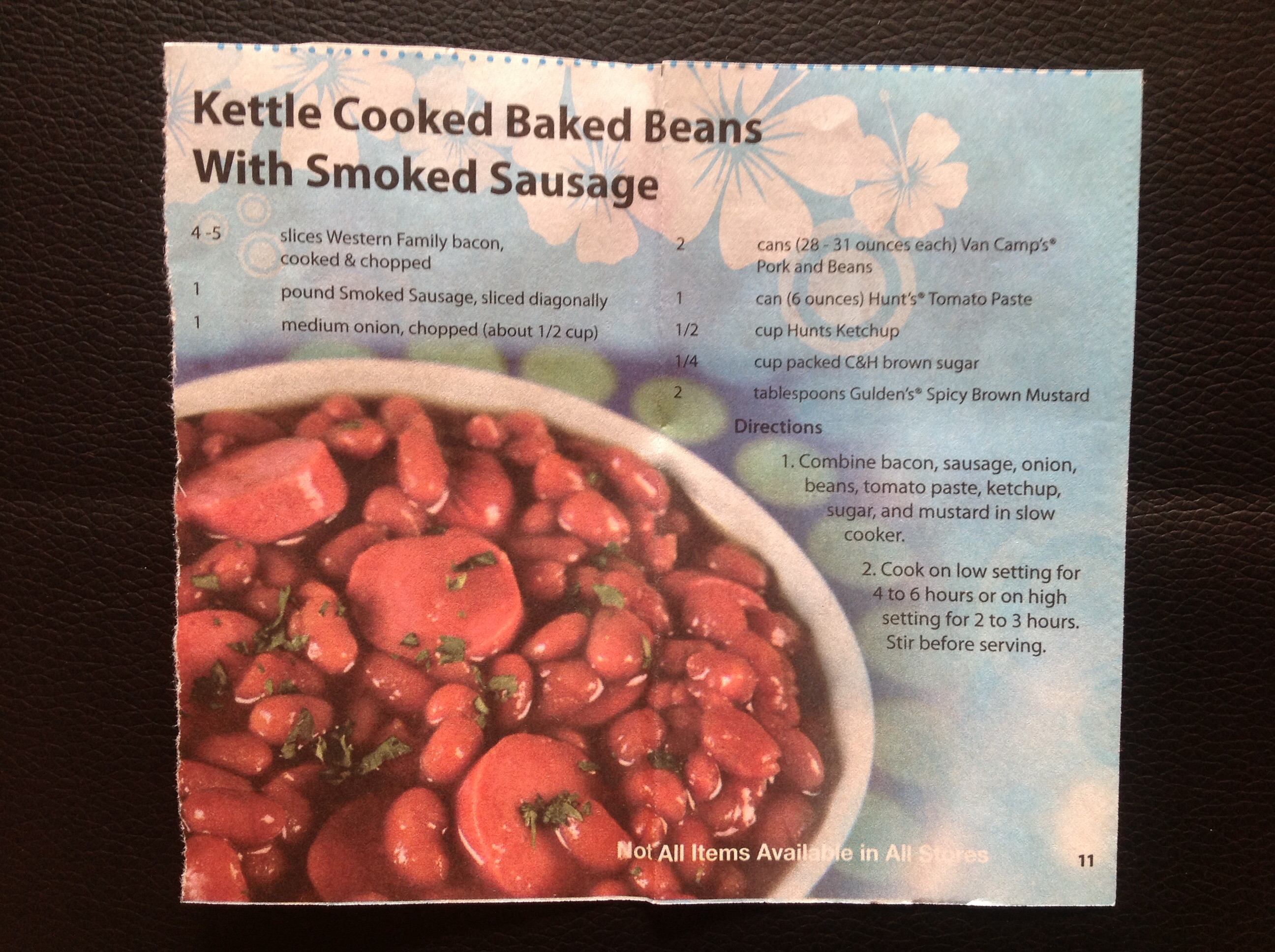
Kettle Cooked Baked Beans

image


Simple Baked Beans

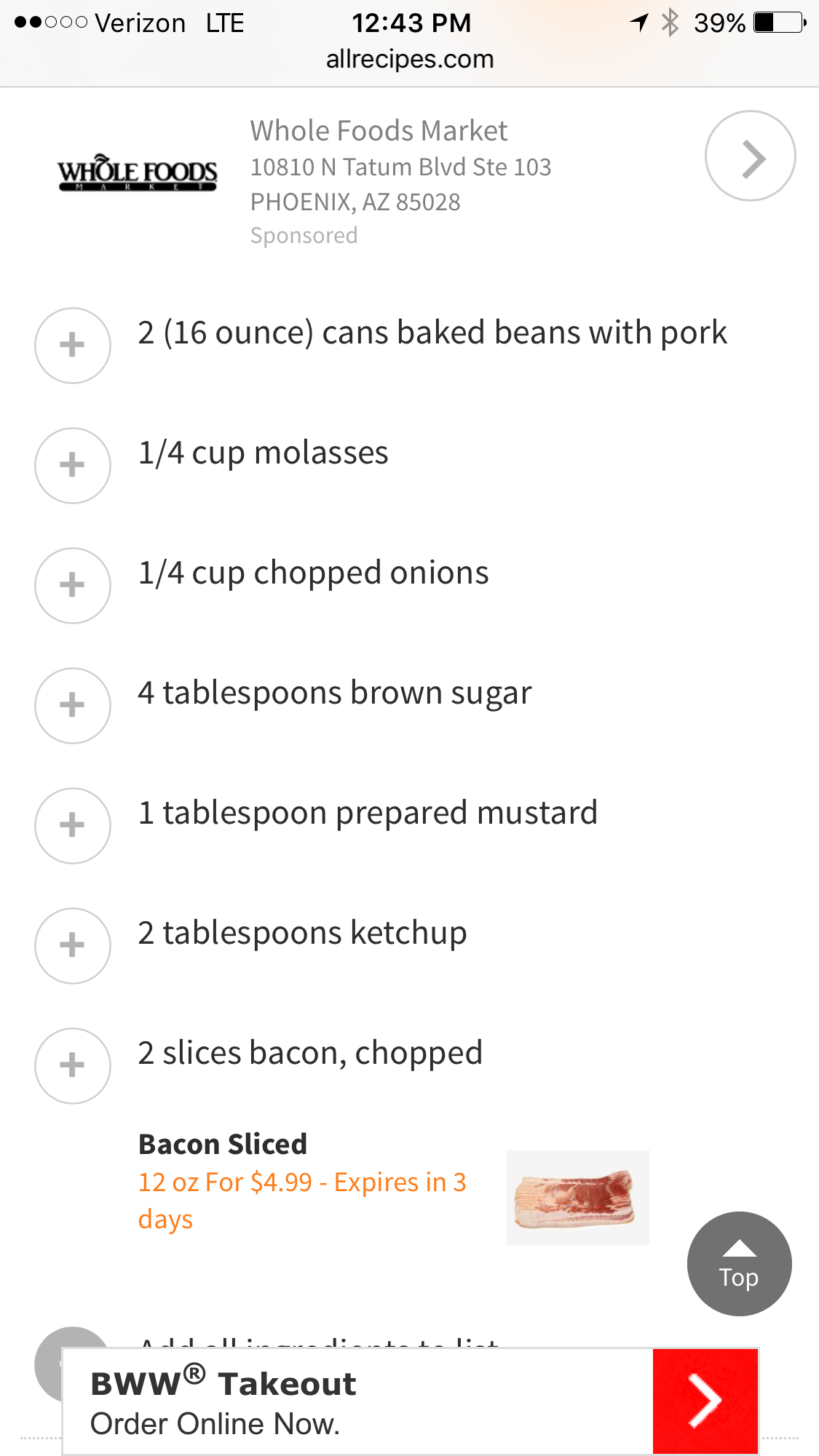
2015-12-19 12.43.14

Bush’s Boston Baked Beans

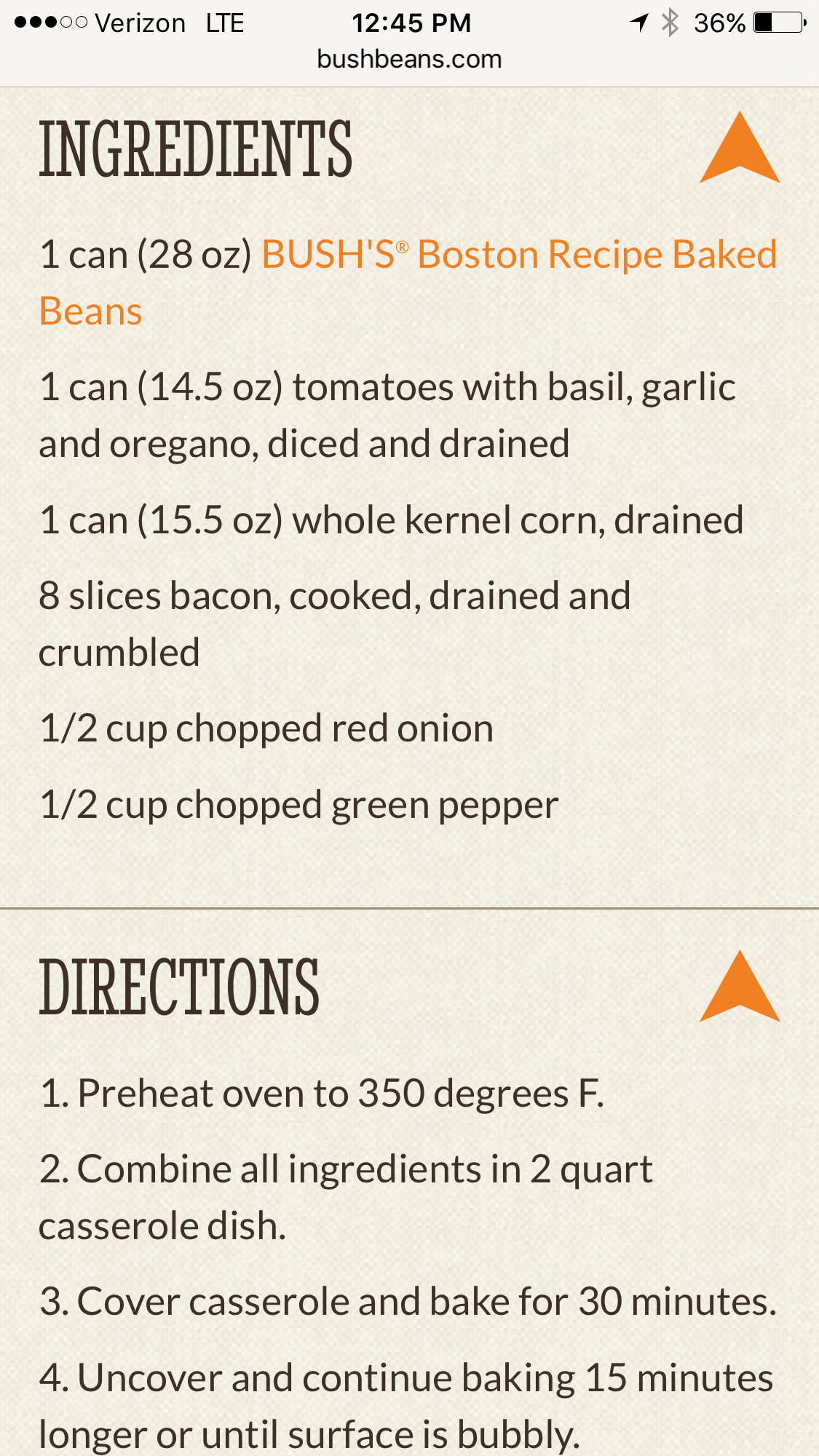
2015-12-19 12.45.26


Crispy Tortilla Eggs with Avocado and Lime

CLICK HERE for Avocado Tips and Tricks.  


3 tablespoons EVOO
4 stale corn tortillas, cut into long narrow strips
2 tablespoons chopped mild onion
Salt and fresh-ground black pepper
6 eggs, beaten
1/3 cup good-quality salsa
1/3 cup crumbled mild cheese
(eg) Monterey Jack or Brick
1 avocado, sliced
1 lime, halved
1/4 cup Mexican crema, sour cream, or plain whole-milk yogurt (optional)

Instructions

1. Film a large saute pan with the olive oil, and heat over medium-high heat until the oil looks wavy. Add the tortilla strips and fry until they are beginning to crisp, about 1 minute. Don’t move them around too much; let them crisp on one side and then turn them.

2. Add the chopped onion and continue frying until the tortilla strips are crispy and nicely browned. Season with salt and pepper. Remove from the heat and spoon off any extra fat, reserving 1 tablespoon in the pan.

3. Return the pan to the burner, reducing the heat to medium. Move the majority of the strips to the edge of the pan, leaving about 3 inches clear in the center. Pour the eggs in the center and partially over the strips. Allow the eggs to set, and then gently pull them apart, letting the uncooked egg reach the surface of the pan. Once the eggs are firmly set, turn them in large pieces to finish cooking.

4. Serve with the salsa, cheese, slices of avocado, a squeeze of lime, and if you wish, the crema or sour cream.

Variations Stale tortillas are a must; fresh won’t crisp as well.

The recipe for this dish, at its most primal, begs for variations, so follow your heart: add shrimp, roasted chiles, olives, fresh herbs – you get the idea.

Notes From The Splendid Table’s How to Eat Supper:
Recipes, Stories, and Opinions from Public Radio’s Award-Winning Food Show by Lynne Rossetto Kasper and Sally Swift (Clarkson Potter/Publishers, 2008).
Copyright 2008 by American Public Media.

Hot Fudge Topping

Takes about 10 minutes from start to finish.

Ingredients

    • 6 oz baking chocolate – dark or semi-sweet
    • 1/2 C granulated sugar
    • 1/3 C Karo syrup
    • 1/4 C cocoa powder
    • 3/4 C heavy cream
    • 1/2 tsp salt – only if using unsalted butter
    • 1/4 C butter (softened)
    • 2 tsp vanilla extract
    1. Mix all except vanilla and buter
    2. Heat over medium heat until consistent
    3. Bring to 220º  (3-5 minutes)
    4. Remove from heat and stir in butter and vanilla.
    5. Store in fridge for no more than a month.

More Homemade Toppings for Desserts & Ice Cream from Sally’s Baking Addiction

Sally McKenney has a great site with many wonderful recipes.  Here are some links to her ice cream toppings.

HTML Snippets Powered By : XYZScripts.com