This is a variation of classic apple pie, but instead of a top crust, we’re piling on a thick, buttery brown sugar crumble. This apple crumble pie is the definition of fall comfort, and you don’t need to fuss with a decorative pie crust on top. Make sure to chill each component as directed. Cold pie dough and a cold crumble topping hold their shape much better during baking.
Ingredients
Crust
1 and 1/2 cups (188g) all-purpose flour (spooned & leveled), plus more for work surface
1 Tablespoon (12g) granulated sugar
1/4 teaspoonsalt
1/2 cup (8 Tbsp; 113g) cold unsalted butter, cubed
1/4 cup (60g/ml) ice-cold water, plus more as needed
egg wash: 1 large egg beaten with 1 Tablespoon (15g/ml) milk
Make the pie dough for the crust: In a medium bowl, whisk together the flour, sugar, and salt. Using a pastry cutter or 2 forks, cut in the butter until the mixture resembles coarse pea-sized crumbs. Add the water and stir until the flour is moistened. Add 1–2 more Tablespoons of water if the dough seems dry. Turn the dough out onto a lightly floured work surface and, using your hands, work the dough into a ball. Flatten it into a thick disc. Wrap the dough disc in plastic wrap or parchment paper and refrigerate it for at least 2 hours, and up to 3 days.
Make the crumble topping: In a medium bowl, combine the brown sugar, cinnamon, flour, and walnuts. Using a silicone spatula, stir in the melted butter. The topping will be thick and crumbly. Place it in the refrigerator while you continue.
Roll out the chilled pie dough: On a floured work surface, roll out the disc of chilled dough. Turn the dough about a quarter turn after every few rolls until you have a circle 12 inches in diameter. Carefully place the dough into a 9-inch pie dish. Tuck it in with your fingers, making sure it is smooth. Use a small paring knife to trim excess dough off the edges. Flute the pie crust edges and brush them with egg wash. Place the pie crust in the refrigerator.
Make the filling: In a large bowl using a silicone spatula or wooden spoon, combine the apples, sugar, flour, lemon juice, cinnamon, cloves, nutmeg, and vanilla extract, stirring until the apples are all coated.
Preheat the oven to 400°F (204°C). Place a baking sheet on the bottom oven rack to catch any juices that may bubble over.
Spoon the apple filling into the crust, making sure there are no large gaps between the slices. It’s a lot of filling! Sprinkle the cold crumb topping evenly over the top of the apples.
Bake for 20 minutes. Add a pie crust shield to prevent the edges from browning too quickly, and reduce the oven temperature to 375°F (191°C). Bake for an additional 35 to 45 minutes or until the crust is golden brown and juices are bubbling around the edges. If needed toward the end of bake time, remove the pie crust shield and tent a large piece of aluminum foil over the entire pie if the crumb topping is getting too brown.
Allow the pie to cool for at least 3 full hours at room temperature before serving. This time allows the filling to thicken up. Serve with vanilla ice cream and salted caramel sauce, if desired. Cover leftover pie and store in the refrigerator for up to 5 days.
Notes
Make Ahead & Freezing Instructions: This a great pie to make 1 day in advance—after it cools, cover tightly and keep at room temperature. The pie crust dough can also be prepared ahead of time and stored in the refrigerator for up to 5 days or in the freezer for up to 3 months. Baked and cooled pie freezes well for up to 3 months. Thaw overnight in the refrigerator and allow to come to room temperature before serving. Prepared filling can be frozen for up to 3 months; thaw overnight in the refrigerator before using.
Apples: You need about 8 large apples. Peel then slice apples in a uniform thickness, about 1/4 inch thick. You don’t want some solid apples and some thin, mushy apples. For best flavor, use a variety of apples such as Granny Smith, Honeycrisp, Fuji, and/or Pink Lady. If you’re interested, check out this post: Here Are the Best Apples for Baking.
Aluminum Foil Pie Crust Shield: You can purchase a pie crust shield or make one from aluminum foil. Cut a 14-inch square of aluminum foil. Fold in half. Cut out a 5-inch semi-circle on the folded edge. Unfold. Carefully fit the aluminum foil over the pie crust edges, securing down on the sides as best you can (careful, the pie is hot!), leaving the center of the pie exposed.
Update in 2025: After a decade of baking this pie, we’ve made a few small improvements. The original version used half of a double-crust pie dough, fewer apples (8–10 cups), and 2 Tbsp lemon juice. The updated recipe now uses a single all-butter pie crust, slightly more apples, and less lemon juice. If you prefer the original method, make this pie crust recipe (saving the second half for another pie), reduce apples to 8–10 cups, and increase the lemon juice to 2 Tbsp.
You only need 7 ingredients to make these dinner rolls. Flaky, soft, and buttery, these fresh dinner rolls outshine any main dish. See recipe notes for freezing and overnight instructions. You can also reference my Baking with Yeast Guide for answers to common yeast FAQs. This recipe is also in my cookbook, Sally’s Baking 101.
Ingredients
1 cup (240ml) whole milk, warmed to about 110°F (43°C)
2 and 1/4 teaspoons Platinum Yeast from Red Star instant yeast(1 standard packet)
Prepare the dough: Whisk the warm milk, yeast, and 1 Tablespoon of sugar together in the bowl of your stand mixer. Cover and allow to sit for 5 minutes. *If you do not own a stand mixer, you can do this in a large mixing bowl and in the next step, mix the dough together with a large wooden spoon/silicone spatula. It will take a bit of arm muscle. A hand mixer works, but the sticky dough repeatedly gets stuck in the beaters. Mixing by hand with a wooden spoon or silicone spatula is a better choice.*
Add the remaining sugar, egg, butter, salt, and 1 cup flour. With a dough hook or paddle attachment, mix/beat on low speed for 30 seconds, scrape down the sides of the bowl with a silicone spatula, then add the remaining flour. Beat on medium speed until the dough comes together and pulls away from the sides of the bowl, about 2 minutes. If the dough seems too wet to a point where kneading (next step) would be impossible, beat in more flour 1 Tablespoon at a time until you have a workable dough, similar to the photos above. Dough should be soft and a little sticky, but still manageable to knead with lightly floured hands.
Knead the dough: Keep the dough in the mixer and beat for an additional 5 full minutes, or knead by hand on a lightly floured surface for 5 full minutes. (If you’re new to bread-baking, my How to Knead Dough video tutorial can help here.) If the dough becomes too sticky during the kneading process, sprinkle 1 teaspoon of flour at a time on the dough or on the work surface/in the bowl to make a soft, slightly tacky dough. Do not add more flour than you need because you do not want a dry dough. After kneading, the dough should still feel a little soft. Poke it with your finger—if it slowly bounces back, your dough is ready to rise. You can also do a “windowpane test” to see if your dough has been kneaded long enough: tear off a small (roughly golfball-size) piece of dough and gently stretch it out until it’s thin enough for light to pass through it. Hold it up to a window or light. Does light pass through the stretched dough without the dough tearing first? If so, your dough has been kneaded long enough and is ready to rise. If not, keep kneading until it passes the windowpane test.
1st Rise: Lightly grease a large bowl with oil or nonstick spray. Place the dough in the bowl, turning it to coat all sides in the oil. Cover the bowl with aluminum foil, plastic wrap, or a clean kitchen towel. Allow the dough to rise in a relatively warm environment for 1-2 hours or until double in size. (I always let it rise on the counter. Takes about 2 hours. For a tiny reduction in rise time, see my answer to Where Should Dough Rise? in my Baking with Yeast Guide.)
Grease a 9×13 inch baking pan or two 9-inch square or round baking pans. You can also bake the rolls in a cast iron skillet or on a lined baking sheet.*
Shape the rolls: When the dough is ready, punch it down to release the air. Divide the dough into 14-16 equal pieces. (Just eyeball it– doesn’t need to be perfect!) A bench scraper is always helpful for cutting dough. Shape each piece into a smooth ball. Arrange in prepared baking pan.
2nd Rise: Cover shaped rolls with aluminum foil, plastic wrap, or a clean kitchen towel. Allow to rise until puffy, about 1 hour.
Adjust oven rack to a lower position and preheat oven to 350°F (177°C). (It’s best to bake the rolls towards the bottom of the oven so the tops don’t burn.)
Bake the rolls: Bake for 20-25 minutes or until golden brown on top, rotating the pan halfway through. If you notice the tops browning too quickly, loosely tent the pan with aluminum foil. Remove from the oven, brush with optional honey butter topping, and allow rolls to cool for a few minutes before serving.
Cover leftover rolls tightly and store at room temperature for 2-3 days or in the refrigerator for up to 1 week.
Notes
Freezing Instructions: Prepare recipe through step 6. Place shaped rolls in a greased baking pan, cover tightly, and freeze for up to 3 months. Once frozen, the dough balls won’t stick together anymore and you can place them in a freezer bag if needed. On the day you serve them, arrange the dough balls in a greased baking pan, cover tightly, then let them thaw and rise at room temperature for about 4-5 hours. Bake as directed. You can also freeze the baked dinner rolls. Allow them to cool completely, then freeze for up to 3 months. Thaw in the refrigerator or at room temperature, then reheat as desired. If reheating the whole pan, lightly cover and reheat in a 300°F (149°C) oven for about 10 minutes or until warm.
Overnight Instructions: Prepare the recipe through step 6. Cover the shaped rolls tightly and refrigerate for up to about 15 hours. At least 3 hours before you need them the next day, remove the rolls from the refrigerator, keep covered, and allow to rise on the counter for about 1-2 hours before baking. Alternatively, you can let the dough have its 1st rise in the refrigerator overnight. Cover the dough tightly and place in the refrigerator for up to about 15 hours. Remove from the refrigerator and allow the dough to fully rise for 2 more hours. Continue with step 5.
Baking Pan: I prefer baking the rolls in a glass 9×13 inch baking pan because I find they brown a little too quickly in metal. As long as you bake the rolls on a lower oven rack and keep your eye on them, any pan is great.
Yeast: Platinum Yeast from Red Star is an instant yeast. You can use Red Star Yeast active dry yeast instead. Rise times will be slightly longer using active dry yeast. Reference my Baking with Yeast Guide for answers to common yeast FAQs.
Flour: You can use all-purpose flour or bread flour. All-purpose flour is convenient for most, but bread flour produces chewier dinner rolls. The rolls are still soft and fluffy no matter which you use. Either flour is fine and there are no other changes to the recipe if you use one or the other.
You need 7 ingredients—practically the same as my homemade cinnamon swirl bread but less sugar. Likewise, they’re basically the same ingredients as my soft dinner rolls too, but in order to bake a bread that rises tall and has legitimate structure, we’ll leave out some of the fat. Swap some of the milk for water and leave out the egg.
Water: Liquid activates yeast. I use mostly water in this dough because we need a bread that has structure. Using all milk, like I do for my dinner rolls, would yield a flimsy bread without much texture.
Milk: To make a soft bread, you need fat in the dough so make sure 1/4 cup of the liquid is milk. Low fat milk works too, but whole milk produces phenomenal texture.
Yeast: You can use active dry yeast or instant yeast. If using active dry, the rise times will be a bit longer. I recommend Platinum Yeast from Red Star, which is an instant yeast blended with natural dough improvers. It’s my go-to for all bread.
Sugar: Sugar feeds the yeast, increases its activity, and tenderizes the dough.
Butter: Butter promises a flavorful loaf. I tested this recipe with melted butter, softened butter, and even olive oil. We liked the loaf made with softened butter the best because it had pronounced buttery flavor and a softer (yet still sturdy) interior.
Salt: You can’t make flavorful bread without salt!
Flour: You can use all-purpose flour or bread flour. All-purpose flour is convenient for most, but bread flour produces a chewier crust. There are no other changes to the recipe if you use bread flour. For best taste, I highly recommend bread flour. It’s what I always use when I make artisan bread. If you wish to use whole wheat flour, follow my recipe for whole wheat bread instead.
Sandwich Bread
5 Stars 4 Stars 3 Stars 2 Stars 1 Star 4.9 from 1185 reviews
You only need 7 ingredients to make this simple sandwich bread. Soft and buttery with a chewy/crisp crust, this fresh loaf of bread will quickly become a staple in your kitchen. See recipe notes for freezing and overnight instructions. You can also reference my Baking with Yeast Guide for answers to common yeast FAQs.
Ingredients
1 cup (240ml) water, warmed to about 110°F (43°C)
1/4 cup (60ml) whole milk, warmed to about 110°F (43°C)
2 and 1/4 teaspoons (7g) Platinum Yeast from Red Star instant yeast(1 standard packet)
3 and 1/3 cups (about 420–430g) all-purpose flour or bread flour (spooned & leveled), plus more as needed
Instructions
Prepare the dough: Whisk the warm water, warm milk, yeast, and sugar together in the bowl of your stand mixer fitted with a dough hook attachment. Cover and allow to sit for 5 minutes.
Add the butter, salt, and 1 cup flour. Beat on low speed for 30 seconds, scrape down the sides of the bowl with a silicone spatula, then add another cup of flour. Beat on medium speed until relatively incorporated (there may still be chunks of butter). Add the remaining flour and beat on medium speed until the dough comes together and pulls away from the sides of the bowl, about 2 minutes. *If you do not own a mixer, you can mix this dough with a large wooden spoon or silicone spatula. It will take a bit of arm muscle!*
Knead the dough: Keep the dough in the mixer and beat for an additional 5–8 full minutes, or knead by hand on a lightly floured surface for 5–8 full minutes. (If you’re new to bread-baking, my How to Knead Dough video tutorial can help here.) If the dough becomes too sticky during the kneading process, sprinkle 1 teaspoon of flour at a time on the dough or on the work surface/in the bowl to make a soft, slightly tacky dough. Do not add more flour than you need; you do not want a dry dough. After kneading, the dough should still feel a little soft. Poke it with your finger—if it slowly bounces back, your dough is ready to rise. You can also do a “windowpane test” to see if your dough has been kneaded long enough: tear off a small (roughly golfball-size) piece of dough and gently stretch it out until it’s thin enough for light to pass through it. Hold it up to a window or light. Does light pass through the stretched dough without the dough tearing first? If so, your dough has been kneaded long enough and is ready to rise. If not, keep kneading.
1st Rise: Lightly grease a large bowl with olive oil or nonstick spray. Place the dough in the bowl, turning it to coat all sides in the oil. Cover the bowl and allow the dough to rise in a relatively warm environment for 1-2 hours or until double in size. (I always let it rise on the counter. Takes about 2 hours. For a tiny reduction in rise time, see my answer to Where Should Dough Rise? in my Baking with Yeast Guide.)
Shape the bread: When the dough is ready, punch it down to release the air. Lightly flour a work surface, your hands, and a rolling pin. Roll the dough out into a large rectangle, about 8×15 inches. It does not have to be perfect—in fact, it will probably be rounded on the edges. That’s ok! Roll it up into an 8 inch log and place in the prepared loaf pan.
2nd Rise: Cover shaped loaf with aluminum foil, plastic wrap, or a clean kitchen towel. Allow to rise until it’s about 1 inch above the top of the loaf pan, about 1 hour. (See video and photo above for a visual.)
Adjust oven rack to a lower position and preheat oven to 350°F (177°C). (It’s best to bake the bread towards the bottom of the oven so the top doesn’t burn.)
Bake the bread: Bake for 32-36 minutes or until golden brown on top. If you notice the top browning too quickly, loosely tent the pan with aluminum foil. (I usually add aluminum foil over the loaf around the 20 minute mark.) To test for doneness, if you gently tap on the loaf, it should sound hollow. For a more accurate test, the bread is done when an instant-read thermometer reads the center of the loaf as 195–200°F (90–93°C).
Remove from the oven and allow bread to cool for a few minutes in the pan on a cooling rack before removing the bread from the pan and slicing. Feel free to let it cool completely before slicing, too.
Cover leftover bread tightly and store at room temperature for 6 days or in the refrigerator for up to 10 days.
Notes
Freezing Instructions: Prepare recipe through step 6. Place shaped loaf in a greased 9×5-inch loaf pan or disposable loaf pan, cover tightly, and freeze for up to 3 months. On the day you serve it, let the loaf thaw and rise for about 4-5 hours at room temperature. Bake as directed. You can also freeze the baked bread loaf. Allow the bread to cool completely, then freeze for up to 3 months. Thaw in the refrigerator or at room temperature, then reheat as desired.
Overnight Instructions: Prepare the recipe through step 6. Cover the shaped bread tightly and refrigerate for up to about 15 hours. At least 3 hours before you need the bread the next day, remove from the refrigerator, keep covered, and allow to rise on the counter for about 1-2 hours before baking. Alternatively, you can let the dough have its 1st rise in the refrigerator overnight. Cover the dough tightly and place in the refrigerator for up to 12 hours. Remove from the refrigerator and allow the dough to fully rise for 2 more hours. Continue with step 5.
Yeast:Platinum Yeast from Red Star is an instant yeast. Any instant yeast works. You can use active dry yeast instead. Rise times will be slightly longer using active dry yeast. Reference my Baking with Yeast Guide for answers to common yeast FAQs.
Flour: You can use all-purpose flour or bread flour. All-purpose flour is convenient for most, but bread flour produces a chewier loaf of bread and I highly recommend it. The bread is still soft no matter which you use. Either flour is fine and there are no other changes to the recipe if you use one or the other. I don’t recommend whole wheat flour because it doesn’t have the same baking properties as white flour or bread flour (the gluten levels are different). If you wish to use whole wheat flour, try my recipe for whole wheat bread instead.
Doubling this recipe: For best results, I recommend making two separate batches of dough. However, if you want to double the recipe all in 1 mixing bowl, double all of the ingredients except for the yeast and butter. Use 3 and 1/4 teaspoons yeast and 6 Tablespoons of butter.
Bread Machine Questions: I don’t own a bread machine so I have not tested it, but some readers in the comments section have had success.
3 and 1/2 cups (420g) whole wheat flour (spooned & leveled), plus more for kneading/shaping
Topping
2 Tablespoons (28g) unsalted butter, melted
2 teaspoonshoney
sea salt for sprinkling
Instructions
Make the dough: Pour the warm milk over yeast in the bowl of a stand mixer fitted with a dough hook attachment. Or, if you don’t have a stand mixer, a regular large mixing bowl.
Whisk together, cover bowl with a towel, and allow to sit for 5 minutes. The mixture will be frothy and foamy after 5 minutes.
On low speed, beat in the softened butter until it is slightly broken up. Then beat in the honey, eggs, and salt. The butter won’t really be mixing into the mixture, so don’t be alarmed if it stays in pieces.
On low speed, gradually add the flour. Once it is all added, beat on medium speed until a soft dough forms.
Knead the dough: Keep the dough in the mixer and beat for an additional 6-8 full minutes, or knead by hand on a lightly floured surface for 6-8 full minutes. (If you’re new to bread-baking, Sally’s How to Knead Dough video tutorial can help here.) If the dough becomes too sticky during the kneading process, sprinkle 1 teaspoon of flour at a time on the dough or on the work surface/in the bowl to make a soft, slightly tacky dough. Do not add more flour than you need because you do not want a dry dough.
After kneading, the dough should still feel a little soft. Poke it with your finger—if it slowly bounces back, your dough is ready to rise.
Transfer the dough to a lightly floured surface (if you kneaded with your mixer) and knead it with your hands for 1 minute. Form the dough into a ball, coat your mixing bowl with nonstick spray or olive oil, and place the dough back in and turn it over so all sides of the dough are coated with the oil/spray.
Cover the dough/bowl loosely with plastic wrap, a paper towel, or aluminum foil and let sit in a warm place until doubled in size, about 1.5 – 2 hours.
Here’s what Sally does: turn the oven on to 150°F (66°C). Once heated to that temperature, turn the oven off. Stick the covered dough inside the oven and allow it to rise in this warm environment.
Shape the rolls: Punch the dough down to release any air bubbles and turn it out onto a lightly floured work surface. Using floured hands, stretch the dough into a 9×13 rectangle (doesn’t need to be exact, it can be a little smaller). Use a pizza cutter and cut into 15 rolls. See photo above for a visual.
Round out the edges of the rolls since they stretched a bit as you cut them. Arrange in prepared pan.
Loosely cover the rolls and allow to rise in a warm environment again until puffy and double in size, about 1 hour.
Bake the rolls: Preheat the oven to375°F (191°C). Bake rolls for about 25 minutes or until they are golden brown.
About halfway through the bake time, I like to cover the rolls loosely with aluminum foil so the tops don’t brown too much. Remove pan from the oven and allow to cool on a wire rack for 5 minutes.
Top the rolls: Meanwhile, mix the melted butter and honey together. Brush over warm rolls. Sprinkle with sea salt. Serve warm.
Cover any leftover rolls and store at room temperature for a few days or in the refrigerator for up to 1 week.
Notes
Make Ahead & Freezing Instructions: After dough has risen two hours in step 4, punch it down inside the mixing bowl and cover the bowl tightly with plastic wrap. Refrigerate overnight or for up to 2 days, then remove from the refrigerator and continue with step 5. Or freeze the dough for up to 2 months, then allow to thaw overnight in the refrigerator and continue with step 5. You can also freeze the baked dinner rolls. Allow them to cool completely, then freeze for up to 3 months. Thaw in the refrigerator or at room temperature, then reheat as desired. If reheating the whole pan, lightly cover and reheat in a 300°F (149°C) oven for about 10 minutes or until warm.
Milk: Lower fat milk can be substituted, but the rolls won’t taste as soft. I strongly suggest whole milk.
Honey Butter: Don’t leave off that honey butter/sea salt topping. The rolls will be lacking a little flavor without it. I prefer spreading the honey butter on the rolls after they bake as opposed to before they bake. Brushing butter on top of the delicate, airy unbaked roll weighs them down and encourages them to deflate. Best to spread on the honey butter right after baking.
Whisk yeast and warm water together. Allow to sit for 1 minute. Meanwhile, melt 1 Tablespoon of butter (reserve the rest for step 7).
Whisk in salt, brown sugar, and melted butter. Slowly add 3 cups of flour, 1 cup at a time.
Mix with a wooden spoon or dough hook attached to a stand mixer until dough is thick.
Add 3/4 cup more flour until the dough is no longer sticky. If it is still sticky, add 1/4–1/2 cup more, as needed. Poke the dough with your finger—if it bounces back, it is ready to knead.
Knead the dough: Keep the dough in the mixer and beat for an additional 5 full minutes, or knead by hand on a lightly floured surface for 5 full minutes. (If you’re new to bread-baking, read Sally’s How to Knead Dough video tutorial can help here.)
If the dough becomes too sticky during the kneading process, sprinkle 1 teaspoon of flour at a time on the dough or on the work surface/in the bowl to make a soft, slightly tacky dough. Do not add more flour than you need because you do not want a dry dough. After kneading, the dough should still feel a little soft.
Poke it with your finger—if it slowly bounces back, your dough is ready to rise. You can also do a “windowpane test” to see if your dough has been kneaded long enough: tear off a small (roughly golfball-size) piece of dough and gently stretch it out until it’s thin enough for light to pass through it.
Hold it up to a window or light. Does light pass through the stretched dough without the dough tearing first? If so, your dough has been kneaded long enough and is ready to rise. If not, keep kneading until it passes the windowpane test.
Rise: Place in a large greased bowl, cover tightly with plastic wrap, and allow to rise in a warm environment for 1 hour or until nearly doubled in size. (Tip: I preheat my oven to 200°F (93°C), turn it off, place the dough inside and shut the oven. This is the warm environment.)
Once risen, punch down dough to release any air bubbles. Turn out onto a lightly floured surface and, with a sharp knife or pizza cutter, cut dough into 1/3-cup (about 75g) sections. You should have about 12 pieces. Shape into balls for larger pretzels, or 24 balls for pretzel bites.
Preheat oven to 400°F (204°C). Line a baking sheet with parchment paper or silicone baking mat OR line a 9×13 baking pan with parchment paper (I use a baking pan). Set aside.
Bring baking soda and 9 cups of water to a boil in a large pot. Drop 1–2 pretzel rolls into the boiling water for 20–30 seconds. Any longer than that and your pretzels will have a metallic taste.
Using a slotted spatula, lift the pretzel roll out of the water and allow excess water to drip off. Place pretzel rolls onto prepared baking sheet or close together in the baking pan. Using a sharp knife, score a couple slits into the top of each.
Melt the remaining butter. Lightly brush each roll with melted butter and sprinkle with coarse sea salt.
Bake for 22–26 minutes or until deep golden brown on all sides.
Remove from the oven and serve warm. Pretzel rolls may be stored in an airtight container or zip-top bag for up to 3 days (they lose a little softness over time).
Notes
Make Ahead Instructions: If planning to freeze baked pretzel rolls, do not top them with coarse salt before baking. Cool completely, then freeze in an airtight freezer-safe container or zip-top bag for up to 3 months. To reheat, brush frozen pretzel rolls (no need to thaw) with melted butter and sprinkle with coarse salt, then bake at 350°F (177°C) for 20 minutes or until warmed through, or microwave until warm. The prepared pretzel dough can be covered and refrigerated for up to one day or frozen in an airtight container for 2–3 months. Thaw frozen dough in the refrigerator overnight. Bring to room temperature, then continue with step 3.
Make a flavorful pull apart bread using this delicious rosemary-infused yeasted dough. You can use your favorite cheese in the filling. I love and usually use shredded parmesan.
Make the dough: Place the yeast and sugar in the bowl of a stand mixer fitted with a dough hook or paddle attachment. Or, if you do not own a stand mixer, a regular large mixing bowl.
Heat the milk on the stove or in the microwave until warm to touch, about 110°F (43°C). Pour warm milk on top of yeast/sugar.
Whisk gently to combine, then loosely cover with a clean kitchen towel and allow to sit for 5-10 minutes. The mixture will be frothy after 5-10 minutes.
If you do not have a mixer, you can mix the dough together with a wooden spoon or silicone spatula in this step.
Add the butter, egg, flour, salt, garlic powder, and rosemary.
Beat on low speed until the dough comes together and pulls away from the sides of the bowl, about 3 minutes. If the dough isn’t pulling away from the sides of the bowl, add a little more flour, a Tablespoon at a time. Dough will be soft.
Knead the dough: Keep the dough in the mixer (and switch to the dough hook if using the paddle) and beat for an additional 5 full minutes, or knead by hand on a lightly floured surface for 5 full minutes. (If you’re new to bread-baking, here is Sally’s How to Knead Dough video tutorial can help here.)
If the dough becomes too sticky during the kneading process, sprinkle 1 Tablespoon of flour at a time on the dough or on the work surface/in the bowl to make a soft, slightly tacky dough. Do not add more flour than you need because you do not want a dry dough. After kneading, the dough should still feel a little soft. Poke it with your finger—if it slowly bounces back, your dough is ready to rise. You can also do a “windowpane test” to see if your dough has been kneaded long enough: tear off a small (roughly golfball-size) piece of dough and gently stretch it out until it’s thin enough for light to pass through it.
Hold it up to a window or light. Does light pass through the stretched dough without the dough tearing first? If so, your dough has been kneaded long enough and is ready to rise. If not, keep kneading until it passes the windowpane test.
1st Rise: Shape the kneaded dough into a ball. Place the dough in a greased bowl (I use nonstick spray to grease) and cover with plastic wrap or aluminum foil. Place in a slightly warm environment to rise until doubled in size, around 60-90 minutes. (If desired, use my warm oven trick for rising. See my answer to Where Should Dough Rise? in my Baking with Yeast Guide.)
As the dough rises, prepare the filling in the next step and grease a 9×5-inch loaf pan.
Make the filling: In a medium bowl, mix the soft butter, rosemary, parsley, garlic, and salt together. If the butter is soft enough, you can just mix it all together with a spoon or fork. You can use an electric mixer if that’s easier too.
Cover tightly and set aside until ready to use. (Don’t refrigerate unless making well in advance. It’s easiest to spread on the dough when at room temperature. If refrigerated, let it come to room temperature before spreading on dough pieces.)
Assemble the bread: Punch down the dough to release the air. Place dough on a lightly floured work surface. Divide it into 12 equal pieces, each about 1/4 cup of dough and a little larger than a golf ball.
Using lightly floured hands, flatten each into a circle that’s about 4 inches in diameter. The circle doesn’t have to be perfectly round. I do not use a rolling pan to flatten, but you certainly can if you want. Spread 1-2 teaspoons of filling mixture onto each. Sprinkle each with 1 Tablespoon of cheese.
Fold circles in half and line in prepared baking pan, round side up. See photos above for a visual.
2nd Rise: Cover with plastic wrap or aluminum foil and allow to rise once again in a slightly warm environment until puffy, about 45 minutes.
Adjust the oven rack to the lower third position then preheat oven to 350°F (177°C).
Bake until golden brown, about 50 minutes. If you find the top of the loaf is browning too quickly, tent with aluminum foil. (Don’t be alarmed if there’s melted butter around the sides of the bread as it bakes, it will seep into the bread before it finishes.)
Remove from the oven and place the pan on a wire rack. If desired, brush with melted butter for topping and sprinkle with sea salt.
Cool for 10 minutes in the pan, then remove from the pan and serve warm.
Cover and store leftovers at room temperature for up to 2 days or in the refrigerator for up to 1 week. Since the bread is extra crispy on the exterior, it will become a little hard after day 1. Reheat in a 300°F (149°C) oven for 10-15 minutes until interior is soft again or warm in the microwave.
Notes
Make Ahead Instructions: Freeze baked and cooled bread for up to 3 months. Thaw at room temperature or overnight in the refrigerator and warm in the oven to your liking. The dough can be prepared through step 4, then after it has risen, punch it down to release the air, cover it tightly, then place in the refrigerator for up to 2 days. Continue with step 5. To freeze the dough, prepare it through step 4. After it has risen, punch it down to release the air. Wrap in plastic wrap and place in a freezer-friendly container for up to 3 months. When ready to use, thaw the dough overnight in the refrigerator. Then let the dough sit at room temperature for about 30 minutes before continuing with step 5. (You may need to punch it down again if it has some air bubbles.)
Yeast: I always use Platinum Yeast from Red Star, an instant yeast. If using active dry yeast, the rise times could be slightly longer. Reference my Baking with Yeast Guide for answers to common yeast FAQs.
Flour: Feel free to use the same amount of bread flour instead of all-purpose flour. You can also try swapping out 1 cup of flour for whole wheat flour. Do not replace all of the flour with whole wheat flour—just 1 cup.
Extra Soft Butter for Filling: Have you ever read my page about room temperature butter? Room temperature butter for baking should still be cool to the touch. You want room temperature butter for the dough. However, for the filling, you want extra soft butter so you can easily spread it onto the flattened dough without tearing the dough. Feel free to microwave it for 10-15 seconds to help it get extra soft.
This jar dessert recipe combines a 2 ingredient graham cracker crust with an easy no-bake cheesecake filling. For best results, read through the recipe and watch the video tutorial above before beginning. See blog post for cheesecake filling flavors and see recipe notes or blog post for topping and garnish suggestions.
Ingredients
2 Tablespoons (28g) unsalted butter, melted
1 cup (100g) graham cracker crumbs(about 8 graham crackers)
1 cup (240ml) heavy cream or heavy whipping cream, cold
8 ounces (226g) full-fat brick cream cheese, softened to room temperature
1/3 cup (65g) granulated sugar
2 Tablespoons (30g) sour cream, at room temperature
1 teaspoonlemon juice
1/2 teaspoon pure vanilla extract
toppings & garnishes (see note)
Instructions
Have your jars ready to go and lined up. This recipe yields about 6 8-ounce jars or 10 6-ounce jars.
Crust: Melt the butter in the microwave in a medium heat-proof bowl or use the stove. Stir in the graham cracker crumbs. The mixture will resemble wet sand. Spoon a generous spoonful into each jar, about 2 Tablespoons into the 8-ounce jars and 1 and 1/2 Tablespoons into the 6-ounce jars. If there’s any crust leftover, sprinkle into the jars to use up or discard. Set jars aside.
Filling: Using a hand mixer or a stand mixer fitted with a whisk attachment, whip the cold heavy cream into stiff peaks on medium-high speed, about 3-4 minutes. Set aside.
Using a hand mixer or a stand mixer fitted with a whisk or paddle attachment, beat the cream cheese, sugar, sour cream, lemon juice, and vanilla extract together on medium-high speed until smooth and creamy. Make sure there are no large lumps of cream cheese. If there are lumps, keep beating until smooth.
Using your mixer on low speed or a silicone spatula, fold the whipped cream into the cheesecake filling until combined. This takes several turns of your silicone spatula. Combine slowly as you don’t want to deflate all the air in the whipped cream.
Layer a couple large spoonfuls of filling on top of the crust in the jars. Use about 1/4 – 1/3 cup filling in the 8 ounce jars and 3 Tablespoons (or however much you can pack in!) into the 6 ounce jars. Make sure to leave room for the topping.
The cheesecake jars are at room temperature at this point, but if you’d like to serve chilled, chill for at least 30 minutes and up to 3 days before adding the topping. (Cover if chilling for longer than 30 minutes.) I recommend adding the topping when serving or up to 2 hours in advance. The topping can seep down into the layers, so that’s why I recommend adding it soon before serving.
Spoon topping and garnishes on top of filling, then serve.
Cover and store leftover cheesecake jars in the refrigerator for up to 5 days.
Notes
Make Ahead Instructions: These cheesecake jars can be made 1-3 days in advance. They can be refrigerated in step 7 for up to 3 days before serving. You can also make & layer the crust 1-2 days ahead of time. Another way to make these cheesecake jars ahead of time is to freeze them before adding the toppings. Seal jars with the lids and freeze up to 3 months. Thaw in the refrigerator before topping and serving. You can also freeze the cheesecake filling as a whole. Cover tightly and freeze up to 3 months. Thaw in the refrigerator before layering on top of crust.
Garnishes: Fresh berries, chopped fruit, nuts, chocolate chips, lemon slices, lime slices, shredded coconut, sprinkles, mint, or whatever you desire.
More Cheesecake Jars: This recipe can easily be doubled, tripled, or quadrupled. Keep in mind the whipping and beating times will increase with the added volume.
Juicy sweet peaches and buttery biscuits come together in this classic summer dessert. Cut the peaches into chunks for the best texture, and use this easy buttermilk biscuit topping for the best flavor. The egg wash promises a golden crisp topping.
Ingredients
Peach Filling
10 cups (around 1.8kg) peeled chopped fresh peaches (1- to 1.5-inch chunks, not slices)
Lightly grease a 9×13-inch baking pan. Any 3- to 4-quart baking dish works.
For the filling: Mix all of the filling ingredients together in a large bowl, then spread into the baking pan.
Bake for 10 minutes. Remove from the oven and set aside as you prepare the topping. Keep the oven on.
For the topping: Whisk the flour, sugar, baking powder, baking soda, and salt together in a large bowl. Using a pastry cutter or 2 forks, cut in the cold butter until the mixture resembles coarse pea-sized crumbles. A pastry cutter makes this step very easy and quick! You could also pulse in a food processor. ABSOLUTELY DO NOT OVER-MIX.
Pour in the buttermilk, and gently mix until evenly combined. Dough should be slightly sticky once completely combined, but if it’s too dry, add 1 more TBL of buttermilk.
Assemble the cobbler: Take handfuls of dough and use your hands to gently flatten out into patties. Place dough all over the top of the warm peach filling. There’s no special trick to this—just flatten the dough in sections and cover most of the peaches.
Brush the top of the biscuit dough with egg wash, then sprinkle with cinnamon-sugar, if using.
Bake for 40–50 minutes, or until the biscuit topping is golden brown and peach filling is bubbling around the edges.
To test for doneness, stick a toothpick into the biscuit topping; if it comes out clean, it’s done.
Remove cobbler from the oven, and set the pan on a cooling rack.
Cover and store leftovers in the refrigerator for up to 5 days.
NOTES
Freezing Instructions: I don’t recommend preparing this recipe ahead of time because the biscuit topping won’t rise as much if it is not immediately baked. You can, however, freeze the prepared peach filling for up to 3 months. Allow to thaw in the refrigerator, mix in 1 teaspoon of cornstarch (it will be so juicy, and this helps thicken it); then pre-bake as instructed in step 2. You can also freeze the baked cobbler for up to 3 months. Thaw overnight in the refrigerator and warm in the oven before serving.
Frozen or Canned Peaches: Fresh peaches are best for cobbler, though you can get away with unsweetened frozen peaches. If using frozen peaches, thaw, chop, and blot them dry before using. Readers have raved about this dessert using frozen, thawed peaches. Canned peaches are not ideal because they’re already too soft and mushy.
Buttermilk: You can make your own DIY buttermilk substitute if needed. Add 1 teaspoon of white vinegar or lemon juice to a liquid measuring cup. Then add enough cold whole milk to the same measuring cup until it reaches 1/2 cup. (In a pinch, cold lower-fat or nondairy milks work for this soured milk, but the topping won’t taste as moist or rich.) Stir it and let sit for 5 minutes. The homemade “buttermilk” will be somewhat curdled and ready to use in the recipe.
To Make Without Egg Wash: The egg wash helps the dessert reach that golden-brown, crisp goodness. You can skip the egg and brush with just buttermilk instead.
Other Fruits: Many readers have asked about mixing in blueberries, cherries, plums, pluots, nectarines, etc. You can absolutely swap fruits, or use a mix of fruits, as long as you have a total of about 10 cups (1.5–1.8kg). I particularly love equal parts blueberries and peaches here. You may also like this mixed berry cobbler.
Individual Cobblers: Instead of baking as one big dessert, you can make individual peach cobblers by dividing the layers and baking in several oven-safe ramekins. Bake time depends on the amount of food in each ramekin. Bake on a large baking sheet until the filling is bubbling and biscuit topping is golden brown. It’s easier to bake as a whole and simply serve in individual ramekins, though!
Preheat the oven to 350°F (177°C) and line a 9×13-inch metal baking pan with parchment paper, leaving an overhang to lift out the finished brownies (makes cutting easier!). Set aside.
In a small microwave-safe bowl or liquid measuring cup, combine the butter and chopped chocolate. Melt in 30-second increments, stirring after each, until completely melted and smooth. Set aside to slightly cool while you continue.
In a large bowl using a handheld or stand mixer fitted with a whisk attachment, combine the granulated sugar, brown sugar, and eggs. Beat on medium-high speed until the sugar begins to dissolve and the mixture is pale and ribbon-y, about 4 minutes.
Pour the warm melted butter/chocolate into the bowl with the sugar/egg mixture, add the oil and vanilla, and beat or whisk to combine.
Using a fine mesh sieve, sift the flour, cocoa powder, and salt into the batter, then whisk or beat on low speed until combined. Fold in the chocolate chips. The batter will be very thick. Spread evenly into the prepared pan. (A small offset spatula is helpful here.)
Bake for 30 minutes, then test the brownies with a toothpick. Insert the toothpick into the center of the pan. If the toothpick is completely coated in wet batter, return the brownies to the oven for 2 more minutes. If the toothpick comes out with moist crumbs clinging to it, the brownies are done. Err on the side of under-baking, as the brownies will continue to set as they cool. (A completely clean toothpick means the brownies are over-baked!)
Remove from the oven and place on a cooling rack to cool completely in the pan. When cool, lift the brownies out by using the parchment overhangs and transfer to a cutting board. Use a sharp knife to cut into squares.
Cover and store leftover brownies at room temperature for up to 1 week.
Notes
Make-Ahead & Freezing Instructions: Brownies freeze well for up to 3 months. Thaw overnight in the refrigerator, then bring to room temperature before serving.
Chocolate: Baking chocolate is typically sold in 4-ounce (113g) bars. I suggest Ghirardelli, Baker’s, or Lindt brands; in either semi-sweet (56% cacao) or bittersweet (60% cacao).
Cocoa Powder: You can use either natural or Dutch-process cocoa powder in this recipe. I strongly recommend Dutch-process (such as this brand) for a smoother chocolate flavor.
Smaller Batch: Use this very similar recipe for seriously fudgy homemade brownies, which yields 16 brownies in a 9-inch square pan.
Flour: This blueberry muffin recipe uses 3 cups of all-purpose flour. The batter is thick and sturdy to keep the blueberries elevated so they won’t all sink down!
Baking Powder & Baking Soda: A lot of leavener creates a significant rise. I previously used all baking powder, but I recently began adding a little baking soda too. In addition to leavening, the baking soda helps brown the exterior. (The recipe below includes this change!)
Vanilla Extract & Salt: Use both for flavor.
Cinnamon: Ground cinnamon is optional, but I love that extra flavor here. If you don’t like cinnamon in blueberry muffins, skip it.
Eggs: Eggs add moisture and bind everything together.
Sour Cream or Plain Yogurt: To keep the muffins extra moist, add sour cream. It also lightens up the crumb and I highly recommend it! If needed, feel free to swap with plain yogurt instead.
Sugar: Use granulated sugar to sweeten these muffins.
Oil & Butter: Oil produces a moist, tender muffin. Combine with melted butter for extra fat, moisture, and flavor.
Milk: Milk adds plenty of moisture and lightens up the crumb. I usually use whole milk, but buttermilk is a wonderful alternative.
Coarse Sprinkling Sugar: For crunchy, sparkly muffin tops, add a sprinkle of coarse sugar. I like Sugar in the Raw or you can use white sparkling sugar sprinkles, usually found with the sprinkles in the baking aisle.
Jumbo Blueberry Muffins
5 Stars 4 Stars 3 Stars 2 Stars 1 Star 4.8 from 219 reviews
These are big bakery style muffins filled with extra blueberries. This recipe is written to yield 6 jumbo muffins. For standard size or mini muffins, see notes at the bottom of the recipe. Baking times differ.
Preheat oven to 425°F (218°C). Generously grease a jumbo 6-count muffin pan with butter or nonstick spray (nonstick spray recommended) or line with muffin liners. Set aside.
Whisk the flour, baking powder, baking soda, salt, and cinnamon (if using) together in a large bowl. Set aside.
Whisk the melted butter, oil, sugar, and eggs together until combined. Then whisk in the sour cream, milk, and vanilla extract. Mixture will be pale yellow. Pour wet ingredients into dry ingredients and fold together with a silicone spatula or wooden spoon until completely combined. Use a whisk to rid any large lumps of flour, if needed. Avoid overmixing. The batter will be thick. Fold in the blueberries.
Divide batter between each muffin cup, filling all the way to the top. Sprinkle with coarse sugar (for added crunch, recommended!). Bake at 425°F for 5 minutes, then, keeping the muffins in the oven, reduce the oven temperature to 350°F (177°C) and continue to bake for 25-30 minutes or until the tops are lightly golden brown and centers are set. Stick a toothpick in the center of a muffin to test for doneness. If it comes out clean, the muffins are done.
Allow to cool for 10 minutes in pan before serving.
Cover leftover muffins and store at room temperature for 5 days or in the refrigerator for 1 week. Muffins freeze well for up to 3 months. Thaw in the refrigerator or on the counter.
Notes
Special Tools (affiliate links): 6-count Jumbo Muffin Pan | Jumbo Muffin Liners | Glass Mixing Bowls | Whisk | Silicone Spatula or Wooden Spoon | White Sparkling Sugar
Oil: Vegetable oil, canola oil, or melted coconut oil work best in this recipe.
Sour Cream/Yogurt: I recommend full fat sour cream or full fat or low fat plain yogurt. I don’t recommend fat-free for either.
Milk: I like to use buttermilk or whole milk in this recipe because either add wonderful moisture and flavor. You can use any milk, dairy or nondairy, but the lower fat milk you use, the less flavorful and moist your muffins will taste.
Standard Size Muffins or Mini Muffins: For standard size muffins baked in a 12-count muffin pan, reduce baking time to about 20 total minutes: 5 initial minutes at 425°F and 15 minutes at 350°F. Yields 14-15 standard size muffins. For about 40 mini muffins, bake for 11-13 minutes at 350°F the entire time.
Why is everything at room temperature? All refrigerated items should be at room temperature so the batter mixes together easily and evenly. Visit Sally’s site for more information.
Original Recipe: This recipe was updated in 2020 since its original publish date in 2013. The muffins are now moister and softer. If you’d like the original recipe, follow above but make these changes to the ingredient list: increase baking powder to 4 teaspoons, leave out the baking soda, leave out the butter, increase oil to 1/2 cup (120ml), and leave out the sour cream.
You need 7 ingredients altogether. They’re the same ingredients in my soft dinner rolls, which is also a rich dough. However, brioche requires more butter, sugar, eggs… and a bit more time!
The other main difference you’ll see between this recipe for brioche compared with many of my yeast bread recipes is the temperature of the milk, eggs, and butter. We’ll get into that below, when I walk you through the steps.
Flour: You need bread flour for this recipe. All-purpose flour is convenient for most, but bread flour produces the best structure here. There are no other changes to the recipe if you use all-purpose flour.
Yeast: You need 2 and 1/4 teaspoons active dry yeast or instant yeast, which is 1 standard packet (7g).
Sugar: Sugar feeds the yeast, increases its activity, and tenderizes the dough. Plus it gives this brioche its characteristic mildly sweet flavor.
Salt: You can’t make flavorful bread without salt!
Milk: For the softest brioche, use whole milk.
Eggs: 3 eggs provides structure and richness.
Butter: Butter promises a flavorful, soft, tender brioche. You’ll add it in later, a little at a time.
To learn how to make homemade brioche, I turned to the king. King Arthur Baking, that is; specifically, their Big Book of Bread, which is one of my favorite cookbooks for discovering the hows and whys of bread-making. The recipe you see below was adapted from the basic brioche in that book.
Use a stand mixer: Brioche requires a really long mixing time, so I strongly recommend using a stand mixer (fitted with a dough hook) to make it. It is very difficult (and a lengthy process!) to make brioche without one.
Keep things cold: The milk, eggs, and butter should all be cold when you begin. The long mixing time means the dough will gradually warm up. Keep the butter in the refrigerator until you’re ready to add it to the dough, and pound it with a rolling pin between sheets of parchment paper to make it pliable (but still cool).
Give it a rest: Once the dough is kneaded and ready to rise, cover it tightly and refrigerate it for at least 12–16 hours. The buttery dough will be very soft and difficult to handle, and you need to allow the butter time to re-solidify, so the dough will be workable and easy to shape. (You can actually leave it in there for up to 48 hours, so that allows for flexibility for when you bake it.) The cold air also slows down the yeast activity and fermentation, which enhances the bread’s flavor.
Use a kitchen scale: In addition to using a food scale to weigh the ingredients for the most precise measurements, it really comes in handy for dividing the dough into 6 evenly sized pieces. Simply weigh the entire ball of dough, then divide that number by 6 to determine how much each dough ball should weigh.
Tent with foil: Loosely tent the loaf with aluminum foil halfway through baking. This prevents the top of the loaf from burning before the center has fully baked.
Let it cool: As tempting as it is to slice into warm, freshly baked brioche, it’s best to wait. Cutting too soon can make the inside seem dense or gummy because the steam hasn’t had time to escape. This is true for most breads, including yeast bread and quick bread.
Should I use European-style butter in homemade brioche?
You can use either American or European butter in brioche. European butter has a touch more butterfat (about 82–85% compared to 80% in American), so the flavor is a little richer and creamier. That extra bit can really shine in a bread like brioche, which is already loaded with butter, eggs, and milk. That said, the difference isn’t huge. If European butter is what you have, go for it! Otherwise, American butter will bake up a perfectly soft, fluffy loaf. It’s what we used in many test loaves.
Can I bake the brioche dough into rolls?
Yes, absolutely. You can divide the dough into 12 smaller rolls, rather than 6 larger pieces. Arrange the shaped rolls in a greased 9×13-inch pan. Proceed with step 8 below. Shorten the bake time to around 25–28 minutes. You can also bake the rolls separated on a lined baking sheet; this style produces excellent hamburger and sandwich buns. See recipe Note below.
Can I braid this brioche dough?
My team and I tested this dough in a braided design in the loaf pan. The finished bread was considerably dense, due to the tight braiding technique. For the tallest, fluffiest brioche, I recommend the brioche nanterre shape instructed in the recipe below.
Homemade Brioche
5 Stars 4 Stars 3 Stars 2 Stars 1 Star 4.5 from 17 reviews
Learn how to make homemade brioche, an irresistibly rich, buttery bread with a soft, tender crumb. This recipe is a 2-day baking project, since the dough rests in the refrigerator overnight to lower its temperature, as well as develop proper flavor and texture. A stand mixer fitted with a dough hook is essential for best success. Be sure to use cold milk, eggs, and butter. Reference my Baking with Yeast Guide for answers to common yeast FAQs.
Ingredients
3 and 1/4 cups (423g) bread flour (spooned & leveled), plus more as needed
2 and 1/4 teaspoons (7g) active dry or instant yeast(1 standard packet)
1/4 cup (50g) granulated sugar
1 and 1/2 teaspoons salt
1/2 cup (120ml) whole milk, cold
3 large eggs, cold
1/2 cup (113g; 8 Tbsp) unsalted butter, cold
egg wash: 1 large egg beaten with 1 Tablespoon (15ml) milk
Instructions
Make the dough: In the bowl of a stand mixer fitted with a dough hook attachment, whisk together the flour, yeast, sugar, and salt. Add the milk and eggs, and mix on medium-low speed for 3 full minutes, until the dough comes together and forms a rough mass around the dough hook. It will be shaggy at first, but just keep mixing until it comes together. Stop the mixer and scrape down the sides of the bowl as needed.
Increase the speed to medium and let the mixer run for 8–10 minutes. Do not shorten this time. The dough should wrap itself around the dough hook and be slapping the sides of the bowl. If that isn’t the case after about 8 minutes, add a little more flour, 1 Tbsp at a time, and keep mixing.
Plasticize the butter: Place a sheet of parchment paper on a sturdy cutting board. Cut the cold butter into 8 equal pieces. Lay the pieces out on the parchment. Place a second sheet of parchment paper on top of the butter. Using a rolling pin, pound the butter to flatten it to about 1/16th of an inch thickness, or about 2mm. If the dough is not yet ready for the next step, transfer the butter, still between the sheets of parchment, to the refrigerator. The butter must be cold.
With the mixer running on medium-low speed, add the butter, 2 pieces at a time. Use a knife or offset spatula to scrape the pieces of butter off the parchment paper and add them to the mixing bowl. Wait until the butter has completely incorporated into the dough before you add the next 2 pieces—this can take about 2 minutes. If the butter gets stuck to the side of the bowl, stop the mixer and scrape it down with a spatula. Once all 8 pieces of butter have been added, increase the speed to medium and let the mixer run for another 2 minutes (again, the dough should be slapping the sides of the bowl), until the dough is smooth, shiny, and elastic. It will be very soft.
Refrigerate the dough: Grease a large bowl with butter, oil, or nonstick spray. Shape the dough into a ball and place it in the bowl, turning it to coat the dough in the butter/oil. Cover tightly and refrigerate for at least 12–16 hours, or up to 48 hours.
Shape the brioche: Remove the dough from the refrigerator and turn it out onto a lightly floured surface. Divide the dough into 6 equal pieces. A bench scraper is always helpful for cutting dough. (Tip: If you have a kitchen scale, weigh the dough, then divide that number by 6 so you know how much each piece of dough should weigh. For example, if the dough weighs 850g, aim for each piece of dough to weigh around 140–145g.) Shape each piece into a smooth ball, and place in the prepared loaf pan, staggering the dough balls in a zigzag pattern.
Cover the loaf lightly and let it rise at room temperature for 1.5 to 2 hours until it’s puffy and just reaches the rim of the pan.
Adjust an oven rack to a lower position and preheat the oven to 350°F (177°C).
When the brioche has risen to the rim of the pan, brush the top of the loaf with egg wash. Bake for 35–40 minutes, until golden brown on top. For a more accurate test, insert an instant-read thermometer into the brioche; it’s done when the internal temperature reaches 195°F (91°C). If you notice the top browning too quickly, loosely tent the pan with aluminum foil. (I always tent aluminum foil over the loaf around the 20-minute mark.)
Let the brioche cool in the pan set on a cooling rack for at least 10 minutes, then carefully flip the bread out of the pan and onto the rack to continue cooling. Cool for at least 1 hour before slicing. (The crumb sets as it cools, giving you neat, fluffy slices—but if you sneak a warm piece, just know it’ll be extra soft!)
Cover leftover brioche tightly and store at room temperature for up to 5 days or in the refrigerator for up to 1 week.
Notes
Make Ahead Instructions – Overnight: See step 5. The dough must rest in the refrigerator for at least 12–16 hours, or up to 48 hours.
Make Ahead Instructions – Freezing: It is best to freeze the brioche dough after it has had its bulk fermentation, which is the refrigeration step (step 5). To freeze, shape the dough as indicated in step 7. Wrap each ball of dough in plastic wrap and place them all in a freezer-safe container or bag. Freeze for up to 3 months. Thaw the dough in the refrigerator overnight, then let the dough balls come to room temperature, place in the greased loaf pan, and proceed with step 8.
Flour: I recommend using bread flour. All-purpose flour is convenient for most, but bread flour produces a chewier loaf of bread and I highly recommend it. If you can’t pick up a bag of bread flour, all-purpose is great in a pinch. The bread is still soft no matter which you use. I don’t recommend whole wheat flour because it doesn’t have the same baking properties as white flour or bread flour (the gluten levels are different). If you wish to use whole wheat flour, try my recipe for whole wheat bread instead.
Yeast: You can use active dry or instant yeast in this recipe. Follow all of the same instructions. Reference my Baking with Yeast Guide for answers to common yeast FAQs.
Milk: I recommend using whole milk for the best, richest-tasting bread. Lower-fat or nondairy milks work in a pinch. Do not use nonfat milk.
Doubling this recipe: For best results, I recommend making two separate batches of dough.
Can I make this dough into smaller brioche rolls? Yes, absolutely. You can divide the dough into 12 smaller rolls, rather than 6 larger pieces. Arrange the shaped rolls in a greased 9×13-inch pan. Proceed with step 8. Shorten the bake time to around 25–28 minutes. You can also bake the rolls separated on a lined baking sheet; this style produces excellent hamburger and sandwich buns. Bake time is around 25 minutes.
Can I braid this dough instead? My team and I tested this dough in a braided design in the loaf pan. The finished bread was considerably dense, due to the tight braiding technique. For the tallest, fluffiest brioche, I recommend the shape instructed (2 staggered rows of the dough balls in the loaf pan), which is called Brioche Nanterre.
Recipe adapted from Basic Brioche Dough in Big Book of Bread by King Arthur Baking Company
This is my favorite vanilla buttercream. It’s the perfect vanilla frosting that’s simple, creamy and smooth and tastes unbelievable on vanilla cupcakes!
4 – 5 cups (480-600g) confectioners’ sugar (see note)
1/4 cup (60ml) heavy cream, half-and-half, or whole milk, at room temperature
2 teaspoonspure vanilla extract
salt, to taste
Instructions
With a handheld or stand mixer fitted with a paddle attachment, beat the butter on medium speed until creamy, about 2 minutes. Add 4 and 1/2 cups confectioners’ sugar, the heavy cream, and vanilla extract. Beat on low speed for 30 seconds, then increase to medium-high speed and beat for 2 full minutes. Taste. Add a pinch of salt if frosting is too sweet. I always add 1/8 teaspoon.
Adjust if needed: You can control the consistency at this point—add up to 1/2 cup more confectioners’ sugar if frosting is too thin or more heavy cream if frosting is too thick (add only 1 Tablespoon at a time, beat together, then taste and add more if desired).
Use immediately or cover tightly and store for up to 1 week in the refrigerator or up to 3 months in the freezer. After freezing, thaw in the refrigerator then beat the frosting on medium speed for a few seconds so it’s creamy again. After thawing or refrigerating, beating in a splash of heavy cream or milk will help thin the frosting out again, if needed.
Notes
Freezing Instructions: Freeze in an airtight container for up to 3 months. Thaw in the refrigerator overnight, then beat the frosting on medium speed for a few seconds so it’s creamy again. After thawing or refrigerating, beating in a splash of room temperature heavy cream, half-and-half, or milk will help thin the frosting out again, if needed.
Quantity: This recipe is enough to frost 12-16 cupcakes or a thin layer on a 9×13 inch quarter sheet cake. Follow the ratios written in this white cake for a two layer cake, or for a three layer cake use the ratios in this confetti cake.
Confectioners’ Sugar: If your confectioners’ sugar is particularly lumpy, I recommend sifting it 1-2x before measuring and using.
Heavy Cream: I love using heavy cream for the creamiest consistency. You can use half-and-half or whole milk instead if needed. The lower the fat, the less creamy your buttercream will be. Whichever you use, make sure it’s at room temperature. Otherwise your frosting could separate or appear grainy.
These soft-baked oatmeal cream pies are a homemade take on the classic Little Debbie brand lunchbox treat we all loved growing up. Two chewy, soft-baked molasses- and cinnamon-kissed oatmeal cookies sandwich a fluffy, sweet cream filling. One bite and you’ll wonder why you ever settled for store-bought. And the best part: You don’t even need to chill the cookie dough.
I originally published this recipe in 2013.
One reader, Adrienne, commented: “I have made these cookies twice now. They are without a doubt the BEST cookies my husband and I have ever had… not just best I have made, but best we have ever eaten… Absolutely wonderful! ★★★★★”
And another reader, Kate, commented: “What a fantastic recipe!!! The oatmeal cookies on their own are easily the tastiest and best oatmeal cookies I have EVER MADE! I made my creme pies slightly smaller than the recipe called for so I had about 30 pies total. Highly recommend!★★★★★”
They’re not an exact copycat, though. My homemade version is softer and oat-ier than the original. And I know that packaged oatmeal creme pies use raisin paste (among other additional ingredients) in the cookie dough; these do not.
Ingredients You Need & Why
Butter: These cookies use plenty of it both in the cookie dough and in the filling. You need a lot of butter in the cookie dough to ensure spread. The cookies should be soft and flat, and using proper room-temperature butter will help achieve that. If the butter is too soft, they’ll over-spread and become hard and crispy. Read more: room-temperature butter in baking.
Dark Brown Sugar & Granulated Sugar: I recommend reaching for dark brown sugar, which has a slightly higher molasses content than light brown sugar. This means more flavor. You’ll use some granulated sugar, too, to ensure the cookies spread.
Egg: An egg helps bind the ingredients and provides structure.
Molasses: Just a Tablespoon, for even more flavor.
Flour: Flour gives the cookies structure and helps soak up the moisture in the cookie dough. Note that I slightly increased the flour from the original recipe. I now use 1 and 2/3 cups (209g) instead of 1 and 1/2 cups.
Baking Soda: Helps the cookies puff up, then fall a bit as they cool.
Salt: Flavor enhancer, and to balance the sweet.
Quick Oats: For the ideal texture, use quick oats. They incorporate smoothly into the dough, unlike whole oats, which can make the cookies overly coarse.
Confectioners’ Sugar: To sweeten and thicken the filling.
Heavy Cream: Smooths out the filling.
Let’s address the butter in the room one more time: yes, these cookies use plenty. You need 1 and 1/4 cups (20 Tablespoons) in the cookie dough. This is 2 and 1/2 sticks. You also need 3/4 cup (12 Tbsp) in the filling, which is 1 and 1/2 sticks. These aren’t lightened-up or healthified in any way—and that’s the whole point. They’re a true treat, one worth savoring… every single soft and sticky bite.
Oats Success Tip
Again, use quick oats for the best texture.
If you only have old-fashioned whole oats, which is what I usually use in most oatmeal cookie recipes, give them a few pulses in your food processor to break them down. That’s the secret to helping these cookies spread just right and still hold their soft, chewy center.
Homemade Cream Filling
As the cookies finish cooling, you can make the cream filling. This is just like making an American-style buttercream frosting. Beat butter until smooth, and then add confectioners’ sugar, cream, vanilla, and then add salt to taste. It’s smooth, fluffy, and thick—perfect consistency to stuff inside two cookies!
Homemade Oatmeal Cream Pies
5 Stars 4 Stars 3 Stars 2 Stars 1 Star 4.7 from 119 reviews
These soft-baked oatmeal cream pies are a homemade take on the classic lunchbox treat we all loved growing up. Made with buttery, cinnamon-kissed oatmeal cookies and a fluffy, sweet cream filling, they’re even better than the original. And the best part: You don’t even need to chill the cookie dough.
3 Tablespoons (45ml) heavy cream, at room temperature
1 and 1/2 teaspoons pure vanilla extract
salt, to taste
Instructions
Preheat oven to 375°F (191°C). Line baking sheets with parchment paper or silicone baking mats. Set aside.
In a large bowl using a hand mixer or a stand mixer fitted with a paddle attachment, beat the butter, brown sugar, and granulated sugar together on medium-high speed until light and creamy, about 3 minutes. Stop and scrape down the sides of the bowl as needed. (Here’s a helpful tutorial if you need guidance on how to cream butter and sugar.) Add the egg, vanilla, and molasses and beat on high speed until combined, about 1 minute. Scrape down the sides and bottom of the bowl and beat again as needed to combine.
In a medium bowl, whisk the flour, baking soda, salt, cinnamon, cloves, and oats.
With the mixer running on low speed, slowly add the dry ingredients to wet ingredients. The dough will be quite thick and very sticky, and you may have to mix it all by hand after a few seconds in the mixer.
Scoop the dough, about 2 heaping Tablespoons of dough per cookie (if using a scale, make them 45g each), and arrange 3 inches apart on the baking sheets (about 6 cookies per baking sheet). Cookies will spread a bit in the oven.
Bake for 10–13 minutes or until the cookies are very lightly golden around the edges. The centers will look very, very soft.
Remove from the oven and allow the cookies to cool on the baking sheet for 10 minutes before transferring to a cooling rack to cool completely.
For the filling: In a large bowl using a hand mixer or a stand mixer fitted with a paddle attachment, beat the butter on high speed until creamy, about 1 minute. Add the confectioners’ sugar and beat on medium speed for 1–2 minutes. Pour in heavy cream and vanilla extract. Beat on high speed for 2–3 minutes. Taste and add a pinch or two of salt, if needed. If filling is way too thick, beat in another Tablespoon of room-temperature heavy cream.
Spread about 1.5 Tablespoons of cream filling on the bottom side of half of the cookies; top with remaining cookies, right side up.
Cover and store leftover sandwich cookies at room temperature for up to 2 days, or in the refrigerator for up to 5 days.
Notes
Make Ahead & Freezing Instructions: You can make the cookie dough and store it, tightly covered, in the refrigerator for up to 3 days. Bring to room temperature before continuing with step 5. (Note that the cookies won’t spread as much since the oats have likely absorbed a lot of moisture.) Baked cookies, cooled but not filled/sandwiched, freeze well for up to 3 months. (For best taste and texture, filling should be fresh.) Thaw overnight in the refrigerator and bring to room temperature before continuing with step 8. Unbaked cookie dough balls freeze well for up to 3 months. Bake from frozen, adding a minute or two to the baking time. Read my tips and tricks on how to freeze cookie dough.
Brown Sugar: I use dark brown sugar for extra flavor. If you only have light brown sugar, you can use that with no other changes to the dough.
Oats: Do not use old-fashioned whole oats in this recipe; for the correct texture and to ensure enough moisture is soaked up in the cookie dough, use quick oats. If you only have whole oats, pulse them about 10 times in a food processor before using.
I’ve been a home-schooled chef for over 30 years, and I’ve got to say that Sally’s is one of the best sites I have come across. Her website says it all, only someone with a true addiction to the art of baking could be so comprehensive.
While I’ve copied many of the recipes here FOR MY OWN REFERENCE, you may use them. There is always a link at the top of each page, and I highly encourage you to visit her site. It is more comprehensive than mine, as mine is mainly for my own use.
Sally also has a cookbook that is filled with WONDERFUL recipes.
Sally’s Baking 101
A New York Times Best Seller, this is the ultimate baking book from the creator of the beloved website Sally’s Baking Addiction, written for home cooks of all skill levels and packed with 101 sweet and savory, foolproof recipes plus helpful tips for best results.
Homemade thin mint cookies come together using my chocolate sugar cookies recipe, a splash of peppermint extract, and a divine coating of chocolate. You’ll love these copycat thin mint cookies for when you have a craving and there’s no Girl Scout Cookie box to be found.
Divide the dough into 2 equal parts. Using a rolling pin, roll each to about 1/4-inch thickness on a piece of parchment. Refrigerate the dough for at least 1 hour—chilling is mandatory.
Cut the cookie dough into circles. Use a 2-inch round cookie cutter. Re-roll the remaining dough and continue cutting until all is used.
Bake.
Let the cookies cool completely.
Make the chocolate topping.
Dip each cooled cookie completely into the chocolate. Use a fork to lift out and let any excess chocolate drip off. Place each cookie onto a lined baking sheet and repeat the process for the remaining cookies. Refrigerate the baking sheet to help the chocolate set.
Here’s exactly how to make homemade thin mint cookies using a simple from-scratch cookie dough recipe with cocoa powder, real chocolate, and peppermint. Try them cold or out of the freezer—they’re incredible!
Make the cookies: In a large bowl using a handheld mixer or stand mixer fitted with a paddle attachment, beat the butter for 1 minute on medium speed until completely smooth and creamy. Add the granulated sugar and beat on medium high speed until fluffy and light in color. Beat in the egg, vanilla extract, and peppermint extract on high speed. Scrape down the sides and bottom of the bowl as needed.
Sift the flour and cocoa powder together in a medium bowl. Whisk in the baking powder and salt until combined. On low speed, slowly mix into the wet ingredients until combined.
Divide the dough into 2 equal parts. Roll each portion out onto a piece of parchment to about 1/4″ thickness. Stack the pieces (with parchment paper between) onto a baking sheet and refrigerate for at least 1 hour. Chilling is mandatory. If chilling for more than a couple hours, cover the top dough piece with a single piece of parchment paper. You can chill up to 2 days.
Once chilled, preheat oven to 350°F (177°C). Line 2-3 large baking sheets with parchment paper or silicone baking mats. Remove one of the dough pieces from the refrigerator and using a 2-inch round cookie cutter, cut in circles. Transfer the cut cookie dough to the prepared baking sheet. Re-roll the remaining dough and continue cutting until all is used.
Bake for 8-10 minutes or until the edges appear set. The cookies will seem very soft in the centers. Make sure you rotate the baking sheet halfway through bake time. Cool on baking sheet for 5 minutes, then transfer to a wire rack to cool completely before dipping in chocolate.
Once the cookies are cool, begin the topping: Melt the chopped chocolate and oil together in a double boiler or (carefully!) use the microwave. For the microwave, place the chocolate and oil in a medium heat-proof bowl. Melt in 15 second increments, stirring after each increment until completely melted and smooth. Once melted, stir in the peppermint extract. Dip each cooled cookie completely into the chocolate and use a fork to lift out. Tap the fork gently on the side of the bowl to allow excess chocolate to drip off. Place cookie onto a parchment or silicone baking mat-lined baking sheet. Place the baking sheet into the refrigerator to help the chocolate set. Once set, enjoy!
Cover and store leftover cookies at room temperature for up to 2-3 days or in the refrigerator for up to 1 week. The cookies taste delicious cold. I love eaten straight from the freezer!
Notes
Make Ahead & Freezing Instructions: Cookies freeze well up to 3 months. Thaw overnight in the refrigerator if desired. You can chill the cookie dough for up to 2 days (step 3). You can also freeze the cookie dough before rolling for up to 3 months. Then allow to thaw overnight in the refrigerator. Then allow to come to room temperature for about 1 hour. Then roll and continue with the recipe as directed.
Peppermint Extract: Avoid using mint extract; I find it more resembles the taste of spearmint toothpaste than anything else. Peppermint extract has that wonderful cool mint flavor which pairs wonderfully with chocolate.
Slice ‘n’ Bake Option: I’ve been getting questions about using this recipe as a slice ‘n’ bake cookie to avoid rolling out the dough. This is doable, just keep in mind the dough is a little sticky. Roll the cookie dough into two 2-3 inch diameter logs, then chill for at least 1 hour as directed above. Slice each into 16-18 cookies, then continue with step 5.
With only 8 ingredients in this recipe, each and every one has an important job to do:
All-Purpose Flour: Provides structure so the cookies hold their cut-out shapes.
Unsweetened Cocoa Powder: The star of the show! You can use natural or Dutch-process for slightly different flavor profiles. See the section below on this.
Baking Powder: Gives a slight lift without puffing too much (important for flat tops!).
Salt: For flavor balance.
Butter: Unparalleled for buttery sugar cookies. Make sure it’s properly softened to room temperature. And if you’re a baking beginner, check out my tutorial on how to cream butter and sugar.
Granulated Sugar: Sweetens and helps create those slightly crisp edges.
Egg: Binds everything together and adds richness.
Vanilla Extract: Enhances the chocolate flavor without overpowering it.
Success Tips for the Best Chocolate Sugar Cookies
There are a few tricks to making sure your chocolate sugar cookies hold their cookie-cutter shapes in the oven (rather than spreading into unrecognizable blobs):
Roll out the dough BEFORE chilling. It’s much more effective to chill the cookie dough *after* rolling it out, just as you do when making regular sugar cookies or brown sugar cut-out cookies. Trying to roll out hard, chilled sugar cookie dough is frustrating and difficult. So, once you’ve mixed together your dough, divide it into 2 halves, and roll out each portion before chilling the rolled-out dough in the refrigerator.
Another trick: Roll out the cookie dough directly on a silicone baking mat or parchment paper so you can easily transfer it to the refrigerator. If you don’t have enough room for 2 baking sheets in your refrigerator, stack the pieces of rolled-out dough on top of each other, with parchment in between.
Roll evenly: Aim for about 1/4-inch thickness so they bake evenly and stay soft.
My final trick: Instead of dusting your hands and work surface with flour like you usually do when handling/working with dough, use cocoa powder—an ingredient you need for the dough anyway! Flour is tasteless, so might as well use cocoa powder for extra chocolate flavor, right?
3 Cookie Icing Options
Once cooled, these cookies are your canvas! Because the cookies bake with a flat, smooth top, decorating is much easier and more professional-looking.
I have 3 cookie icing recipes, so you have several options to choose from, based on your skill level and decorating needs. Here are the basic differences:
1. Buttercream Frosting: I decorated the pictured chocolate sugar cookie hearts with cookie decorating buttercream, piped on with a Wilton 1A piping tip. Then I spread it around to flatten it out and added these sprinkles. This is a classic vanilla buttercream frosting that soft-sets on cookies after a few hours. In a nutshell:
Only 5 ingredients
Creamy + sweet
Great for beginners
Can decorate with piping tips or simply spread on cookies
2. Royal Icing: I have a separate post for royal icing where you can find many FAQs, make-ahead instructions, and a video tutorial. This icing is ideal for intermediate or advanced cookie decorators. In a nutshell:
Sturdy icing for piping sharp detail and fine designs
Sets on the cookie in just 1–2 hours
Dries firm but still soft, not a hard cement-like texture
3. Easy Glaze Icing: Another option is this easy cookie icing, which I typically use on these Christmas sugar cookies. This glaze-style icing is great for beginners and much easier to make than royal icing because you don’t need an electric mixer or the perfect icing consistency for success. It isn’t as sturdy as royal icing, though, so you won’t be able to pipe concise details. It also takes a good 24 hours to dry. In a nutshell:
Easy to make with just a fork/whisk and bowl
Just 5 basic ingredients
Can decorate with piping tips or a squeeze bottle (good for beginners and young bakers)
And if you’re not into piping tips, you can just dunk the tops of the chocolate sugar cookies into icing like when making mini animal cracker cookies. A fun option if you’re baking with kids!
Do chocolate sugar cookies spread?
Not much! This recipe is designed to hold its shape, especially when the dough is properly chilled.
Can I make this cookie dough ahead of time?
Yes! Chill it for up to 3 days in the refrigerator.
Can I freeze chocolate sugar cookie dough?
Absolutely. Freeze for up to 3 months, then thaw in the refrigerator before rolling. See How to Freeze Cookie Dough for more info.
Cut-Out Chocolate Sugar Cookies
5 Stars 4 Stars 3 Stars 2 Stars 1 Star 4.8 from 46 reviews
Total Time:3 hours, 30 minutes (plus icing setting time)
Yield:18 3-inch cookies
These are soft, thick chocolate sugar cookies with lightly crisp edges and rich cocoa flavor. This easy cut-out cookie dough rolls out smoothly, holds its shape, and bakes with a flat surface perfect for decorating with icing or buttercream. Chilling is the most important step, so don’t skip it. The number of cookies this recipe yields depends on the size of the cookie cutter you use. If you’d like to make dozens of cookies for a large crowd, double the recipe.
Make the cookies: Whisk the flour, cocoa powder, baking powder, and salt together in a medium bowl. Set aside.
In a large bowl using a handheld or a stand mixer fitted with a paddle attachment, beat the butter and sugar together on high speed until completely smooth and creamy, about 2 minutes. Add the egg and vanilla and beat on high speed until combined, about 1 minute. Scrape down the sides and up the bottom of the bowl and beat again as needed to combine.
Add the dry ingredients to the wet ingredients and mix on low until combined. Dough will be soft. If the dough seems too soft and sticky for rolling, add 1 more Tablespoon of flour.
Roll the dough: Divide the dough into 2 equal parts. Dust 2 large pieces of parchment paper or 2 silicone baking mats with cocoa powder or flour. Place a dough half on each. With a rolling pin lightly dusted with cocoa powder or flour, roll the dough out to about 1/4-inch thickness. Use more cocoa powder/flour if the dough seems too sticky. The rolled-out dough can be any shape, as long as it is evenly 1/4-inch thick.
Chill the dough: Lightly dust one of the rolled-out doughs with cocoa powder or flour. Place a piece of parchment on top. (This prevents sticking.) Place the 2nd rolled-out dough on top. Cover with plastic wrap or aluminum foil, then refrigerate for at least 1-2 hours and up to 2 days.
Preheat oven & shape cookies: Once chilled, preheat oven to 350°F (177°C). Line 2-3 large baking sheets with parchment paper or silicone baking mats. Carefully remove the top dough piece from the refrigerator. Using cookie cutters, cut the dough into shapes. Re-roll the remaining dough, using more cocoa powder or flour to lightly dust your work surface and rolling pin, and continue cutting the dough until all is used. Work quickly so the dough doesn’t become too warm or soft. If it does, stop what you’re doing and place any unused dough back in the refrigerator for 10 minutes to stiffen up again. Repeat cutting into shapes with 2nd half of dough. (Note: It doesn’t seem like a lot of dough, but you get a lot of cookies from the dough scraps you re-roll.)
Bake & cool: Arrange shaped cookies on baking sheets 3 inches apart. Bake for 11-12 minutes or until edges are set. If your oven has hot spots, rotate the baking sheet halfway through bake time. Allow cookies to cool on the baking sheet for 5 minutes and then transfer to a wire rack to cool completely before decorating.
Enjoy cookies right away or wait until the frosting/icing sets to serve them. Once the icing has set, these cookies are great for gifting or for sending. Plain or decorated cookies stay soft for about 5 days when covered tightly at room temperature. For longer storage, cover and refrigerate for up to 10 days.
Notes
Freezing Instructions: Plain or decorated sugar cookies freeze well up to 3 months. Wait for the icing/buttercream to set completely before layering between sheets of parchment paper in a freezer-friendly container. To thaw, thaw in the refrigerator or at room temperature. You can also freeze the cookie dough for up to 3 months before rolling it out. Prepare the dough through step 3, divide in half, flatten both halves into a disk as we do with pie crust, wrap each in plastic wrap, then freeze. To thaw, thaw the disks in the refrigerator, then bring to room temperature for about 1 hour. Roll out the dough as directed in step 4, then chill in the refrigerator for 1 hour before cutting into shapes and baking.
Room Temperature:Room temperature butter is essential. If the dough is too sticky, your butter may have been too soft. Room temperature butter is actually cool to the touch. Room temperature egg is preferred so it’s quickly and evenly mixed into the cookie dough.
Even if you’ve never made homemade bread or worked with yeast before, this homemade artisan bread is for you. Watch the video tutorial below and review the recipe instructions and recipe notes prior to beginning. If you’re new to working with yeast, reference my Baking with Yeast Guide for answers to common yeast FAQs.
Ingredients
3 and 1/4 cups (about 430g) bread flour (spooned & leveled), plus more for hands and pan
2 teaspoons (about 6g) instant yeast
2 teaspoons (about 9g) coarse salt (see note)
1 and 1/2 cups (360ml) water, close to room temperature at about 70°F (21°C)
optional: cornmeal for dusting pan
Instructions
In a large ungreased mixing bowl, whisk the flour, yeast, and salt together. Pour in the water and gently mix together with a silicone spatula or wooden spoon. The dough will seem dry and shaggy, but keep working it until all the flour is moistened. If needed, use your hands (as I do in the video tutorial below) to work the dough ingredients together. The dough will be sticky. Shape into a ball in the bowl as best you can.
Keeping the dough in the bowl, cover the dough tightly with plastic wrap or aluminum foil and set on the counter at room temperature (honestly any normal room temperature is fine!). Allow to rise for 2-3 hours. The dough will just about double in size, stick to the sides of the bowl, and have a lot of air bubbles.
You can continue with step 4 immediately, but for absolute best flavor and texture, I strongly recommend letting this risen dough rest in the refrigerator for at least 12 hours and up to 3 days. Place covered dough in the refrigerator for 12 hours – 3 days. I usually let it rest in the refrigerator for about 18 hours. The dough will puff up during this time, but may begin to deflate after 2 days. That’s fine and normal—nothing to worry about.
Lightly dust a large nonstick baking sheet (with or without rims and make sure it’s nonstick) with flour and/or cornmeal. Turn the cold dough out onto a floured work surface. Using a sharp knife or bench scraper, cut dough in half. Some air bubbles will deflate as you work with it. Place dough halves on prepared baking sheet. Using floured hands, shape into 2 long loaves about 9×3 inches each (doesn’t have to be exact) about 3 inches apart. Loosely cover and allow to rest for 45 minutes. You will bake the dough on this prepared baking sheet.
During this 45 minutes, preheat the oven to 475°F (246°C).
When ready to bake, using a very sharp knife or bread lame (some even use kitchen shears), score the bread loaves with 3 slashes, about 1/2 inch deep. (“Score” = shallow cut.) If the shaped loaves flattened out during the 45 minutes, use floured hands to narrow them out along the sides again.
Optional for a slightly crispier crust: After the oven is preheated and bread is scored, place a shallow metal or cast iron baking pan or skillet (I usually use a metal 9×13-inch baking pan) on the bottom oven rack. Carefully and quickly pour 3-4 cups of boiling water into it. Place the scored dough/baking pan on a higher rack and quickly shut the oven, trapping the steam inside. The steam helps create a crispier crust.
Place the shaped and scored dough (on the flour/cornmeal dusted pan) in the preheated oven on the center rack. Bake for 20-25 minutes or until the crust is golden brown. Gently tap the loaves—if they sound hollow, the bread is done. For a more accurate test of doneness, the bread is done when an instant read thermometer inserted in the center reads 195°F (90°C).
Remove the bread from the oven and allow to cool for at least 20 minutes before slicing and serving. Store leftovers loosely covered at room temperature for up to 5 days or in the refrigerator for up to 1 week.
Notes
Make Ahead & Freezing Instructions: The dough can sit in the refrigerator for up to 3 days, so this is a wonderful recipe to begin ahead of time. You can also bake the bread, allow it to cool, and freeze for up to 3 months. Thaw at room temperature before serving. You can also freeze the dough. Complete the recipe through step 3. Wrap in plastic wrap and place in a freezer-friendly container. To bake, allow dough to thaw overnight in the refrigerator, or for 2-3 hours at room temperature. Continue with step 4 and the rest of the recipe instructions.
Flour: For absolute best flavor and chewy texture, I strongly recommend using bread flour. You can use a 1:1 substitution of all-purpose flour in a pinch with no other changes to the recipe. I recommend avoiding whole wheat flour in this dough. If necessary, use half bread flour and half whole wheat flour. The bread will taste dense.
Yeast: You can use instant or active dry yeast, but I highly recommend an instant (aka “rapid rise” or “quick rise” yeast). The bread will rise faster. I usually use Platinum yeast by Red Star, which is an instant yeast. 2 teaspoons is a little less than 1 standard packet. If using active dry yeast, there are no changes needed to the recipe. The rise time in step 2 may take longer.
Salt: Use a coarse salt, such as coarse sea salt, in this bread. I find the flavor slightly lacking when using regular table fine salt. If you only have fine salt, reduce to 1 and 1/2 teaspoons.
Water: Use cool water. 70°F (21°C) is great, but the exact temperature doesn’t matter as long as it’s not hot or warm.
Round Loaf: If you want to shape the dough into a boule (round loaf) simply shape into a round ball instead of 2 loaves in step 4. Baking instructions are the same, but the loaf will take a few extra minutes in the oven. If you want to bake the boule in a dutch oven, see next note.
Using a Dutch Oven: Follow this dough recipe through step 3, then follow the simple shaping/baking instructions (steps 2-5) in my Cranberry Nut No Knead Bread recipe including using the parchment paper. If your parchment paper can’t withstand heat this high, you can either lower the oven temperature and bake the bread for longer or grease the Dutch oven instead.
Using a pizza stone: If you want to bake your bread loaves on a pizza stone, place pizza stone in the preheating oven. In step 8, place the shaped and scored dough on your preheated pizza stone. If the bottom of the shaped dough is pretty sticky, dust the hot pizza stone with some extra cornmeal. Bake as directed.
No Nonstick Pan: If you don’t have a nonstick baking sheet, line it with parchment paper instead. Coat with a dusting of flour and/or cornmeal before placing the dough on top. Parchment paper can burn, so it’s best to check the box to see how much heat yours can tolerate. Lower your oven heat if necessary and bake the bread for longer until golden brown and when gently tapped, sound hollow.
Flavor ideas: Before pouring in the water in step 1, add any of the following ingredients/combination of ingredients to the dry ingredients in the bowl: 4 cloves minced garlic + 3 Tablespoons chopped rosemary, 3 Tablespoons your favorite fresh herb (chopped), 1 cup your favorite shredded cheese, a diced jalapeño, 3/4 – 1 cup dried cranberries and/or chopped nuts, 2 teaspoons garlic powder, etc.
Give snack time an upgrade with flavorful homemade artisan crackers. Crispy, salty, savory, and endlessly customizable, the simple dough comes together quickly and easily in one bowl from basic pantry ingredients.
Ingredients
Crackers
2 cups (250g) all-purpose flour, plus more for kneading and rolling
1 teaspoongranulated sugar
1 teaspoonsalt
1/2 teaspoononion powder
1/4 tspgarlic powder
1 Tablespoon finely chopped fresh rosemary or other add-in (see Notes)*
2/3 cup (160g/ml) water
3 Tablespoons (41g/45ml) extra-virgin olive oil, plus more for brushing on top
In a large bowl, whisk together the flour, sugar, salt, onion powder, garlic powder, and rosemary (or other add-ins). Pour in the water and olive oil and stir with a wooden spoon or silicone spatula until the dough comes together in a clump.
Turn the dough out onto a lightly floured work surface. Lightly flour your hands and the dough and knead it, sprinkling on a little more flour as you go, until it’s no longer sticking to your hands and you can shape it into a rough ball, about 1 to 2 minutes. Return the dough to the bowl and cover the bowl with plastic wrap. Let the dough rest for at least 10 minutes, and up to 1 hour at room temperature.
Cut the dough in half. Keep one half of the dough covered while you work with the other half.
On a lightly floured work surface with a lightly floured rolling pin, roll one half of the dough out into a rectangle. Roll the dough very thin—about 1/16th of an inch (1.5mm). If the dough keeps shrinking back as you try to roll it out, lightly cover it and let it rest for 5 minutes, then try again. (Don’t worry if it shrinks, that’s completely normal and expected.)
Using a ruler and a pizza cutter, cut the dough into small rectangles about 3 x 1.5 inches in size. Carefully transfer the crackers to the prepared baking sheet(s).
Repeat steps 5 and 6 with the second half of dough.
Dock (poke holes in) the crackers several times with a fork. Brush with olive oil, then sprinkle with flaky sea salt (and everything bagel seasoning or sesame seeds, if making those varieties. Note that extra seasonings on top can sometimes fall off of the crackers when eating them).
Bake until golden brown and crispy, about 9–12 minutes. To ensure even browning, rotate the baking sheet(s) halfway through baking.
Let crackers cool completely on the baking sheet(s) set on a cooling rack. Crackers need several minutes of cooling before they taste crispy. They taste fantastic with hummus, crab dip or other dips, various cheeses, or serve with a cranberry pecan cheese ball.
Store in an airtight container at room temperature in a dry place for up to 2 days. To re-crisp crackers, spread them on a baking sheet and bake at 350°F for 10 minutes. Cool completely before serving.
Notes
Make Ahead & Instructions: These crackers taste best for up to 2 days after you make them. See step 11 for how to re-crisp them, if desired. You can freeze cooled crackers. Cover tightly and freeze up to 3 months. Thaw at room temperature. Re-crisp if needed (see step 11).
Other Flavors/Add-Ins: Do not leave the crackers plain. You need a flavor in the dough. Instead of rosemary, try another favorite herb, or any of these team favorites:
Black Pepper & Thyme: 2 teaspoons freshly cracked black pepper (do not use pre-ground fine pepper) + 1 Tbsp finely chopped fresh thyme
Everything & Chives: 1 Tbsp everything bagel seasoning (plus more for sprinkling on top) + 1 Tbsp dried chives
Sesame Seed: 1 and 1/2 Tbsp sesame seeds (plus more for sprinkling on top)
Gluten-Free Flour? We don’t recommend using gluten-free flour in this recipe. The test batches we tried with different brands of GF flour came out break-your-teeth hard. You’re better off looking for a cracker recipe that has been developed specifically to be gluten free.
Whole Wheat Flour? Crackers made with whole wheat flour were also quite hard. If you want to use whole wheat flour, try using half all-purpose and half whole wheat. Expect a slightly dense, less crisp cracker.
Let the dough rest. Trying to roll it out too soon is an exercise in frustration, trust me on this!
Roll the dough out suuuuuper thin. The crackers need to be very thin to bake up crispy. Too thick and they taste a little chewy.
If the dough keeps shrinking back as you roll it out, cover it lightly and let it rest for 5 minutes to allow the gluten to relax, then try again.
Use a light-colored (silver) baking sheet, not a dark baking sheet, and make sure your parchment paper is safe for high-temperature baking.
Rotate the pan(s) halfway through baking, for even browning. Ovens can have hot spots, and this recipe will show you where they are!
We don’t recommend using gluten-free flour in this recipe. The test batches we tried with different brands of GF flour came out chip-your-teeth hard. You’re better off looking for a cracker recipe that has been developed specifically to be gluten free.
Homemade crackers get stale a lot faster than store-bought crackers, because they don’t have added preservatives. Store them in an airtight container in a dry spot, and, if needed, re-crisp them in the oven at 350°F (177°C) for up to 10 minutes.
Make homemade cheese crackers with only 6 ingredients! Chilling the dough for 45 minutes is important– the crackers won’t hold their shape otherwise. You’ll appreciate the straightforward instructions and quick baking time!
3 Tablespoons (40g) unsalted butter, cold and cut into 3 pieces
1 TBLcold water
Sea salt for sprinkling
Instructions
Process cheddar cheese, flour, cornstarch, and salt together in a food processor until combined, about 30 seconds.
Add butter and process until mixture resembles wet sand, about 20 seconds.
Add water and pulse until dough forms large clumps, about 10 pulses.
Transfer dough to a lightly floured work surface, and pat each into a 6-inch square. (No need to use a rolling pin, just pat with hands.) If the dough feels dry, moisten your fingers with cold water.
Carefully wrap in plastic wrap and refrigerate until firm, about 45 minutes and up to 2 days.
Preheat oven to 350°F (177°C). Line large baking sheets with parchment paper or silicone baking mats.
Unwrap dough square and place on a lightly floured work surface.
Roll out into a 9-inch square. Doesn’t need to be perfect! Using a fluted pastry wheel, pizza cutter, crinkle cutter, or small sharp knife, trim dough into a neat 8 inch square. Slice square into 8 strips, each 1 inch wide, then make 8 perpendicular slices, each 1 inch wide. Each 8-inch square will have 64 squares (crackers).
Place squares on prepared baking sheet. Use a skewer or large toothpick to poke a hole through the center of each.
Lightly sprinkle with sea salt, if desired.
Bake until golden brown around the edges, about 16-18 minutes, rotating the baking sheets halfway through baking. For crunchier crackers, bake for 20 minutes.
Remove from the oven and cool completely on the baking sheet before serving.
Store leftover crackers at room temperature for up to 1 week. If tightly sealed, they’ll lose their crunch. Feel free to keep the lid slightly ajar to maintain some crunchiness.
Notes
Freezing Instructions: You can freeze the wrapped dough instead of refrigerating it in step 2. Freeze up to 3 months. Thaw in the refrigerator and bring to room temperature for 10 minutes before continuing with the recipe.
Instead of classic yellow cheddar, white cheddar is a wonderful substitute. In fact, any medium-hard cheese is great. Avoid soft cheeses.
6 Tablespoons (85g) unsalted butter, cold and cut into 6 pieces
2 Tablespoonscold water
optional: sea salt for sprinkling
Instructions
Process cheddar cheese, flour, cornstarch, and salt together in a food processor until combined, about 30 seconds. Add butter and process until mixture resembles wet sand, about 20 seconds. Add water and pulse until dough forms large clumps, about 10 pulses.
Transfer dough to a lightly floured work surface. Divide in half and pat each into a 6-inch square. (No need to use a rolling pin, just pat with hands.) If the dough feels dry, moisten your fingers with cold water. Carefully wrap each in plastic wrap and refrigerate until firm, about 45 minutes and up to 2 days.
Preheat oven to 350°F (177°C). Line 2 large baking sheets with parchment paper or silicone baking mats.
Unwrap each dough square. Place each on a lightly floured work surface and roll out into a 9-inch square. Doesn’t need to be perfect! Using a fluted pastry wheel, pizza cutter, or small sharp knife, trim dough into a neat 8 inch square. Slice square into 8 strips, each 1 inch wide, then make 8 perpendicular slices, each 1 inch wide. Each 8-inch square will have 64 squares (crackers).
Place squares on prepared baking sheet. Use a skewer or large toothpick to poke a hole through the center of each. Lightly sprinkle with sea salt, if desired. Bake until golden brown around the edges, about 16-18 minutes, rotating the baking sheets halfway through baking. For crunchier crackers, bake for 20 minutes.
Remove from the oven and cool completely on the baking sheet before serving.
You only need 7 ingredients to make these dinner rolls. Flaky, soft, and buttery, these fresh dinner rolls outshine any main dish. If you’re a bread beginner, read this blog post to learn more about the yeast rolls recipe, including how to prep the rolls ahead of time. You can also reference my Baking with Yeast Guide for answers to common yeast FAQs.
This recipe is brought to you in partnership with Red Star Yeast.
Overview: How to Make Homemade Dinner Rolls
Make the dough. Continue below to learn more about this dough recipe.
Knead the dough. Reference my How to Knead Dough video tutorial if you need extra help with this step.
Cover the dough and let it rise. The dough rises in about 1-2 hours in a relatively warm environment.
Punch down the dough to release the air and shape into rolls.
Let the rolls rise for about 1 hour.
Bake for 20-25 minutes until golden brown. If desired, brush the warm rolls with a little honey and melted butter for extra flavor.
Soft Dinner Rolls Require a Rich Dough
The crustier and chewier the bread, the less fat in the dough. This is known as a lean dough. The softer and richer the bread, the more fat in the dough. This is known as a rich dough. Unlike chewy homemade bagels, focaccia, ciabatta, and my artisan bread, soft dinner rolls require a rich dough. Unfortunately, this doesn’t mean that the dough is swimming in cash. Rather, “rich” correlates with the amount of fat. For example, this dough has milk, butter, and egg.
You need 7 ingredients total. They’re the same ingredients in my easy cinnamon rolls and homemade brioche, which are also rich doughs. (Though I use more sugar for sweeter cinnamon rolls, of course.)
Milk: Liquid activates the yeast. For the softest dinner rolls, use whole milk. Nondairy or low fat milks work too, but whole milk produces phenomenal flavor and texture.
Yeast: You can use active dry yeast or instant yeast. If using active dry yeast, the rise times will be a little longer. I recommend Platinum Yeast from Red Star, which is an instant yeast blended with natural dough improvers.
Sugar: Sugar feeds the yeast, increases its activity, and tenderizes the dough.
Egg: 1 egg provides structure and flavor.
Butter: Butter promises a flavorful and soft dinner roll. Make sure it’s room temperature.
Salt: You can’t make flavorful bread without salt!
Flour: You can use all-purpose flour or bread flour in this recipe. All-purpose flour is convenient for most, but bread flour produces chewier dinner rolls. There are no other changes to the recipe if you use bread flour.
Make sure your yeast isn’t expired. Expiration date is on the package.
Directly from the pros at Red StarYeast: Measuring flour correctly is key to avoiding a dense dough, which leads to heavy (not soft!) rolls. Spoon and level your flour, do not scoop it out of the package.
My final piece of advice? Don’t limit these rolls to suppertime. They’re welcome anywhere, with any meal, any time of day. Use for sliders, breakfast sandwiches, soaking up your favorite tomato sauce with slow cooker turkey meatballs, alongside salad, or dunking into a bowl of creamy chicken noodle soup. Above all, don’t doubt yourself because you, too, can become a bread baking pro.
Soft Dinner Rolls Recipe
5 Stars 4 Stars 3 Stars 2 Stars 1 Star 4.8 from 1046 reviews
You only need 7 ingredients to make these dinner rolls. Flaky, soft, and buttery, these fresh dinner rolls outshine any main dish. See recipe notes for freezing and overnight instructions. You can also reference my Baking with Yeast Guide for answers to common yeast FAQs. This recipe is also in my cookbook, Sally’s Baking 101.
Ingredients
1 cup (240ml) whole milk, warmed to about 110°F (43°C)
2 and 1/4 teaspoons Platinum Yeast from Red Star instant yeast(1 standard packet)
Prepare the dough: Whisk the warm milk, yeast, and 1 Tablespoon of sugar together in the bowl of your stand mixer. Cover and allow to sit for 5 minutes. *If you do not own a stand mixer, you can do this in a large mixing bowl and in the next step, mix the dough together with a large wooden spoon/silicone spatula. It will take a bit of arm muscle. A hand mixer works, but the sticky dough repeatedly gets stuck in the beaters. Mixing by hand with a wooden spoon or silicone spatula is a better choice.*
Add the remaining sugar, egg, butter, salt, and 1 cup flour. With a dough hook or paddle attachment, mix/beat on low speed for 30 seconds, scrape down the sides of the bowl with a silicone spatula, then add the remaining flour. Beat on medium speed until the dough comes together and pulls away from the sides of the bowl, about 2 minutes. If the dough seems too wet to a point where kneading (next step) would be impossible, beat in more flour 1 Tablespoon at a time until you have a workable dough, similar to the photos above. Dough should be soft and a little sticky, but still manageable to knead with lightly floured hands.
Knead the dough: Keep the dough in the mixer and beat for an additional 5 full minutes, or knead by hand on a lightly floured surface for 5 full minutes. (If you’re new to bread-baking, my How to Knead Dough video tutorial can help here.) If the dough becomes too sticky during the kneading process, sprinkle 1 teaspoon of flour at a time on the dough or on the work surface/in the bowl to make a soft, slightly tacky dough. Do not add more flour than you need because you do not want a dry dough. After kneading, the dough should still feel a little soft. Poke it with your finger—if it slowly bounces back, your dough is ready to rise. You can also do a “windowpane test” to see if your dough has been kneaded long enough: tear off a small (roughly golfball-size) piece of dough and gently stretch it out until it’s thin enough for light to pass through it. Hold it up to a window or light. Does light pass through the stretched dough without the dough tearing first? If so, your dough has been kneaded long enough and is ready to rise. If not, keep kneading until it passes the windowpane test.
1st Rise: Lightly grease a large bowl with oil or nonstick spray. Place the dough in the bowl, turning it to coat all sides in the oil. Cover the bowl with aluminum foil, plastic wrap, or a clean kitchen towel. Allow the dough to rise in a relatively warm environment for 1-2 hours or until double in size. (I always let it rise on the counter. Takes about 2 hours. For a tiny reduction in rise time, see my answer to Where Should Dough Rise? in my Baking with Yeast Guide.)
Grease a 9×13 inch baking pan or two 9-inch square or round baking pans. You can also bake the rolls in a cast iron skillet or on a lined baking sheet.*
Shape the rolls: When the dough is ready, punch it down to release the air. Divide the dough into 14-16 equal pieces. (Just eyeball it– doesn’t need to be perfect!) A bench scraper is always helpful for cutting dough. Shape each piece into a smooth ball. Arrange in prepared baking pan.
2nd Rise: Cover shaped rolls with aluminum foil, plastic wrap, or a clean kitchen towel. Allow to rise until puffy, about 1 hour.
Adjust oven rack to a lower position and preheat oven to 350°F (177°C). (It’s best to bake the rolls towards the bottom of the oven so the tops don’t burn.)
Bake the rolls: Bake for 20-25 minutes or until golden brown on top, rotating the pan halfway through. If you notice the tops browning too quickly, loosely tent the pan with aluminum foil. Remove from the oven, brush with optional honey butter topping, and allow rolls to cool for a few minutes before serving.
Cover leftover rolls tightly and store at room temperature for 2-3 days or in the refrigerator for up to 1 week.
Notes
Freezing Instructions: Prepare recipe through step 6. Place shaped rolls in a greased baking pan, cover tightly, and freeze for up to 3 months. Once frozen, the dough balls won’t stick together anymore and you can place them in a freezer bag if needed. On the day you serve them, arrange the dough balls in a greased baking pan, cover tightly, then let them thaw and rise at room temperature for about 4-5 hours. Bake as directed. You can also freeze the baked dinner rolls. Allow them to cool completely, then freeze for up to 3 months. Thaw in the refrigerator or at room temperature, then reheat as desired. If reheating the whole pan, lightly cover and reheat in a 300°F (149°C) oven for about 10 minutes or until warm.
Overnight Instructions: Prepare the recipe through step 6. Cover the shaped rolls tightly and refrigerate for up to about 15 hours. At least 3 hours before you need them the next day, remove the rolls from the refrigerator, keep covered, and allow to rise on the counter for about 1-2 hours before baking. Alternatively, you can let the dough have its 1st rise in the refrigerator overnight. Cover the dough tightly and place in the refrigerator for up to about 15 hours. Remove from the refrigerator and allow the dough to fully rise for 2 more hours. Continue with step 5.
Baking Pan: I prefer baking the rolls in a glass 9×13 inch baking pan because I find they brown a little too quickly in metal. As long as you bake the rolls on a lower oven rack and keep your eye on them, any pan is great.
Yeast: Platinum Yeast from Red Star is an instant yeast. You can use Red Star Yeast active dry yeast instead. Rise times will be slightly longer using active dry yeast. Reference my Baking with Yeast Guide for answers to common yeast FAQs.
Flour: You can use all-purpose flour or bread flour. All-purpose flour is convenient for most, but bread flour produces chewier dinner rolls. The rolls are still soft and fluffy no matter which you use. Either flour is fine and there are no other changes to the recipe if you use one or the other.
You only need 7 ingredients to make these dinner rolls. Flaky, soft, and buttery, these fresh dinner rolls outshine any main dish. See recipe notes for freezing and overnight instructions. You can also reference my Baking with Yeast Guide for answers to common yeast FAQs. This recipe is also in my cookbook, Sally’s Baking 101.
Ingredients
1 cup (240ml) whole milk, warmed to about 110°F (43°C)
2 and 1/4 teaspoons Platinum Yeast from Red Star instant yeast(1 standard packet)
Prepare the dough: Whisk the warm milk, yeast, and 1 Tablespoon of sugar together in the bowl of your stand mixer. Cover and allow to sit for 5 minutes. *If you do not own a stand mixer, you can do this in a large mixing bowl and in the next step, mix the dough together with a large wooden spoon/silicone spatula. It will take a bit of arm muscle. A hand mixer works, but the sticky dough repeatedly gets stuck in the beaters. Mixing by hand with a wooden spoon or silicone spatula is a better choice.*
Add the remaining sugar, egg, butter, salt, and 1 cup flour. With a dough hook or paddle attachment, mix/beat on low speed for 30 seconds, scrape down the sides of the bowl with a silicone spatula, then add the remaining flour. Beat on medium speed until the dough comes together and pulls away from the sides of the bowl, about 2 minutes. If the dough seems too wet to a point where kneading (next step) would be impossible, beat in more flour 1 Tablespoon at a time until you have a workable dough, similar to the photos above. Dough should be soft and a little sticky, but still manageable to knead with lightly floured hands.
Knead the dough: Keep the dough in the mixer and beat for an additional 5 full minutes, or knead by hand on a lightly floured surface for 5 full minutes. (If you’re new to bread-baking, my How to Knead Dough video tutorial can help here.) If the dough becomes too sticky during the kneading process, sprinkle 1 teaspoon of flour at a time on the dough or on the work surface/in the bowl to make a soft, slightly tacky dough. Do not add more flour than you need because you do not want a dry dough. After kneading, the dough should still feel a little soft. Poke it with your finger—if it slowly bounces back, your dough is ready to rise. You can also do a “windowpane test” to see if your dough has been kneaded long enough: tear off a small (roughly golfball-size) piece of dough and gently stretch it out until it’s thin enough for light to pass through it. Hold it up to a window or light. Does light pass through the stretched dough without the dough tearing first? If so, your dough has been kneaded long enough and is ready to rise. If not, keep kneading until it passes the windowpane test.
1st Rise: Lightly grease a large bowl with oil or nonstick spray. Place the dough in the bowl, turning it to coat all sides in the oil. Cover the bowl with aluminum foil, plastic wrap, or a clean kitchen towel. Allow the dough to rise in a relatively warm environment for 1-2 hours or until double in size. (I always let it rise on the counter. Takes about 2 hours. For a tiny reduction in rise time, see my answer to Where Should Dough Rise? in my Baking with Yeast Guide.)
Grease a 9×13 inch baking pan or two 9-inch square or round baking pans. You can also bake the rolls in a cast iron skillet or on a lined baking sheet.*
Shape the rolls: When the dough is ready, punch it down to release the air. Divide the dough into 14-16 equal pieces. (Just eyeball it– doesn’t need to be perfect!) A bench scraper is always helpful for cutting dough. Shape each piece into a smooth ball. Arrange in prepared baking pan.
2nd Rise: Cover shaped rolls with aluminum foil, plastic wrap, or a clean kitchen towel. Allow to rise until puffy, about 1 hour.
Adjust oven rack to a lower position and preheat oven to 350°F (177°C). (It’s best to bake the rolls towards the bottom of the oven so the tops don’t burn.)
Bake the rolls: Bake for 20-25 minutes or until golden brown on top, rotating the pan halfway through. If you notice the tops browning too quickly, loosely tent the pan with aluminum foil. Remove from the oven, brush with optional honey butter topping, and allow rolls to cool for a few minutes before serving.
Cover leftover rolls tightly and store at room temperature for 2-3 days or in the refrigerator for up to 1 week.
Notes
Freezing Instructions: Prepare recipe through step 6. Place shaped rolls in a greased baking pan, cover tightly, and freeze for up to 3 months. Once frozen, the dough balls won’t stick together anymore and you can place them in a freezer bag if needed. On the day you serve them, arrange the dough balls in a greased baking pan, cover tightly, then let them thaw and rise at room temperature for about 4-5 hours. Bake as directed. You can also freeze the baked dinner rolls. Allow them to cool completely, then freeze for up to 3 months. Thaw in the refrigerator or at room temperature, then reheat as desired. If reheating the whole pan, lightly cover and reheat in a 300°F (149°C) oven for about 10 minutes or until warm.
Overnight Instructions: Prepare the recipe through step 6. Cover the shaped rolls tightly and refrigerate for up to about 15 hours. At least 3 hours before you need them the next day, remove the rolls from the refrigerator, keep covered, and allow to rise on the counter for about 1-2 hours before baking. Alternatively, you can let the dough have its 1st rise in the refrigerator overnight. Cover the dough tightly and place in the refrigerator for up to about 15 hours. Remove from the refrigerator and allow the dough to fully rise for 2 more hours. Continue with step 5.
Baking Pan: I prefer baking the rolls in a glass 9×13 inch baking pan because I find they brown a little too quickly in metal. As long as you bake the rolls on a lower oven rack and keep your eye on them, any pan is great.
Yeast: Platinum Yeast from Red Star is an instant yeast. You can use Red Star Yeast active dry yeast instead. Rise times will be slightly longer using active dry yeast. Reference my Baking with Yeast Guide for answers to common yeast FAQs.
Flour: You can use all-purpose flour or bread flour. All-purpose flour is convenient for most, but bread flour produces chewier dinner rolls. The rolls are still soft and fluffy no matter which you use. Either flour is fine and there are no other changes to the recipe if you use one or the other.
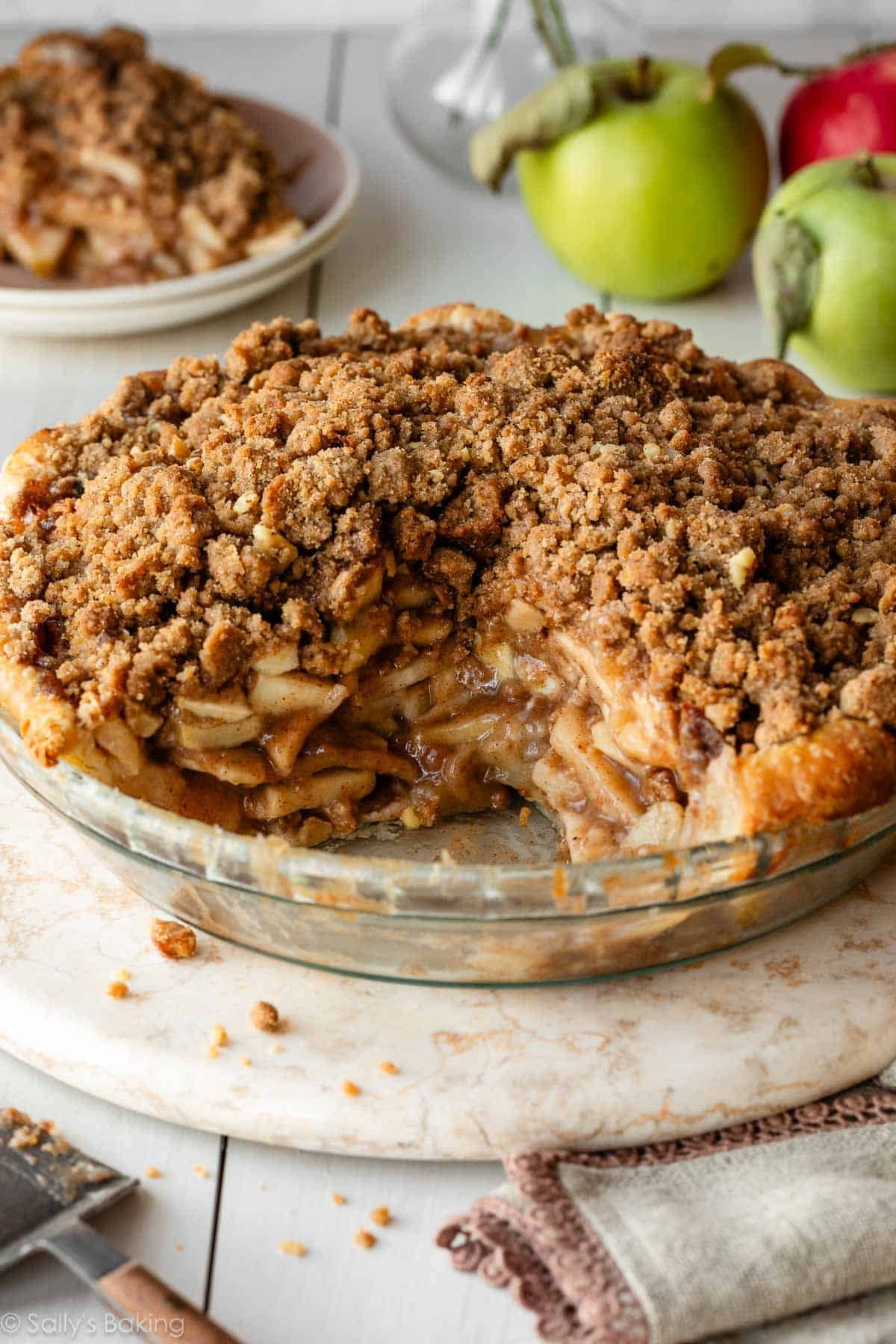 Apple Crumble Pie
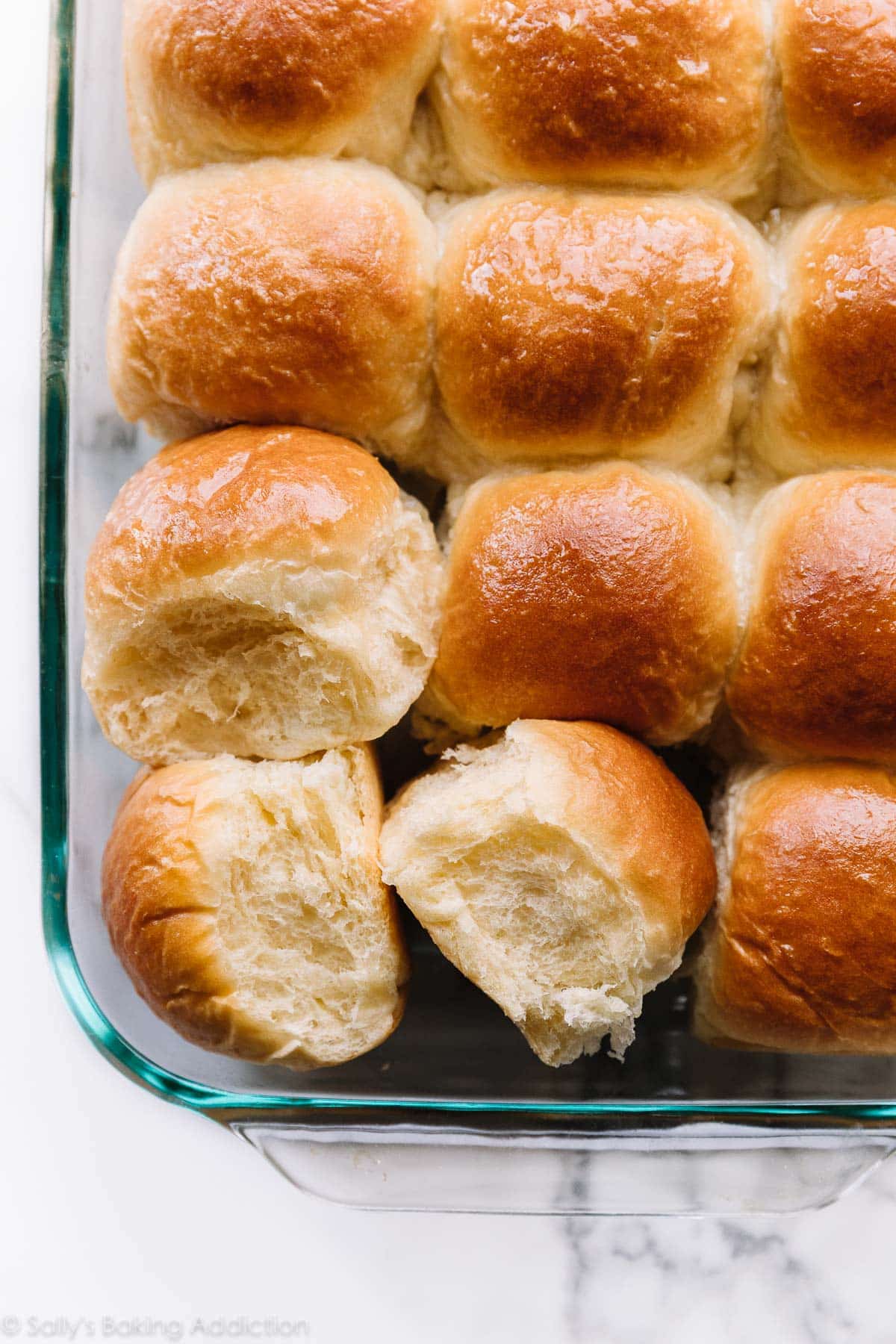 You only need 7 ingredients to make these dinner rolls. Flaky, soft, and buttery, these fresh dinner rolls outshine any main dish. See recipe notes for freezing and overnight instructions. You can also reference my