Tips: Pizza

For Easy and Good level recipes, try not to confuse the budding chef with too much information. By the time they (or you) are ready for Better and Best level recipes, here are some extra recipes, tips and tricks to keep in mind.


Pizza Tips

– Pizzarias use a very hot oven – 800-900° – Use at least 500° at home

Types of Pizza

– New York flat – Very thin – “Saturday Night Fever pizza”
– Neopolitana is a thin crust, but with a little substance to it
– Siciliana – This is a thicker crust – not quite deep dish
– Chicago Style Pizza – Also known as deep dish. This is a very thick pizza

How to THROW a pie

– Flour your peel
– Start to flatten Dough
– Smash air out
– Flatten from outside in
– Leave some thickness in the middle to stretch
– Flip hand to hand
– Toss on fists . Thumbs up

Making your Pizza

– Put onto peel
– Put firm Wisconsin Mozzarella cheese down first
– Then sauce . Tomatoes, evoo, puree, salt
– Dot your pizza with sauce, don’t drown it
– Pecorino cheese . Make it snow
– Fresh Mozzarella on top
– Parmesan regiano cheese
– Drizzle EVOO over top

Cooking at home

– 500° – best with a pizza stone
Put the stone in first to preheat and become hot
– Cook 4-5 minutes
– OPTION: Then turn broiler 2-3 minutes
– Basil after oven and more evoo and more parm

Reheating Leftover Pizza

– Use a hot baking stone or skillet for crisp pie

Alt sauce

– Evoo in skillet
– Tomatoes, chipotle in adobo, oregano

ALT Cracker Crust – St Louis Pizza

– Flour
– Salt
– Baking Powder
– BLEND
– Add 2 TBL oil
– Bind with water – Adjust so that it just comes together
– – Better not enough than too much !!
– Create rounds and wrap in plastic – let rest in fridge 2 hours
– Crush canned whole (drained) tomatoes with basic for sauce – Use EVOO also
– Add salt, pepper, oregano, basil
– For cheese, use a chopped mix of provolone, cheddar, Swiss, Parmesan
– Roll out dough very flat
– A bit of sauce, cheese, toppings
– Use preheated pizza stone – Use parchment paper and slide off cookie sheet

Alt Chicago Style Deep-Dish Pizza

– – – The only difference to your standard pizza dough, is that you add a bit more yeast, and let it rise more than you might with a thin crust, and a bit of extra EVOO oil
– Water, oil, yeast, sugar, flour, cornmeal
– Finish on the counter on a bed of flour
– Let raise in the fridge overnight
– Finish rise next day on the counter
– Sliced peppers in hot cast iron skillet
– Brush with oil
– Salt and pepper
– Bit of sugar and vinegar near end
– Sliced sausage
– Oil iron pan again
– Dough in hot deep dish pan
– . Let set 1/2 hour to rise
– EVOO on dough
– Sauce to edge
– Cheese, pepperoni, cheeses, other toppings
– Peppers on it, sausage, salt
– Bake 20 minutes at 425 till browned
– uncover until the cheese starts to brown and things crisp up

For a Special Italian Treat, try Farinata

– Chickpea flour, water, oil and salt
Mix to the consistency of a thin pancake batter
Pour onto a RIMMED pizza pan
Put into oven
Top and eat when it’s hot

Stovetop Pizza

CLICK HERE TO WATCH VIDEO
In cast iron skillet (with cover) or dutch oven
– start with 1 tbl olive oil in bottom of pan
mix the following in the pan
– 1/2 cup AP flour
– 1/2 cup self-rising flour
– 1 tsp yeast
– 1 tbl honey
– 2/3 cup lukewarm water
– 1 tbl olive oil
– pinch of salt
Top with sauce, then your favorite toppings, and then cheese
Turn stovetop surface to medium heat
Cook 5 minutes with lid on and lid vents closed
Rotate lid to open vents (do not remove lid)
Cook another 10 minutes with lid vents open
Remove to cutting board, cut and serve
 

Grandpa’s Pizzas and Calzones

Dough #1 – Easy and Tasty, but no adventure

Making your own pizza dough is really not that hard, but if you are not quite ready to tackle making your own, but want that pizzeria-quality dough, call one of your local NON-CHAIN pizzerias. Ask what they would charge for a ball of dough.  It should be somewhere between $3 and $5.

Dough #2 – Pretty Good, and Really Quick

8 hours before making your pizza, combine the following in a glass bowl

  • 1 TBL fresh yeast
  • 1 C water – very warm to the touch, but not hot – About 105-110º
  • 1 TBL sugar

Sift together in a large mixing bowl

  • 4 C flour
  • 1 tsp sea salt

Create a pile of flour, with an indentation (well) in the middle using 2 C of your flour

  • Pour your yeast mixture into the well, a little at a time, stirring to incorporate
  • Add more flour if necessary to firm up your ball
  • Once it is kind of firm, knead it in the remaining flour spread onto your counter
    Pull it in with your fingers, and push it away with the ball of your hand
  • Knead until it becomes elastic like Buddah’s stomach
  • Pinch, pull together, and form into a smooth ball
  • Let rise in a large lightly oiled bowl for about 1/2 hour
  • For Family Pizza Night, cut off softball sized pieces
    Roll them into small balls and put into glass bowls for about 2-4 hours
  • When you are ready, flatten them into shape as described below.

Dough #3 – Quality taste and an adventure, but overnight

About 24-36 hours before you will be making pizzas, combine the following in a glass bowl.
PLEASE NOTE: NO SUGAR IS USED IN THIS DOUGH RECIPE.

Sift together in a large mixing bowl

  • 4 C flour
  • 1 tsp sea salt
  • 1 TBL fresh yeast

Prepare 1 C water – very warm to the touch, but not hot – About 105-110º
Create a pile of flour, with an indentation (well) in the middle using 2 C of your flour

  • Pour your water into the well, a little at a time, stirring to incorporate
  • Add more flour if necessary to firm up your ball
  • Once it is kind of firm, knead it in the remaining flour spread onto your counter
    Pull it in with your fingers, and push it away with the ball of your hand
  • Knead until it becomes elastic like Buddah’s stomach
  • Pinch, pull together, and form into a smooth ball
  • For Family Pizza Night, cut off softball sized pieces – otherwise, this will make about two 14 inch pizzas
  • Let rise in a large lightly oiled bowl for about 2 hours at room temperature
  • Cover and refrigerate for AT LEAST 20 hours – and as long as 36 hours
  • When you are ready, flatten the cold dough into shape as described below.
    There is no need to let it come up to room temperature.

How to Handle your Dough

  • Flatten dough ball with your fingers
  • For a pizza, top with red sauce and your favorite ingredients for a great pizza.
    It makes it easier to get into the oven if you flatten your pizza onto parchment paper.
  • For a calzone, fill it half-way with sauce and ingredients for a classic calzone.
    When you fold your calzone in half, you will want to pinch or roll the edge so it doesn’t leak

Some Tips about Cheese

  • Mozzarella cheese is a given.  Buffalo mozzarella is a plus
  • Provalone is an OK substitute for Mozzarella
  • Gruyere has a nice melty stringiness about it
  • Pecorino cheese is another good one to use

Some Tips about Sauce

  • Canned whole Marzano tomatoes – Put through a food mill or use food processor
  • If you have typical store bought tomatoes, halve or quarter them, drizzle them with EVOO and a bit of salt, then bake them at 400º for an hour.  THEN run them through a food mill.

Topping Suggestions

  • Slivered garlic
  • Baby spinach leaves
  • Sun dried tomatoes
  • Basil chiffonade
  • EVOO drizzle
  • Black and red pepper

Tips for a Successful Bake

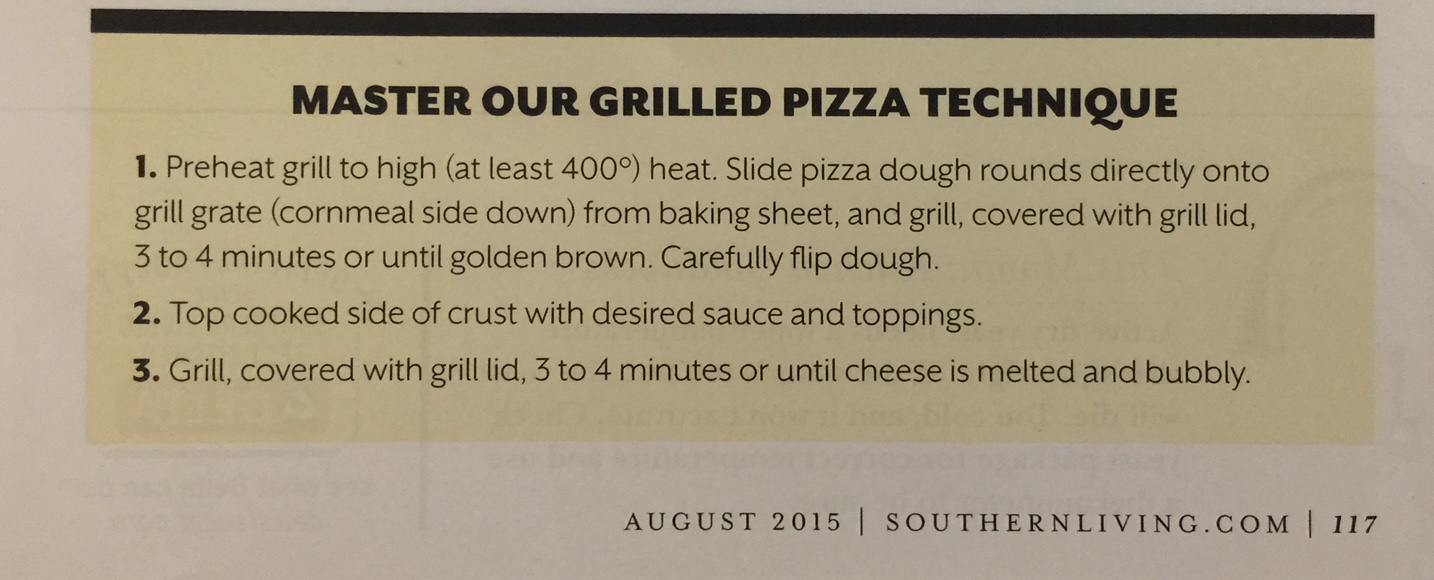
  • Cook on pizza stone for nice crisp crust
  • Preheat up pizza stone to 500º – – – 550º if your oven supports it.
    Use your fingertips to flatten dough to a wide disk

Other Yummy Tips

  • Don’t use too much sauce, or your ingredients will get lost.  If you want, serve with marinara dipping sauce for the crust pieces, but not too much sauce.
  • Don’t overcrowd your pizza with cheese.  Leave some space between cheeses.
  • Use real Parmesan, not the stuff in the green can
  • A few leaves of basil give a good taste to your pizza
  • Dirzzle EVOO onto your pizza before baking.
  • Your pizza will bake in about 6-10 minutes at 500 degrees


Basic Calzone Recipe

Make substitutions to taste

  1. Remove Bratwurst or Italian Sausage from their casings and brown in a skillet – Set aside
  2. Saute onion in a bit of EVOO in the same skillet
  3. Add salt, pepper, garlic and green chilies
  4. Cook about 3 minutes, then add tomato sauce
  5. Toss in buffalo mozzarella
  6. Put into rolled pizza dough, fold and seal
  7. Bake at 550º for about fifteen minutes

Consider a rolled cheese edge.

Tips: Meatloaf

Rachel’s meatloaf

Hamburger pork combination or lamb if that sounds good
Breadcrumbs soaked in milk and then run out
One egg
Green onions, garlic, minced, parsley, Celery, salt, pepper, LEMON zest
Drizzle olive oil then mixed with hand’s. Bake at 425° for 30 minutes

Leftover Meatloaf Tricks

  • Serve a warmed over slide with a fried egg on top for breakfast
  • Dip a slice in egg wash and then panko bread crumnbs and fry in a skillet till browned
  • Start on low heat – about 325º – and cook till internal temp reaches about 165º – glaze at about 15 minutes

The goal of a casserole is not to prepare a restaurant-quality showpiece, but is rather to feed the hungry and heartbroken.

  • Allow for drainage, or you could get a soggy bottom. There are meatloaf pans that have holes in them to let the grease drop to the bottom of the pan.
  • A casserole should have kind of a creamy mouth feel to it, have a crunchy top (traditionally Ritz Crackers) and you should be able to identify the individual components within the casserole.
  • Add a bit of cornstarch to your meat and it will gel some of the run-off.  Shredded Parmesan also does this.
  • The advent of soup make it unnecessary to start with a bechemel sauce or veloute sauce.
  • Many meatloaf recipes use stale bread crumbs. Try these options:
    – Use a fresh and hearty loaf such as French bread
    – Use dry oatmeal – not minute oats, but traditional rolled oats


Tips: Hot Wings

MENU SUGGESTIONS:
Pair wings with more finger food. Corn on the cob would go nicely.
A classic pairing is celery and carrot sticks.
Roasted potato wedges are a good alternative and can be cooked alongside the wings.

IMPORTANT NOTE: Use a second clean metal pan for tossing after they are cooked to avoid cross-contamination from any juice that leaked out of the uncooked, lightly seared chicken.

Dipping sauce is yogurt with lime and honey

Pat wings with paper towel and then put on tray in a single layer.  Put on the bottom shelf for two hours to dry.


Tips: Corn Bread

So, as I was writing this, I thought Corn Bread or Cornbread? I let Google decide. 8 million people say Cornbread, while 72 million say Corn Bread. So, now we know.

Special Steps:

Cast Iron- clean w/salt, seasoning-repeat yourself, wash, heat to sizzle, rub w/veg oil, repeat 5 times. Repeat every time you use it, do not drip dry-heat on burner.

Sprinkle a little red chili flakes in your corn bread for a spicy southwest version.

Cut back on the liquid and use creamed corn

Tips: Yeast

TYPES OF YEAST

  • Instant, Quick Rise or Rapid Rise Yeast :: Think Born Ready to Go – This has been gently dehydrated and can be added to flour directly without proofing
  • Dry Active Yeast :: Think Old and Dry – This has been quickly dehydrated and must be proofed before using.  It also will live longer in your pantry.
    THE FOLLOWING ARE NOT AS COMMON
  • Bakers Yeast :: Used to get from the local brewery
  • Liquid Pitchable Yeast :: Liquid, live and ready to go – keep refrigerated – Shake and pour – likes barley
  • Fresh or Cake Yeast :: Hard to get, but the yeast is totally alive and ready to go

ABOUT YEAST

  • If you are using sugar, eggs, zest, fruit, butter … or pretty much anything that dilutes the pure yeast/water/sugar combination – keep in mind that they all retard the growth of yeast, so take that into consideration.
  • Potato water nourishes the yeast, and promotes faster rising, but dough may be darker than dough made with water

ABOUT BAKING BREAD

  • Just because your bread is beautifully brown, does not mean that it is done.  Internal temperature should be 200º in the center.  Less than that, and the gluten structure will break down.  Also, it should NEVER be above 210 or it will be intolerably dry – The water in the bread starts to turn to steam and escape.

ABOUT INGREDIENTS

  • Use water instead of milk in breads when you want a firm crust.
  • The crust is softer and browner when you use milk rather than water
  • Milk increases the food value of bread.
  • Milk should be scalded to about 160º and then cooled to 100º or below
  • If using evaporated milk or nonfat milk powder freshly mixed with water, you do not need to scald the milk
  • Sugar is not essential in bread, but it adds flavor and supplies food for the yeast.
  • Sugar also creates a browner crust
    White sugar, brown sugar, honey or molasses may be used for slightly different flavors.


Tips: Recipe Rehab

Recipe Rehab Chef tips and tricks / ideas

Lemonade with apples instead of sugar
Try with pith… Try with skin…

Other juice fruits: carrots, celery, beets, etc
. . . . . . . . . .

Try grilled cheese with Mozzarella
Tomato, basil, pesto
Panini grill . No butter
. . . . . . . . . .
Zucchini on Berliner mandolin
Use instead of pasta strings
. . . . . . . . . .
Apple sandwich
Apple, almond butter, granola
Red on top, green apple on bottom
. . . . . . . . . .
Omelet with mustard greens
Mozzarella cheese
. . . . . . . . . .
Guacamole toast with omelet
. . . . . . . . . .
Sear meat
Season first
Baste with butter
Toss on thyme, shallots, garlic, etc
Finish in over for 5-6 minutes
Let rest for 5 minutes for juices to distribute
. . . . . . . . . .

Healthy appetizers
1-Watermelon, feta and basil on toothpics
Garnish with balsamic reduction

2-Caprese Hors d’ouvre

Cherry tomato
Mozzerella cheese
Green or black olive
Spear onto toothpicks

… Substitute what you have:
Pepperoncini, cheddar, basil leaf, etc

3-pokie tuna with ginger and scallion
Lime juice, soy
Serve with won ton chips

4-goat cheese truffles
Press goat cheese around red seedless grapes
Roll across sprinking of paprika or chives or dried basil, parsley, tarragon, thyme, …
Nuts, pistachios, almonds, …
Toothpick and place in small cupcake papers
. . . . . . . . . .
Healthy vegetable chips
Slice thinly on mandolin
Layer onto a tray
Spray with oil and sprinkle with salt
Bake at 275° until they start to brown
Flip over and finish crisping
. . . . . . . . . .
Salad dressings
Carrot and miso vinaigrette
You can substitute peanut butter
Rice wine vinegar, garlic, sesame oil, pickled ginger
Emulsify Canola oil
Opt: mango instead of oil
Blend
. . . . . . . . . .
Healthy Snacks
Young Okra . Eat it raw
Dates
Figs
Belgian endives . Stuff with (eg) tuna fish salad
Edamame beans
Roasted sunflower seeds
Chia seeds
Cocoa nibs
Mini bananas
Greek yogurt with fruit puree . Base for dressing

Robert@RobertAndrews.NET

Tips: Cow Parts – Dissection

CLICK HERE for cuts from other animals


See also Tips: Burgers and Tips: Steaks and Cow Parts

Meat Grades
• Longue ?
• Sterling . Restaurant Quality . More expensive than Prime, but worth it.
• Prime . Omaha Steaks . Very expensive . Best for home chefs . Lots of marbling . About $3 more than choice
• Private – Might just be Fry’s Foods
• Choice . Most common . Fairly inexpensive, fairly tasty
• Select . Little marbling . Stay away except for stews, etc.

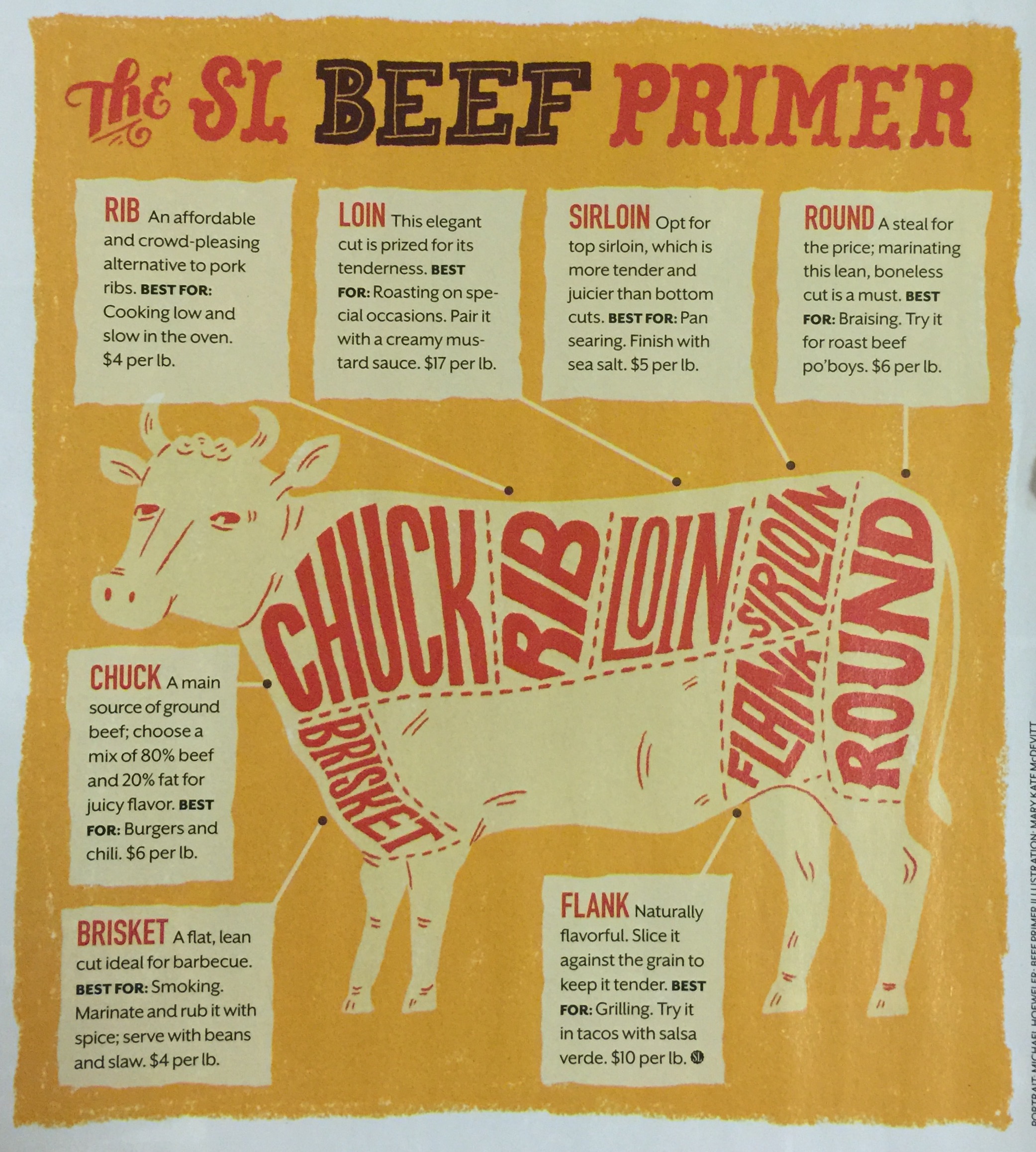
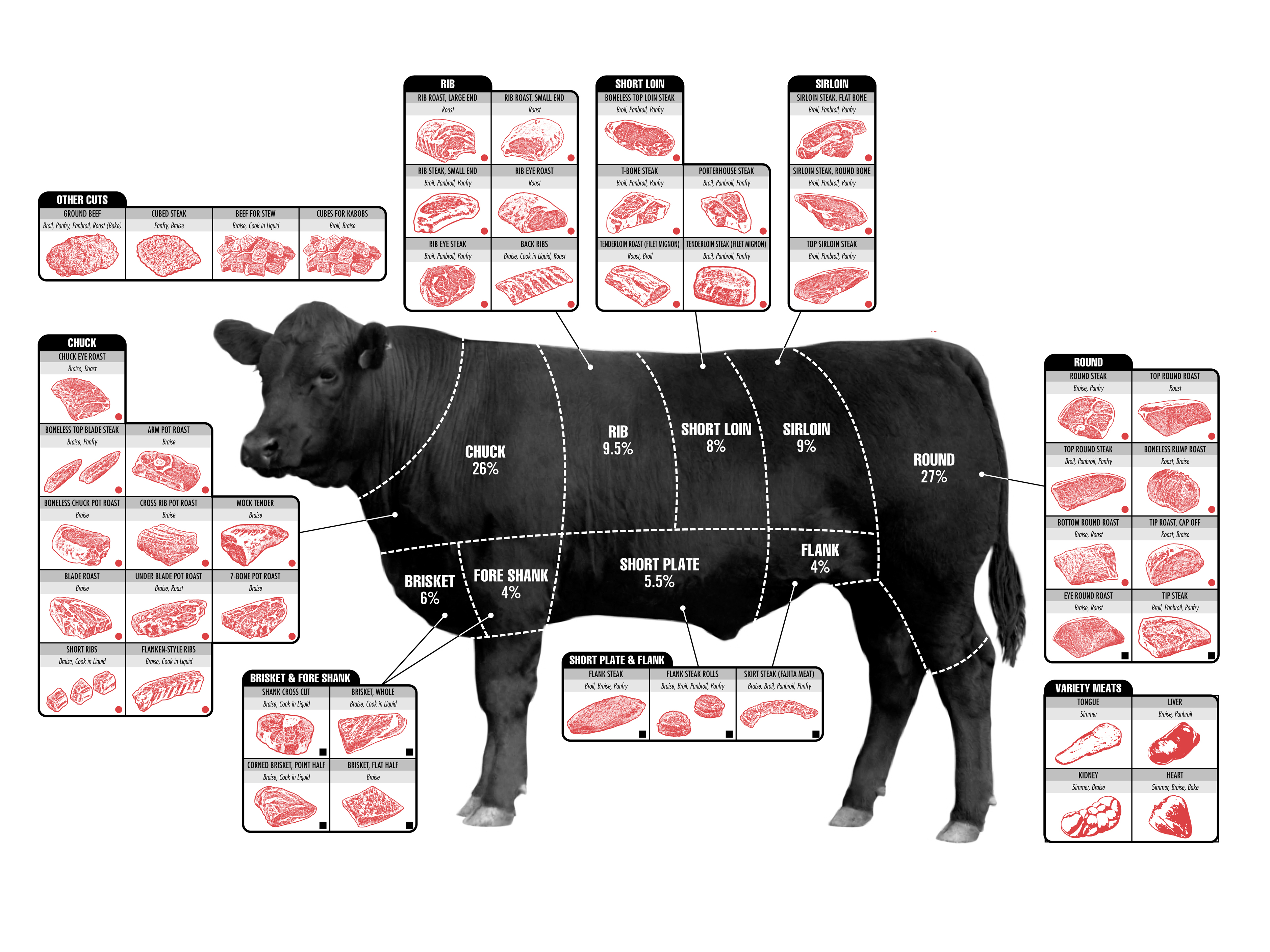
Fore Shoulder . Chuck
. Top blade roast . Above the shoulder blade
. . . A fair amount of fat, and a pretty good choice
. Chuck seven bone roast
. Chuck Eye roast . In the center of the ribs
. . . Lots of flavor, a little bit more fat . Best choice
. Chuck shoulder roast . Cut into ribs sometimes

Ribs . Just behind the chuck and in front of the loin

Back Side . The Round
. Top Round Roast
. Bottom Round Roast
. Bottom Round Rump Roast
. Eye Round Roast
inexpensive, but not a lot of fat and not a lot of flavor
these are fairly tough, and require a long cooking time and lots of spices

.
.

Loin . center back of cow
.

Brisket front breast of cow . above fore legs
.
.
.

Sirloin . Just behind loin, in front of round
. Rib Roast . 1st cut
. Rib Roast . 2nd cut
. Tri-Tip Roast
. Top Loin Roast
. Tenderloin
. Top Sirloin Roast . Lots of flavor . Cooks more quickly


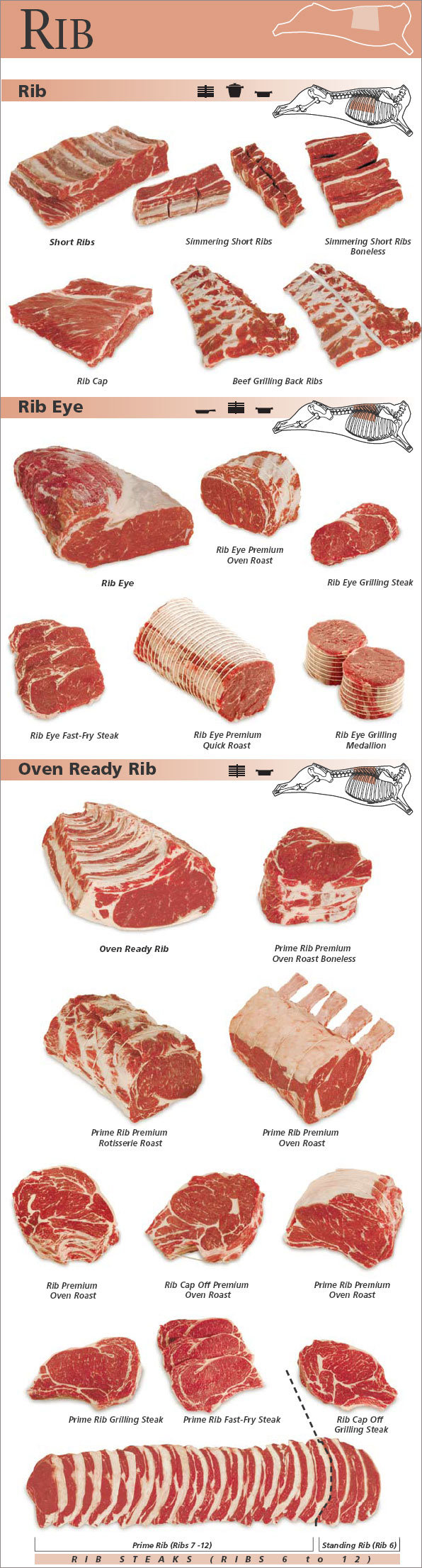
cuts-of-beef


Tips: Pig Parts – Dissection

CLICK HERE for cuts from other animals


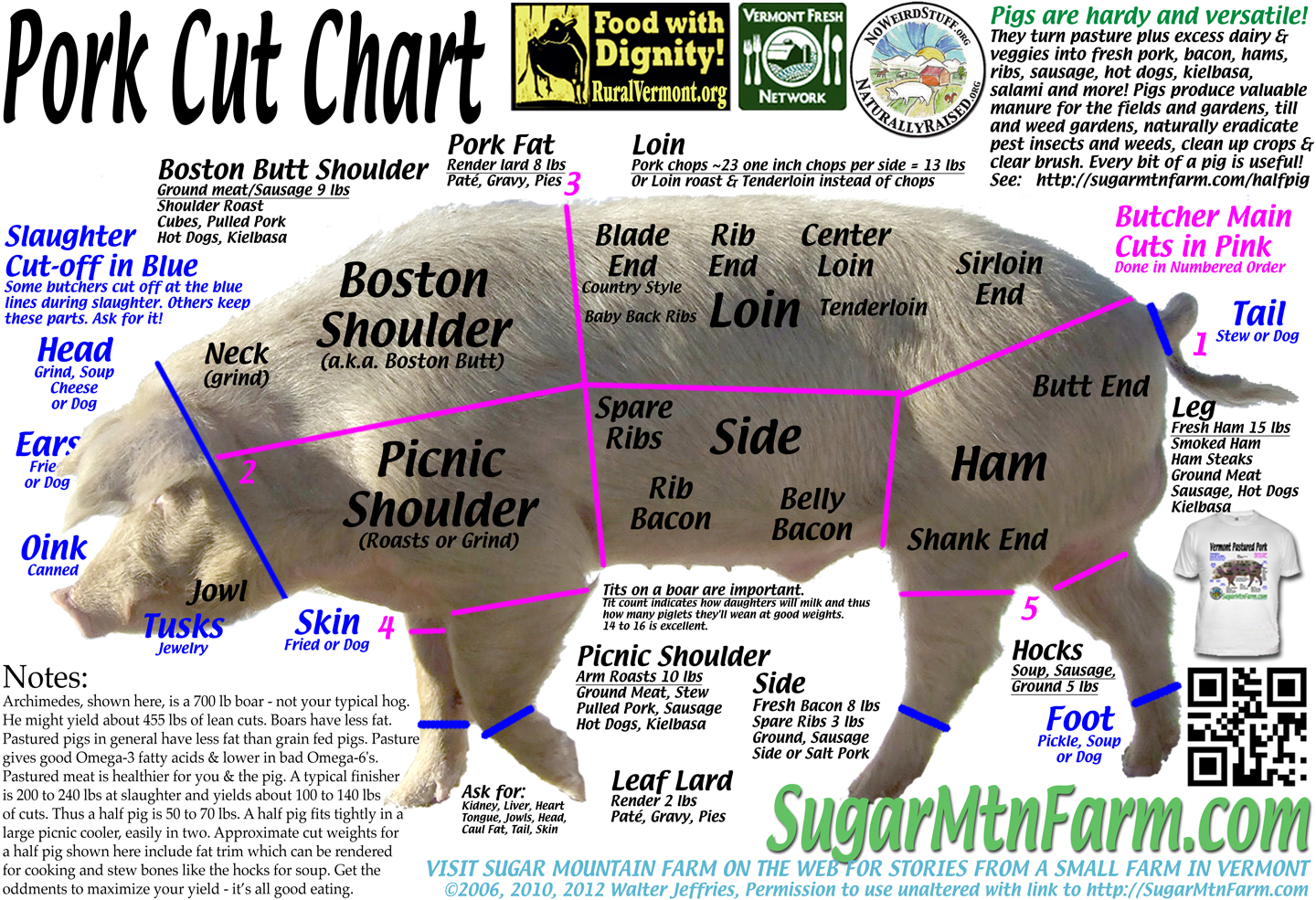
pork-chart


From America’s Test Kitchen and Sugar Mountain Farm.

Ever wonder where Ham Hocks come from? What’s the difference between the ribs and the spare ribs? What’s the difference between the loin and the center loin?

Here is a picture and an explanation of the Pig Parts and how to use them.

  • The buttocks are salted and pressed in order to eventually produce ham.
  • The ribcage meat is salted and smoked in order to get bacon.[6] Salt is rubbed thoroughly into each piece of meat and all surfaces are covered. Some formulas also include lots of black pepper. The bulk of the meat is cut and ground to produce various sausages, which are traditionally wrapped into the intestines of various sizes.[6]

Schematic representation of the main pork cuts.

The bulk of the fat is cut into small pieces. Some of it is fried to produce cracklings. Lard is made by rendering – heating fragments of fat in a large iron pot over a fire until it is reduced to simmering grease which congeals when cooled.[6] Lard is then stored in lard tins with tin covers. The typical tins in the US are five gallons.

The intestines are stripped by drawing them through a clenched fist. They are then washed, cut into short pieces, and fried to make chitlins.

The various “leftovers” are put into various forms of headcheese jelly, etc. Most parts of the pig are used in this traditional process, even parts of the skin that would normally be thrown away are preserved to be cooked with beans.

The smoke house is essential for the preservation and long term storage of hams, shoulders, bacon sides, and pork bellies. The meat is hung on racks and hooks in the smokehouse; and later smoked. Fragrant hardwood, such as hickory, beech, or cherry is allowed to smolder slowly in a pit below the hanging meat. This gives added flavor and color to the meat as well as serving to dry cure the pork.

Here is another bit of information:

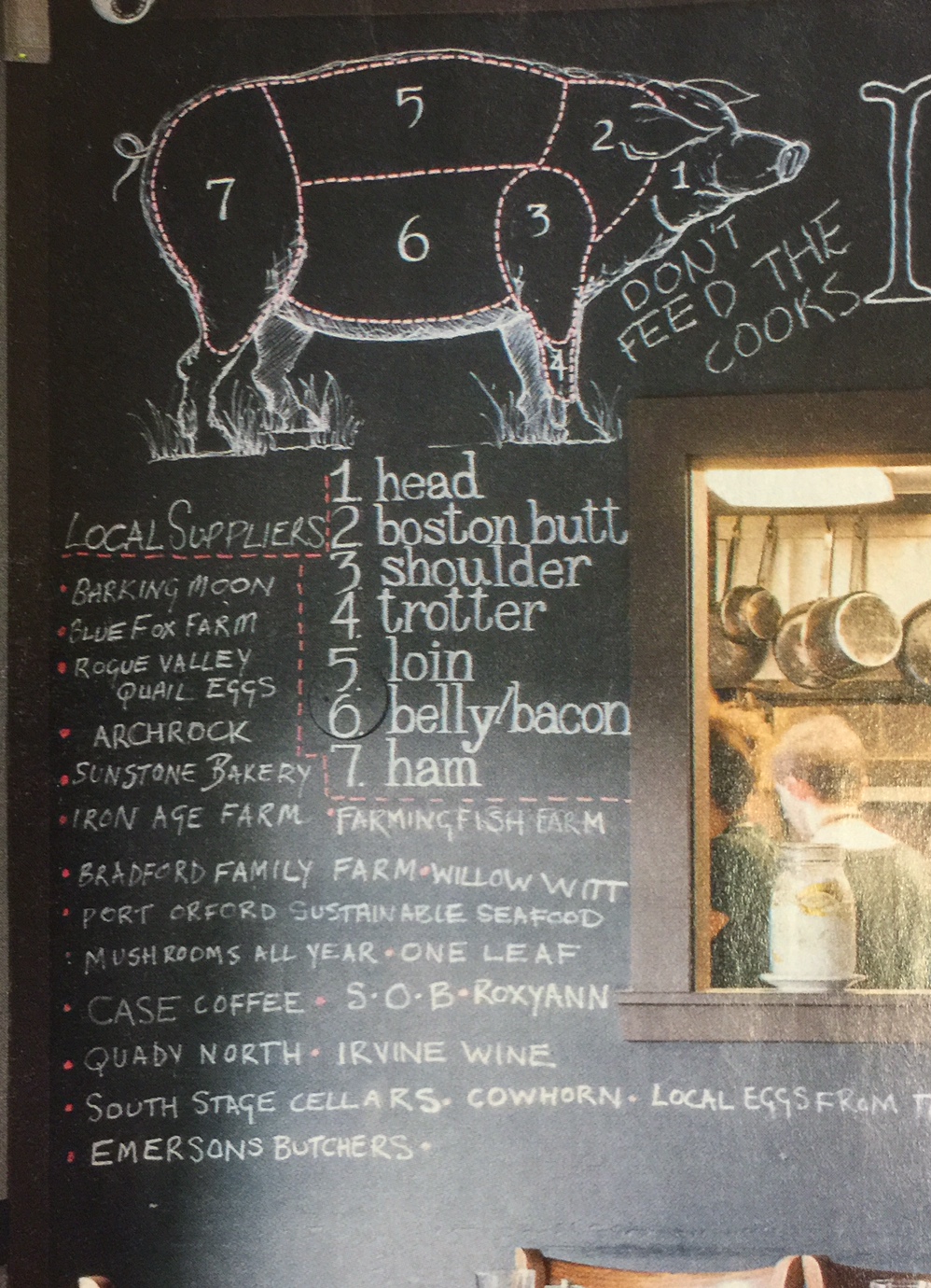
Pork Cuts – Where do they come from?

Where does the meat come from?
Ham – front and back legs up to the haunches
Butt – from the shoulder
Pork loin – the top of the back near the rear of the pig
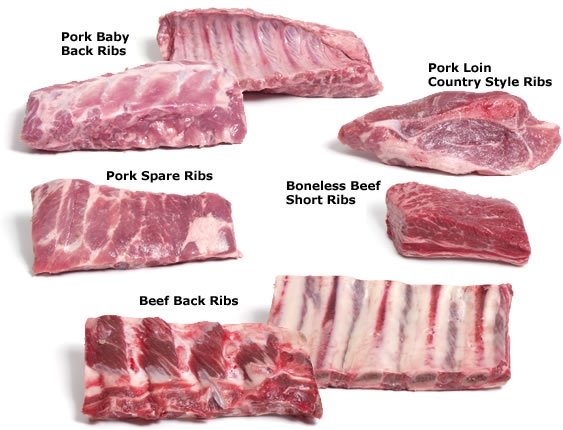
Loin ribs – Same as baby back, but closer to the rear
Baby back ribs – ribs nearest the spine
Spare ribs – ribs just outside the baby back ribs
St Louis ribs – the tips… past the spare ribs

Instructions

Spare ribs are a bit tougher so take longer to cook, but contain more meat.
Baby backs are faster cooking, more tender and take flavors well
Vaccuum packed ribs will keep in the fridge for 2-3 weeks

Info from Alton Brown


Tips from America’s Test Kitchen

  1. Save rind from Parmesan cheese, store in freezer, and add to soup for extra flavor.
  2. For a quick cooking meats such as fish, sprinkle a bit of sugar over the top so that it will instantly caramelize when it hits the hot pan.
  3. For a bit of a meaty mystery taste, add a little soy sauce or anchovy. Something with umami .
  4. Season things to be served cold more aggressively. Use vinegar, salt, pepper, sugar, lemon juice, etc. just before serving.
  5. Don’t over cook things with a chocolate base. As soon you start to smell them consider taking them out of the oven, or turning the oven off.
  6. Sautéed meat when it has been dried. If there is liquid, that will turn to steam and cook the meat, but will not brown it. This is called the Pallard reaction.
  7. Herbs fall into two categories. Those added early, and those added late. Herbs that are added early are things such as rosemary, Thyme… Full flavored herbs. Herbs that are added near the end are things such as basil, parsley, cilantro, and chives.
  8. If you are cooking something that uses butter or oil and other spices such as cinnamon, nutmeg, etc., melt your butter and put the spices into the hot butter to more fully develop the flavor of the spices.
  9. When sautéing chicken, heat your skillet up to about 450° before putting the meat into it.
  10. When sautéing onions, use 1/2 tsp of baking soda to speed up the process.


Tips: Safety

Safety tips

When weighing any meat, use a plastic bag to protect the surface of your scale.

To sanitize your sink and counter area use 1 tablespoon of bleach and 1 quart water.

To avoid cross-contamination, put all your seasonings into a small bowl and mix before putting on to your meat. Discard what you don’t use.

Cool hot items such as a casserole on a cooling rack for an hour before putting in the refrigerator.

To clean bacteria from fruits such as apples, use a solution of one part white vinegar to 3 parts water. Rinse off underwater when you are done.

Grandpa’s alternative: use one part lemon juice and two parts water. Spray on to your fruit, and that’s it.

Robert@RobertAndrews.NET

Life Hacks – 2013

Not everything is about skill.  Many of the magic done by great cooks is knowing how to do something.  Browsing these Tips and Trips will bring you closer to being a better cook or chef.

This is the only one of my books that goes comically above the 30 or so recipes that are in all of the others.  There are so many good times, and things that I really want you to know…

  1. Learning to Cook
    FIRST THINGS FIRST
  2. Kitchen Safety
  3. Knife Skills
  4. Food Storage
  5. Food Safety
  6. The Danger Zone
    EQUIPMENT
  7. Slow Cookers and more
  8. Kitchen Tools
  9. Temperature
  10. Gadgets
  11. Electric vs Gas
  12. Dishwasher
  13. Care of Non-Stick Skillets
  14. Care of Cast Iron Cookware
  15. A Good Thermometer
    GETTING THE RIGHT FOOD
  16. Mail Order Food
  17. Canned Food
  18. Expiration Dates
  19. Bread Wrappers – Color Coded Tags
  20. Grocery Store Shopping
  21. Beef and other red meats
  22. Chicken and other poultry
  23. Pork and other white meats
  24. Seafood in general
  25. Potatoes
  26. Avocados
  27. Onions and Garlic
  28. Peppers
  29. Tomatoes
  30. Noodles and Pasta
  31. Yeast
  32. Cheese
  33. Snacks
  34. Dietary Water
  35. Edible Colors
  36. Eggs
  37. Vegetables
    PLANNING YOUR MEALS
  38. Terminology
  39. Grinding, Grating and Peeling
  40. From Chopped to Minced
  41. Food Preparation
  42. Garnish
    COOKING YOUR FOOD
  43. Microwave Cooking
  44. BBQ and Grilling
  45. Fry Tips
  46. Grilling Food
    PREPARATION COMPONENTS
  47. Starch Thickeners – Differences
  48. Butter and Oil
  49. Substitutions
  50. Spices
  51. Salads
  52. Dough
  53. Sauces
    AFTER THE MEAL
  54. Cleaning Up
    REHEATING YOUR FOOD
  55. Reheating Food
  56. Brown Bag Safety
  57. All about Mold
    HEALTHY EATING
  58. Healthy Eating
  59. Cutting Down on Salt
  60. Cutting Down on Sugar
  61. Eliminating Potentially Dangerous Foods
  62. Recipe Rehab – Eating Healthier
    PRESERVING YOUR FOOD
  63. Storing Fruits and Veggies
  64. Pickling and Canning
  65. Freezing Food
    OTHER THINGS TO THINK ABOUT
  66. Garden Tips
  67. Other Life Hacks
  68. Composting
  69. Roaches
  70. Travel Tips
  71. Potluck Safety
  72. Grinding your own Meat
  73. Tailgate Safety

Download Tips and Tricks for only 99¢. Select any FIVE BOOKS for only $2.99 and start cooking as soon as possible. It is worth “the price of admission” just to browse these time and money saving tips.

Tips: Cheese

SOFT CHEESES
Cover is light mold.
Mozzarella, provalone, or fontina cheese are fairly interchangeable

HARD CHEESES
Rind will be hard. It is actually not bad for you and can pack lots of flavor.  Use the crust of parmesan cheese rind to flavor and thicken your pasta sauce.  Remove it before serving.  Cheese is squeezed and compressed. Nutrition is about 14
times more than the milk used to make it.

Parmesean Cheese – Grate your own, don’t use the round green box either.

Eg: Cheddar, machengo, parmesean, gruyere

Lower fat content means stringier cheese.

KEEP AND CARE OF CHEESE
Likes cool moist environment, but not COLD and not WET
Likes to breathe
Soft and medium in plastic container with a slice of apple.
Hard cheeses lightly wrapped in waxed paper secured with rubber band or aluminum foil.

MEDIUM CHEESES
Reddish or brown rind is more natural
Milk is pasturized at 145 degrees for 30 mintues
At 160 degrees for 15 seconds kills everything. Applies to most cheeses.
You can use dental floss to cut soft cheeses

FREEZING CHEESE
You can wrap cheese in Saran Wrap and then put it into a zipper lock bag. This will keep it for about three months.

GOOEY CHEESE
The melty stringy cheeses are those with a lower fat content.  That’s why low moisture, low fat mozzarella cheese is so great for pizza.  Mozzarella, provalone, or fontina cheese are fairly interchangeable

Tips: Pork

ribs2ribs1Chops- Bone like porterhouse, Pork tenderloin, Pork filet, Pork roast (fresh ham),
Smoked ham, pork ribs (baby backs most tender), dry rub, the same Chinese style ribs.


Ribs

$$ Spare ribs are meaty, rich and big – 3-4 ribs per guest

$$$ St. Louis cut ribs are just trimmed spare ribs – you pay extra for their work – Easy to eat, and they cook evenly

$$$$ Baby Back ribs are lean, tender and short – 6-7 ribs per guest


Tips: BBQ

BBQ Tips

Ingredients:
1 lb salmon filet
1 lb chick breast
1 lb flank steak
soy
mirin
rice vinegar
turmeric
five spice
chili flakes
coriander
grapeseed oil
lemon grass
molasses
asparagus
mint
sprouts
watercress

Instructions:
Chicken rub – coriander, turmeric, five spice, chili flakes

Slice salmon into strips, marinate in soy & rice vinegar for10 mintues, mint and sprouts on plate.

Chicken breast w/o skin, cut into strips, put between plastic and pound flat, skewer on lemongrass. Plate w/watercress.

Flank Steak – cut into strips across grain, pound flat, pastry brush-apply molasses, wrap around asparagus, brush w/oil & put on grill. Plate w/baby lettuce or any small leaf. (cut at angle).

+++++++

BBQ and other Meat Tips

Ingredients How different can BBQ be?

In South Carolina they use mustard-laced shredded pork.
In North Carolina they use pepper and vinegar.
In Kansas City, a tangy tomato-based sauce is used.
In Memphis, Worcestershire is added to the sauce.
In Texas, beef brisket is preferred over pork

In Arizona, my recipe is the best ! ! ! !
See “Robert’s Quick n Tasty BBQ Ribs” under “Main Courses”

Instructions
1. Meat / Butcher tip @ http://www.xml3.com/family/Recipes/Tips_2.pdf
2. Marinate meat in a plastic bag. This allows for easy agitation.
3. Put meats into freezer for 30 minutes to make them firm before slicing

+++++++++

BBQ Tips

1 lb salmon filet
1 lb chick breast
1 lb flank steak
soy
mirin
rice vinegar
turmeric
five spice
chili flakes
coriander
grapeseed oil
lemon grass
molasses
asparagus
mint
sprouts
watercress

Instructions
1. Chicken rub – coriander, turmeric, five spice, chili flakes

2. Slice salmon into strips, marinate in soy & rice vinegar for10 mintues, mint and sprouts on plate.

3. Chicken breast w/ o skin, cut into strips, put between plastic and pound flat, skewer on lemongrass. Plate w/ watercress.

4. Flank Steak – cut into strips across grain, pound flat, pastry brush-apply molasses, wrap around asparagus, brush w/ oil & put on grill. Plate w/ baby lettuce or any small leaf. (cut at angle).

Tips: Butter

Butter Taste Tests

Butter – Saturated fat increases bad cholesterol and increases good cholesterol.

Margarine – Trans-fat, hydrogenated decreases good cholesterol raises bad cholesterol.

Artificial margarines – Gums & tropical oils, 80% fat=margarine (hard) like butter,

Taste Winners – Land O’ Lakes, soft baking butter with canola oil – Olivio, Olive oil spread – Land O’ Lakes, Sweet Cream unsalted butter.

Chicken Tips and Tricks

Chicken Breasts
Tight seal on package, keep on bottom shelf near back for up to 3 days.
Avoid cracked packaging & any pink discoloration spots.
Pooled juice in bottom of container can mean it’s been on the self for a while.
Check expiration date.

White skin = grain fed
Yellow skin = corn fed
Taste is the same.

Generally better to buy chicken with the bone in.

Cutting a whole chicken

Turn up side down, Crack breastbone w/knife, push down & lift out breastbone. Separate rib meat, follow down rib w/sharp knife – remove ribs. Use bones for stock.

Use bones for stock.

Tips: Fish from Alton Brown

1. Lube your fish up then rub with salt and pepper inside and out
2. Wrap VERY tightly in foil and cook at 500 degrees for 30 minutes or (better yet) internal temperature of 120 degrees, but DON’T OVERCOOK
3. Plate on top of bed of fresh parsley and dill, and garnish with lemon slices

Try to hide your fish, layering the ingredients like this:

Parsley
Dill
Onion
Lemon
Fish
Lemon
Onion
Dill
Parsley


HTML Snippets Powered By : XYZScripts.com